John 2:1–4:1
The Holman Christian Standard BibleOther versions
English
- HCSB The Holman Christian Standard Bible
- DARBY 1890 Darby Bible
- ASV American Standard Version
- AV 1873 The Cambridge Paragraph Bible of the Authorized English Version
- CSB Christian Standard Bible
- D-R Douay-Rheims Bible
- ESV English Standard Version
- GW GOD’S WORD Translation
- GNB Good News Translation
- KJV 1900 King James Version
- LSB Legacy Standard Bible
- LEB The Lexham English Bible
- MSG The Message: The Bible in Contemporary Language
- NET The NET Bible
- NASB95 New American Standard Bible (1995)
- NCV New Century Version
- NIrV New International Reader’s Version (1998)
- NIV New International Version (2011)
- NKJV The New King James Version
- NLT New Living Translation
- NRSVue New Revised Standard Version: Updated Edition
- RSV The Revised Standard Version
- RSVCE The Revised Standard Version, Catholic Edition
- YLT Young’s Literal Translation
Arabic
Czech
French
German
Greek
Hungarian
Italian
Korean
Latin
Portuguese
Russian
Simplified Chinese
Spanish
Traditional Chinese
The First Sign: Turning Water into Wine
2On the third day a wedding took place in Cana iof Galilee. jJesus’ mother kwas there, and 2Jesus and His disciples were invited to the wedding as well. 3When the wine ran out, Jesus’ mother told Him, “They don’t have any wine.”
4“What has this concern of yours to do with Me, lm•woman?” nJesus asked. “My hour ohas not yet come.”
5“Do whatever He tells you,” His mother told the servants.
6Now six stone water jars had been set there for Jewish purification. pEach contained 20 or 30 gallons. q
7“Fill the jars with water,” Jesus told them. So they filled them to the brim. 8Then He said to them, “Now draw some out and take it to the chief servant.” rAnd they did.
9When the chief servant tasted the water (after it had become wine), he did not know where it came from—though the servants who had drawn the water knew. He called the groom 10and told him, “Everyone sets out the fine wine first, then, after people have drunk freely, the inferior. But you have kept the fine wine until now.”
11Jesus performed this first sign sin Cana tof Galilee. uHe displayed vHis glory, wand His disciples believed in Him.
12After this, He went down to Capernaum, xtogether with His mother, His brothers, yand His disciples, and they stayed there only a few days.
Cleansing the Temple Complex
13The Jewish Passover zwas near, so Jesus went up to Jerusalem. a14In the temple complex bHe found people selling oxen, sheep, and doves, and He also found the money changers sitting there. 15After making a whip out of cords, cHe drove everyone out of the temple complex with their sheep dand oxen. He also poured out the money changers’ coins and overturned the tables. 16He told those who were selling doves, “Get these things out of here! Stop turning My Father’s ehouse finto a marketplace!” gh
17And His disciples remembered that it is written: Zeal ifor Your house will consume jMe. kl
18So the Jews replied to Him, “What sign of authority will You show us for doing these things?”
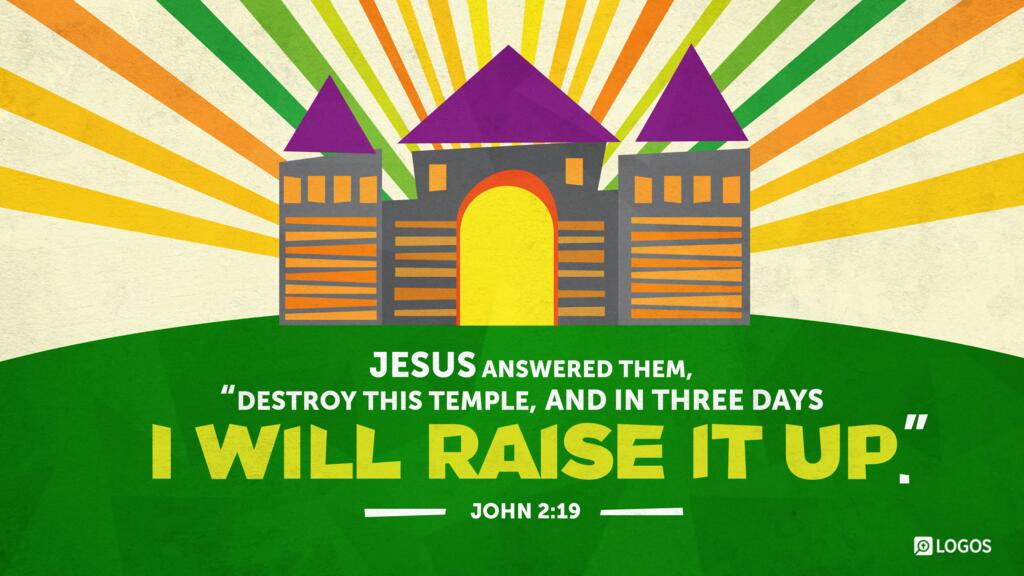
19Jesus answered, “Destroy this sanctuary, mand I will raise it up in three days.” n
20Therefore the Jews said, “This sanctuary took 46 years to build, and will You raise it up in three days?” o
21But He was speaking about the sanctuary of His body. p22So when He was raised from the dead, qHis disciples remembered that He had said this. rAnd they believed the Scripture sand the statement Jesus had made.
23While He was in Jerusalem tat the Passover Festival, umany trusted in His name vwhen they saw the signs He was doing. 24Jesus, however, would not entrust Himself to them, since He knew them all 25and because He did not need anyone to testify about man; for He Himself knew what was in man. w
Jesus and Nicodemus
3There was a man from the Pharisees xnamed Nicodemus, ya ruler zof the Jews. 2This man came to Him at night and said, “Rabbi, awe know that You have come from God bas a teacher, cfor no one could perform these signs You do unless God were with him.” d
3Jesus replied, “•I assure you: Unless someone is born again, efhe cannot see the kingdom of God.” g
4“But how can anyone be born when he is old?” Nicodemus asked Him. “Can he enter his mother’s womb a second time and be born?”
5Jesus answered, “I assure you: Unless someone is born hof water and the Spirit, ijhe cannot enter the kingdom of God. 6Whatever is born of the flesh kis flesh, and whatever is born of the Spirit lis spirit. 7Do not be amazed that I told you that you mmust be born nagain. 8The wind oblows where it pleases, and you hear its sound, but you don’t know where it comes from or where it is going. pSo it is with everyone born of the Spirit.” q
9“How can these things be?” asked Nicodemus.
10“Are you a teacher rof Israel and don’t know these things?” Jesus replied. 11“I assure you: sWe speak what We know and We testify to what We have seen, but you tdo not accept Our testimony. u12If I have told you about things that happen on earth and you don’t believe, how will you believe if I tell you about things of heaven? 13No one has ascended vinto heaven wexcept the One who descended from heaven x—the •Son of Man. yz14Just as Moses alifted up the snake in the wilderness, bso the Son of Man must be lifted up, 15so that everyone who believes in Him will chave eternal life. d
16“For God loved ethe world •in this way: fHe gave His •One and Only gSon, hso that everyone who believes in Him will not perish but have eternal life. i17For God did not send His Son into the world that He might condemn jthe world, but that the world might be saved through Him. 18Anyone who believes in Him is not condemned, but anyone who does not believe is already condemned, kbecause he has not believed in the name lof the One and Only Son mof God.
19“This, then, is the judgment: The light nhas come into the world, oand people loved darkness rather than the light because their deeds were evil. 20For everyone who practices wicked things hates pthe light and avoids it, qso that his deeds rmay not be exposed. 21But anyone who lives by sthe truth comes to the light, so that his works tmay be shown to be accomplished by God.” u
Jesus and John the Baptist
22After this, Jesus and His disciples went to the Judean countryside, where He spent time with them and baptized. 23John valso was baptizing in Aenon near Salim, because there was plenty of water there. People were coming and being baptized, 24since John had not yet been thrown into prison. w
25Then a dispute arose between John’s disciples xand a Jew yabout purification. z26So they came to John and told him, “Rabbi, athe One you testified about, and who was with you across the Jordan, bis baptizing—and everyone is flocking to Him.” c
27John responded, “No one can receive a single thing unless it’s given to him from heaven. 28You yourselves can testify that I said, ‘I am not the Messiah, dbut I’ve been sent ahead of Him.’ e29He who has the bride fis the groom. But the groom’s friend, who stands by and listens for him, rejoices greatly gat the groom’s voice. So this joy hof mine is complete. 30He must increase, but I must decrease.”
The One from Heaven
31The One who comes from above iis above all. The one who is from the earth is earthly and speaks in earthly terms. jThe One who comes from heaven is above all. k32He testifies lto what He has seen and heard, yet no one accepts His testimony. 33The one who has accepted His testimony has affirmed that God is true. m34For God sent Him, and He speaks God’s words, since He ngives the Spirit owithout measure. 35The Father loves the Son pand has given all things into His hands. q36The one who believes in the Son has eternal life, but the one who refuses to believe in the Son will not see life; instead, the wrath of God remains on him. r
Jesus and the Samaritan Woman
4When Jesus sknew that the Pharisees theard He was making uand baptizing more disciples than John v
Footnotes
- l2:4 Or You and I see things differently; What to Me and to you; Mt 8:29; Mk 1:24; 5:7; Lk 8:28
- •When used in direct address, “Woman” was not a term of disrespect but of honor.
- o2:4 The time of His sacrificial death and exaltation; Jn 7:30; 8:20; 12:23, 27; 13:1; 17:1
- q2:6 2 or 3 measures
- r2:8 ruler of the table; perhaps master of the feast, or headwaiter
- s2:11 this beginning of the signs; Jn 4:54; 20:30. Seven miraculous signs occur in John’s Gospel and are so noted in the headings.
- g2:16 a house of business
- •This is a phrase used only by Jesus to testify to the certainty and importance of His words; in Mt, Mk, and Lk it is literally Amen, I say to you; in Jn it is literally Amen, amen, I say to you.
- e3:3 The same Gk word can mean again or from above (also in v. 7).
- i3:5 Or spirit, or wind; the Gk word pneuma can mean wind, spirit, or Spirit, each of which occurs in this context.
- m3:7 The pronoun is in Gk.
- o3:8 The Gk word pneuma can mean wind, spirit, or Spirit, each of which occurs in this context.
- r3:10 Or the teacher
- t3:11 In Gk, the word you is here and throughout v. 12.
- u3:11 The pronouns we and our refer to Jesus and His authority to speak for the Father.
- •Most frequent title Jesus used for Himself (Dn 7:13; Mt 8:20)
- y3:13 Other add who is in heaven
- c3:15 Other add not perish, but
- •The Greek word houtos, commonly translated in Jn 3:16 as “so” or “so much,” occurs over 200 times in the NT. Almost without exception it is an adverb of manner, not degree (for example, see Mt 1:18). It only means “so much” when modifying an adjective (see Gal 3:3; Rev 16:18). Manner seems primarily in view in Jn 3:16, which explains the HCSB’s rendering.
- f3:16 The Gk word houtos, commonly translated in Jn 3:16 as “so” or “so much” occurs over 200 times in the NT. Almost without exception it is an adverb of manner, not degree (for example, see Mt 1:18). It only means “so much” when modifying an adjective (see Gl 3:3; Rv 16:18). Manner seems primarily in view in Jn 3:16, which explains the HCSB‘s rendering.
- •Or one of a kind, or incomparable, or only begotten; the Greek word can refer to someone’s only child as in Lk 7:12; 8:42; 9:38. It can also refer to someone’s special child as in Heb 11:17.
- q3:20 and does not come to the light
- s3:21 who does
- u3:21 It is possible that Jesus’ words end at v. 15. Ancient Gk did not have quotation marks.
- y3:25 Other read and the Jews
- g3:29 with joy rejoices
- j3:31 Or of earthly things
- n3:34 Other read since God
- s4:1 Other read the Lord
Cross references
- i2:1 Jn 2:11; 4:46; 21:2
- j2:1 Mt 17:22
- k2:1 Mt 1:16
- m2:4 2Sm 16:10; 19:22
- n2:4 Jn 19:26
- p2:6 Lv 13–14; Heb 1:3
- t2:11 Jn 2:1; 21:2
- u2:11 Mt 17:22
- v2:11 2Co 4:11; 1Jn 1:2
- w2:11 Mk 10:37; Jn 17:24
- x2:12 Lk 10:15
- y2:12 Mt 12:46–50; Mk 3:31–35; 6:3; Lk 8:19–21; Ac 1:14
- z2:13 Ex 12:11
- a2:13 Mt 23:37
- b2:14–17 Mt 21:12–13; Mk 11:15–17; Lk 19:45–46
- c2:15 Ac 27:32
- d2:15 Mt 7:15
- e2:16 Mt 5:16; 11:27; Jn 8:42
- f2:16 Lk 11:51; Jn 2:17
- h2:16 Jr 7:11; Zch 14:21; Mal 3:1–3
- i2:17 Nm 25:13
- j2:17 Gl 5:15
- k2:17 Ps 69:9
- l2:17 Ps 69:9
- m2:19 Lk 1:21
- n2:19 Lk 9:22
- o2:20 Mk 15:29
- p2:21 Mt 26:26; 27:52, 58; Mk 14:22; 15:43; Lk 12:4; 22:19; 23:52, 55; Jn 19:31, 38, 40; 20:12; 1Co 10:16; 11:23–26; Heb 10:5, 10; 1Pt 2:24
- q2:22 Mt 17:9; Rv 20:12
- r2:22 Jn 14:26
- s2:22 Mt 26:54; 2Pt 1:20
- t2:23 Mt 23:37
- u2:23 Jn 5:1
- v2:23 Jn 10:25; 1Jn 3:23
- w2:25 Jr 17:10
- x3:1 Mk 7:3
- y3:1 Jn 3:4, 9; 7:50; 19:39
- z3:1 Lk 8:41; 12:58
- a3:2 Jn 11:8
- b3:2 Mk 1:45
- c3:2 Mk 4:38; Eph 4:11
- d3:2 Ex 3:12; Jn 15:24; Ac 10:38; Rv 21:3
- f3:3 1Pt 1:3; 1Jn 2:29
- g3:3 Mk 1:15; 9:1
- h3:5 Mk 9:43
- j3:5 Ezk 36:25–27; Ac 22:16; Ti 3:5
- k3:6 Php 3:3
- l3:6 Jn 1:33
- n3:7 1Pt 1:3
- p3:8 Jn 8:14
- q3:8 1Co 2:13–16
- s3:11 Jn 1:51; Rv 22:21
- v3:13 Jn 20:17
- w3:13 Dt 30:12; Jn 6:62; Ac 2:34; Rm 10:6; 1Co 15:47; Eph 4:8–10; Rv 11:12
- x3:13 Jn 6:38; 8:23
- z3:13 Mk 2:10
- a3:14 Ps 77:20; Mt 8:4; Heb 3:2
- b3:14 Nm 21:4–9
- d3:15 Mk 10:17; Jn 12:25; Ac 13:48
- e3:16 Jn 12:43; 1Co 13:1; Gl 2:20; Col 1:13; 3:12; 1Th 1:4; 2Th 2:13, 16; 1Jn 4:7–12; Jd 1
- g3:16 1Jn 4:9
- h3:16 Jn 5:19; Heb 1:2
- i3:16 Jn 12:25; Rm 5:8; 1Jn 3:16; 4:9–10
- j3:17 Jn 8:11
- k3:18 Mt 12:41; Mk 16:16
- l3:18 Jn 10:25; 1Jn 3:23
- m3:18 Jn 5:19
- n3:19 Ps 36:9; Jn 12:46
- o3:19 Jn 18:37; 1Jn 2:8
- p3:20 Lk 6:27; 19:14
- r3:20 Mk 14:6; Gl 3:10; Jms 2:14–26
- t3:21 Jn 5:36
- v3:23 Mk 1:4
- w3:24 Mk 1:14
- x3:25 Mt 9:14; 11:2; 14:12; Mk 2:18; 6:29; Lk 5:33; 7:18–19; 11:1; Jn 1:35, 37; 6:3
- z3:25 Lv 13–14; Heb 1:3
- a3:26 Jn 11:8
- b3:26 Mk 10:1; Lk 3:3
- c3:26 Mk 1:45
- d3:28 Mt 1:17; Eph 5:2
- e3:28 Lk 1:17
- f3:29 Rv 21:2
- h3:29 Jn 15:11
- i3:31 Jms 1:17
- k3:31 Jn 8:23; 1Jn 4:5–6
- l3:32 Jn 15:26; Ac 26:5
- m3:33 1Jn 5:20
- o3:34 Jn 1:33
- p3:35 Jn 5:20; 10:17; 1Co 13:1
- q3:35 Jn 5:19
- r3:36 Mk 16:16
- t4:1 Mk 7:3
- u4:1 Mt 28:19–20
- v4:1 Mk 1:4
Copyright 2002, 2003, 2009 Holman Bible Publishers