Romans 9:7–33
New International Version (2011)Other versions
English
- NIV New International Version (2011)
- DARBY 1890 Darby Bible
- ASV American Standard Version
- AV 1873 The Cambridge Paragraph Bible of the Authorized English Version
- CSB Christian Standard Bible
- D-R Douay-Rheims Bible
- ESV English Standard Version
- GW GOD’S WORD Translation
- GNB Good News Translation
- HCSB The Holman Christian Standard Bible
- KJV 1900 King James Version
- LSB Legacy Standard Bible
- LEB The Lexham English Bible
- MSG The Message: The Bible in Contemporary Language
- NET The NET Bible
- NASB95 New American Standard Bible (1995)
- NCV New Century Version
- NIrV New International Reader’s Version (1998)
- NKJV The New King James Version
- NLT New Living Translation
- NRSVue New Revised Standard Version: Updated Edition
- RSV The Revised Standard Version
- RSVCE The Revised Standard Version, Catholic Edition
- TNIV Today’s New International Version
- YLT Young’s Literal Translation
Arabic
Czech
French
German
Greek
Hungarian
Italian
Korean
Latin
Portuguese
Russian
Simplified Chinese
Spanish
Traditional Chinese
7Nor because they are his descendants are they all Abraham’s children. On the contrary, “It is through Isaac that your offspring will be reckoned.”bg 8In other words, it is not the children by physical descent who are God’s children,h but it is the children of the promise who are regarded as Abraham’s offspring.i 9For this was how the promise was stated: “At the appointed time I will return, and Sarah will have a son.”cj
10Not only that, but Rebekah’s children were conceived at the same time by our father Isaac.k 11Yet, before the twins were born or had done anything good or badl—in order that God’s purposem in election might stand: 12not by works but by him who calls—she was told, “The older will serve the younger.”dn 13Just as it is written: “Jacob I loved, but Esau I hated.”eo
14What then shall we say?p Is God unjust? Not at all!q 15For he says to Moses,
“I will have mercy on whom I have mercy,
and I will have compassion on whom I have compassion.”fr
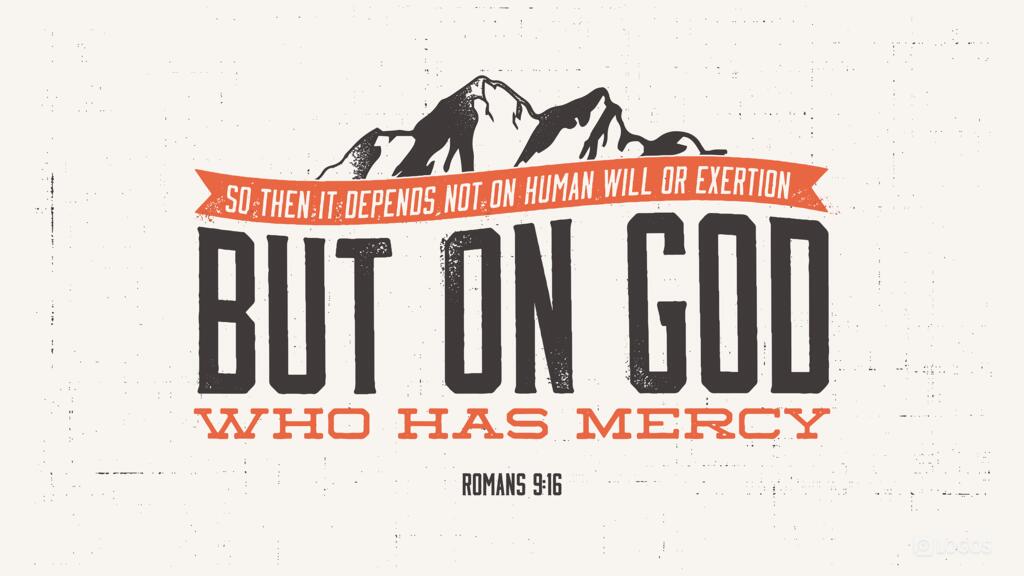
16It does not, therefore, depend on human desire or effort, but on God’s mercy.s 17For Scripture says to Pharaoh: “I raised you up for this very purpose, that I might display my power in you and that my name might be proclaimed in all the earth.”gt 18Therefore God has mercy on whom he wants to have mercy, and he hardens whom he wants to harden.u
19One of you will say to me:v “Then why does God still blame us?w For who is able to resist his will?”x 20But who are you, a human being, to talk back to God?y “Shall what is formed say to the one who formed it,z ‘Why did you make me like this?’ ”ha 21Does not the potter have the right to make out of the same lump of clay some pottery for special purposes and some for common use?b
22What if God, although choosing to show his wrath and make his power known, bore with great patiencec the objects of his wrath—prepared for destruction?d 23What if he did this to make the riches of his glorye known to the objects of his mercy, whom he prepared in advance for gloryf—24even us, whom he also called,g not only from the Jews but also from the Gentiles?h 25As he says in Hosea:
“I will call them ‘my people’ who are not my people;
and I will call her ‘my loved one’ who is not my loved one,”ii
26and,
“In the very place where it was said to them,
‘You are not my people,’
there they will be called ‘children of the living God.’ ”jj
27Isaiah cries out concerning Israel:
“Though the number of the Israelites be like the sand by the sea,k
only the remnant will be saved.l
28For the Lord will carry out
his sentence on earth with speed and finality.”km
29It is just as Isaiah said previously:
“Unless the Lord Almightyn
had left us descendants,
we would have become like Sodom,
we would have been like Gomorrah.”lo
Israel’s Unbelief
30What then shall we say?p That the Gentiles, who did not pursue righteousness, have obtained it, a righteousness that is by faith;q 31but the people of Israel, who pursued the law as the way of righteousness,r have not attained their goal.s 32Why not? Because they pursued it not by faith but as if it were by works. They stumbled over the stumbling stone.t 33As it is written:
“See, I lay in Zion a stone that causes people to stumble
and a rock that makes them fall,
and the one who believes in him will never be put to shame.”mu
Footnotes
- bGen. 21:12
- cGen. 18:10, 14
- dGen. 25:23
- eMal. 1:2, 3
- fExodus 33:19
- gExodus 9:16
- hIsaiah 29:16; 45:9
- iHosea 2:23
- jHosea 1:10
- kIsaiah 10:22, 23 (see Septuagint)
- lIsaiah 1:9
- mIsaiah 8:14; 28:16
Cross references
- gGe 21:12; Heb 11:18
- hSee Ro 8:14
- iSee Gal 3:16
- jGe 18:10, 14
- kGe 25:21
- lver 16
- mRo 8:28
- nGe 25:23
- oMal 1:2, 3
- pSee Ro 8:31
- q2 Ch 19:7
- rEx 33:19
- sEph 2:8; Tit 3:5
- tEx 9:16; 14:4; Ps 76:10
- uEx 4:21; 7:3; 14:4, 17; Dt 2:30; Jos 11:20; Ro 11:25
- vRo 11:19; 1 Co 15:35; Jas 2:18
- wRo 3:7
- x2 Sa 16:10; 2 Ch 20:6; Da 4:35
- yJob 1:22; 9:12; 40:2
- zIsa 64:8; Jer 18:6
- aIsa 29:16; 45:9; 10:15
- b2 Ti 2:20
- cSee Ro 2:4
- dPr 16:4
- eSee Ro 2:4
- fRo 8:30
- gSee Ro 8:28
- hSee Ro 3:29
- iHos 2:23; 1 Pe 2:10
- jHos 1:10; See Mt 16:16; See Ro 8:14
- kGe 22:17; Hos 1:10
- l2 Ki 19:4; Jer 44:14; 50:20; Joel 2:32; Ro 11:5
- mIsa 10:22, 23
- nJas 5:4
- oIsa 1:9; Ge 19:24–29; Dt 29:23; Isa 13:19; Jer 50:40
- pSee Ro 8:31
- qRo 1:17; 3:22; 4:5, 13; 10:6; Gal 2:16; Php 3:9; Heb 11:7
- rDt 6:25; Isa 51:1; Ro 10:2, 3; 11:7
- sGal 5:4
- t1 Pe 2:8
- uIsa 8:14; 28:16; Ro 10:11; 1 Pe 2:6, 8
Copyright 1973, 1978, 1984, 2011 Biblica, Inc.