Psalm 52:1–9
The NET BibleOther versions
English
- NET The NET Bible
- DARBY 1890 Darby Bible
- ASV American Standard Version
- AV 1873 The Cambridge Paragraph Bible of the Authorized English Version
- CSB Christian Standard Bible
- D-R Douay-Rheims Bible
- ESV English Standard Version
- GW GOD’S WORD Translation
- GNB Good News Translation
- HCSB The Holman Christian Standard Bible
- KJV 1900 King James Version
- LSB Legacy Standard Bible
- LEB The Lexham English Bible
- MSG The Message: The Bible in Contemporary Language
- NASB95 New American Standard Bible (1995)
- NCV New Century Version
- NIrV New International Reader’s Version (1998)
- NIV New International Version (2011)
- NKJV The New King James Version
- NLT New Living Translation
- NRSVue New Revised Standard Version: Updated Edition
- RSV The Revised Standard Version
- RSVCE The Revised Standard Version, Catholic Edition
- TNIV Today’s New International Version
- YLT Young’s Literal Translation
Arabic
Czech
French
German
Hebrew
Hungarian
Italian
Korean
Latin
Portuguese
Russian
Simplified Chinese
Spanish
Traditional Chinese
52:1Why do you boast about your evil plans,1 O powerful man?
God’s loyal love protects me all day long!2
52:2Your tongue carries out your destructive plans;3
it is as effective as a sharp razor, O deceiver.4
52:3You love evil more than good,
lies more than speaking the truth.5
(Selah)
52:4You love to use all the words that destroy,6
and the tongue that deceives.
52:5Yet7 God will make you a permanent heap of ruins.8
He will scoop you up9 and remove you from your home;10
he will uproot you from the land of the living.
(Selah)
52:6When the godly see this, they will be filled with awe,
and will mock the evildoer, saying:11
52:7“Look, here is the man who would not make12 God his protector!
He trusted in his great wealth
and was confident about his plans to destroy others.”13
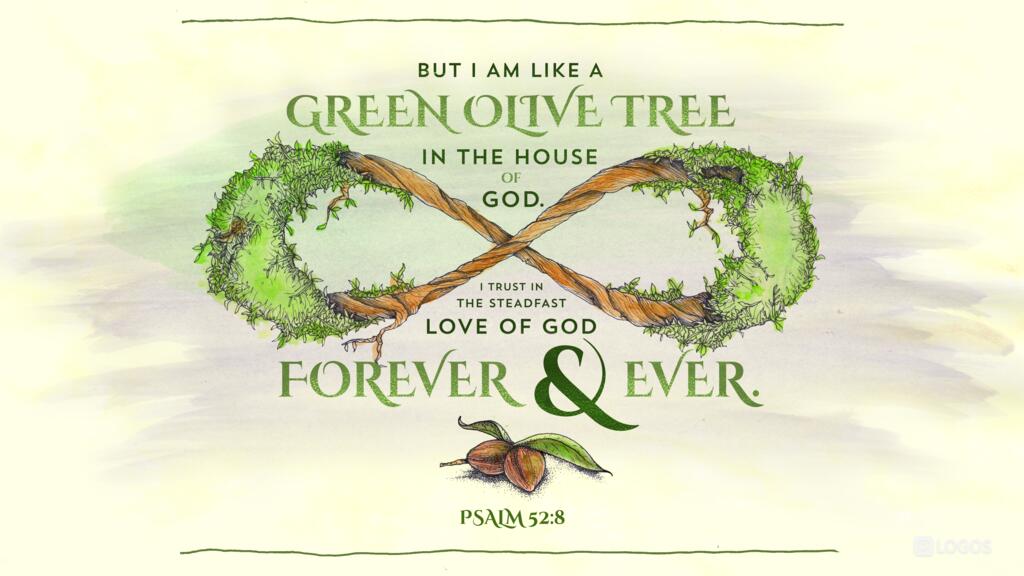
52:8But I14 am like a flourishing15 olive tree in the house of God;
I continually16 trust in God’s loyal love.
52:9I will continually17 thank you when18 you execute judgment;19
I will rely20 on you,21 for your loyal followers know you are good.22
Footnotes
- 1 Heb “Why do you boast in evil?”
- 2 Heb “the loyal love of God [is] all the day.” In this context, where the psalmist is threatened by his enemy, the point seems to be that the psalmist is protected by God’s loyal love at all times.
- 3 Heb “destruction your tongue devises.”
- 4 Heb “like a sharpened razor, doer of deceit.” The masculine participle עָשָׂה (’asah) is understood as a substantival vocative, addressed to the powerful man.
- 5 Or “deceit more than speaking what is right.”
- 6 Heb “you love all the words of swallowing.” Traditionally בַּלַּע (bala’) has been taken to mean “swallowing” in the sense of “devouring” or “destructive” (see 118 בָּלַע). III *בֶּלַע proposes a homonym here, meaning “confusion.” This would fit the immediate context nicely and provide a close parallel to the following line, which refers to deceptive words.
- 7 The adverb גַּם (gam, “also; even”) is translated here in an adversative sense (“yet”). It highlights the contrastive correspondence between the evildoer’s behavior and God’s response.
- 8 Heb “will tear you down forever.”
- 9 This rare verb (חָתָה, khatah) occurs only here and in Prov 6:27; 25:22; Isa 30:14.
- 10 Heb “from [your] tent.”
- 11 Heb “and the godly will see and will fear and at him will laugh.”
- 12 The imperfect verbal form here draws attention to the ongoing nature of the action. The evildoer customarily rejected God and trusted in his own abilities. Another option is to take the imperfect as generalizing, “[here is the man who] does not make.”
- 13 Heb “he was strong in his destruction.” “Destruction” must refer back to the destructive plans mentioned in v. 2. The verb (derived from the root עָזַז, ’azaz, “be strong”) as it stands is either an imperfect (if so, probably used in a customary sense) or a preterite (without vav [ו] consecutive). However the form should probably be emended to וַיָּעָז (vayya’az), a Qal preterite (with vav [ו] consecutive) from עָזַז. Note the preterite form without vav (ו) consecutive in the preceding line (וַיִּבְטַח, vayyivtakh, “and he trusted”). The prefixed vav (ו) was likely omitted by haplography (note the suffixed vav [ו] on the preceding עָשְׁרוֹ, ’oshro, “his wealth”).
- 14 The disjunctive construction (vav [ו] + subject) highlights the contrast between the evildoer’s destiny (vv. 5–7) and that of the godly psalmist’s security.
- 15 Or “luxuriant, green, leafy.”
- 16 Or, hyperbolically, “forever and ever.”
- 17 Or, hyperbolically, “forever.”
- 18 Or “for.”
- 19 Heb “you have acted.” The perfect verbal form (1) probably indicates a future perfect here. The psalmist promises to give thanks when the expected vindication has been accomplished. Other options include (2) a generalizing (“for you act”) or (3) rhetorical (“for you will act”) use.
- 20 Or “wait.”
- 21 Heb “your name.” God’s “name” refers here to his reputation and revealed character.
- 22 Heb “for it is good in front of your loyal followers.”
The NET Bible First Edition, Copyright 1996-2005 by Biblical Studies Press
In other versions
ESVEnglish Standard Version
Why do you boast of evil, O mighty man?
The steadfast love of God endures all the day.
Your tongue plots destruction,
like a sharp razor, you worker of deceit.
You love evil more than good,
and lying more than speaking what is right. Selah
You love all words that devour,
O deceitful tongue.
But God will break you down forever;
he will snatch and tear you from your tent;
he will uproot you from the land of the living. Selah
The righteous shall see and fear,
and shall laugh at him, saying,
“See the man who would not make
God his refuge,
but trusted in the abundance of his riches
and sought refuge in his own destruction!”
But I am like a green olive tree
in the house of God.
I trust in the steadfast love of God
forever and ever.
I will thank you forever,
because you have done it.
I will wait for your name, for it is good,
in the presence of the godly.
Copyright 2001 Crossway Bibles
NIVNew International Version (2011)
Why do you boast of evil, you mighty hero?
Why do you boast all day long,
you who are a disgrace in the eyes of God?
You who practice deceit,
your tongue plots destruction;
it is like a sharpened razor.
You love evil rather than good,
falsehood rather than speaking the truth.
You love every harmful word,
you deceitful tongue!
Surely God will bring you down to everlasting ruin:
He will snatch you up and pluck you from your tent;
he will uproot you from the land of the living.
The righteous will see and fear;
they will laugh at you, saying,
“Here now is the man
who did not make God his stronghold
but trusted in his great wealth
and grew strong by destroying others!”
But I am like an olive tree
flourishing in the house of God;
I trust in God’s unfailing love
for ever and ever.
For what you have done I will always praise you
in the presence of your faithful people.
And I will hope in your name,
for your name is good.
Copyright 1973, 1978, 1984, 2011 Biblica, Inc.
CSBChristian Standard Bible
Why boast about evil, you hero!
God’s faithful love is constant.
Like a sharpened razor,
your tongue devises destruction,
working treachery.
You love evil instead of good,
lying instead of speaking truthfully.
Selah
You love any words that destroy,
you treacherous tongue!
This is why God will bring you down forever.
He will take you, ripping you out of your tent;
he will uproot you from the land of the living.
Selah
The righteous will see and fear,
and they will derisively say about that hero,
“Here is the man
who would not make God his refuge,
but trusted in the abundance of his riches,
taking refuge in his destructive behavior.”
But I am like a flourishing olive tree
in the house of God;
I trust in God’s faithful love forever and ever.
I will praise you forever for what you have done.
In the presence of your faithful people,
I will put my hope in your name, for it is good.
Copyright 2017 Holman Bible Publishers
NLTNew Living Translation
Why do you boast about your crimes, great warrior?
Don’t you realize God’s justice continues forever?
All day long you plot destruction.
Your tongue cuts like a sharp razor;
you’re an expert at telling lies.
You love evil more than good
and lies more than truth.
Interlude
You love to destroy others with your words,
you liar!
But God will strike you down once and for all.
He will pull you from your home
and uproot you from the land of the living.
Interlude
The righteous will see it and be amazed.
They will laugh and say,
“Look what happens to mighty warriors
who do not trust in God.
They trust their wealth instead
and grow more and more bold in their wickedness.”
But I am like an olive tree, thriving in the house of God.
I will always trust in God’s unfailing love.
I will praise you forever, O God,
for what you have done.
I will trust in your good name
in the presence of your faithful people.
Holy Bible, New Living Translation, copyright © 1996, 2004, 2015 by Tyndale House Foundation. Used by permission of Tyndale House Publishers. All rights reserved.
LEBThe Lexham English Bible
Why do you boast about evil, O mighty man?
The loyal love of God endures continually.
Your tongue plans destruction,
like a sharp razor, working deceit.
You love evil more than good,
a lie more than speaking what is right. Selah
You love all devouring words,
O deceitful tongue,
but God will pull you down forever.
He will snatch you and tear you away from your tent,
and he will uproot you from the land of the living. Selah
And the righteous will see and fear,
and will laugh at him, saying,
“Look, the man who would not make God his refuge,
but he trusted in the greatness of his wealth;
he took refuge in his destructiveness.”
But I am like an olive tree flourishing
in the house of God.
I trust the loyal love of God forever and ever.
I will give thanks to you forever, because of what you have done,
and I will wait on your name, because it is good,
in the presence of your faithful ones.
Copyright 2012 Lexham Press
KJV 1900King James Version
Why boastest thou thyself in mischief, O mighty man?
The goodness of God endureth continually.
Thy tongue deviseth mischiefs;
Like a sharp rasor, working deceitfully.
Thou lovest evil more than good;
And lying rather than to speak righteousness. Selah.
Thou lovest all devouring words,
O thou deceitful tongue.
God shall likewise destroy thee for ever,
He shall take thee away, and pluck thee out of thy dwelling place,
And root thee out of the land of the living. Selah.
The righteous also shall see, and fear,
And shall laugh at him:
Lo, this is the man that made not God his strength;
But trusted in the abundance of his riches,
And strengthened himself in his wickedness.
But I am like a green olive tree in the house of God:
I trust in the mercy of God for ever and ever.
I will praise thee for ever, because thou hast done it:
And I will wait on thy name; for it is good before thy saints.
Public Domain