John 10:1–18
The Message: The Bible in Contemporary LanguageOther versions
English
- MSG The Message: The Bible in Contemporary Language
- DARBY 1890 Darby Bible
- ASV American Standard Version
- AV 1873 The Cambridge Paragraph Bible of the Authorized English Version
- CSB Christian Standard Bible
- D-R Douay-Rheims Bible
- ESV English Standard Version
- GW GOD’S WORD Translation
- GNB Good News Translation
- HCSB The Holman Christian Standard Bible
- KJV 1900 King James Version
- LSB Legacy Standard Bible
- LEB The Lexham English Bible
- NET The NET Bible
- NASB95 New American Standard Bible (1995)
- NCV New Century Version
- NIrV New International Reader’s Version (1998)
- NIV New International Version (2011)
- NKJV The New King James Version
- NLT New Living Translation
- NRSVue New Revised Standard Version: Updated Edition
- RSV The Revised Standard Version
- RSVCE The Revised Standard Version, Catholic Edition
- TNIV Today’s New International Version
- YLT Young’s Literal Translation
Arabic
Czech
French
German
Greek
Hungarian
Italian
Korean
Latin
Portuguese
Russian
Simplified Chinese
Spanish
Traditional Chinese
He Calls His Sheep by Name
1–510“Let me set this before you as plainly as I can. If a person climbs over or through the fence of a sheep pen instead of going through the gate, you know he’s up to no good—a sheep rustler! The shepherd walks right up to the gate. The gatekeeper opens the gate to him and the sheep recognize his voice. He calls his own sheep by name and leads them out. When he gets them all out, he leads them and they follow because they are familiar with his voice. They won’t follow a stranger’s voice but will scatter because they aren’t used to the sound of it.”
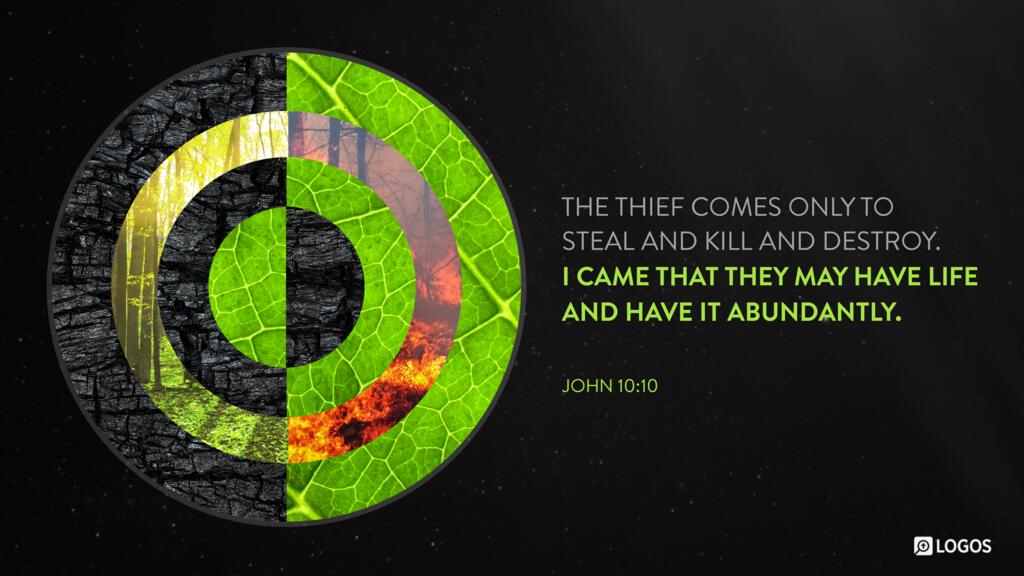
6–10Jesus told this simple story, but they had no idea what he was talking about. So he tried again. “I’ll be explicit, then. I am the Gate for the sheep. All those others are up to no good—sheep stealers, every one of them. But the sheep didn’t listen to them. I am the Gate. Anyone who goes through me will be cared for—will freely go in and out, and find pasture. A thief is only there to steal and kill and destroy. I came so they can have real and eternal life, more and better life than they ever dreamed of.
11–13“I am the Good Shepherd. The Good Shepherd puts the sheep before himself, sacrifices himself if necessary. A hired man is not a real shepherd. The sheep mean nothing to him. He sees a wolf come and runs for it, leaving the sheep to be ravaged and scattered by the wolf. He’s only in it for the money. The sheep don’t matter to him.
14–18“I am the Good Shepherd. I know my own sheep and my own sheep know me. In the same way, the Father knows me and I know the Father. I put the sheep before myself, sacrificing myself if necessary. You need to know that I have other sheep in addition to those in this pen. I need to gather and bring them, too. They’ll also recognize my voice. Then it will be one flock, one Shepherd. This is why the Father loves me: because I freely lay down my life. And so I am free to take it up again. No one takes it from me. I lay it down of my own free will. I have the right to lay it down; I also have the right to take it up again. I received this authority personally from my Father.”
Copyright 2005 Eugene H. Peterson.