Romans 8:11–23
The Lexham English BibleOther versions
English
- LEB The Lexham English Bible
- DARBY 1890 Darby Bible
- ASV American Standard Version
- AV 1873 The Cambridge Paragraph Bible of the Authorized English Version
- CSB Christian Standard Bible
- D-R Douay-Rheims Bible
- ESV English Standard Version
- GW GOD’S WORD Translation
- GNB Good News Translation
- HCSB The Holman Christian Standard Bible
- KJV 1900 King James Version
- LSB Legacy Standard Bible
- MSG The Message: The Bible in Contemporary Language
- NET The NET Bible
- NASB95 New American Standard Bible (1995)
- NCV New Century Version
- NIrV New International Reader’s Version (1998)
- NIV New International Version (2011)
- NKJV The New King James Version
- NLT New Living Translation
- NRSVue New Revised Standard Version: Updated Edition
- RSV The Revised Standard Version
- RSVCE The Revised Standard Version, Catholic Edition
- YLT Young’s Literal Translation
Arabic
Czech
French
German
Greek
Hungarian
Italian
Korean
Latin
Portuguese
Russian
Simplified Chinese
Spanish
Traditional Chinese
11And if the Spirit of the one who raised Jesus from the dead lives in you, the one who raised Christ Jesusb from the dead will also make alive your mortal bodies through his Spirit who lives in you.
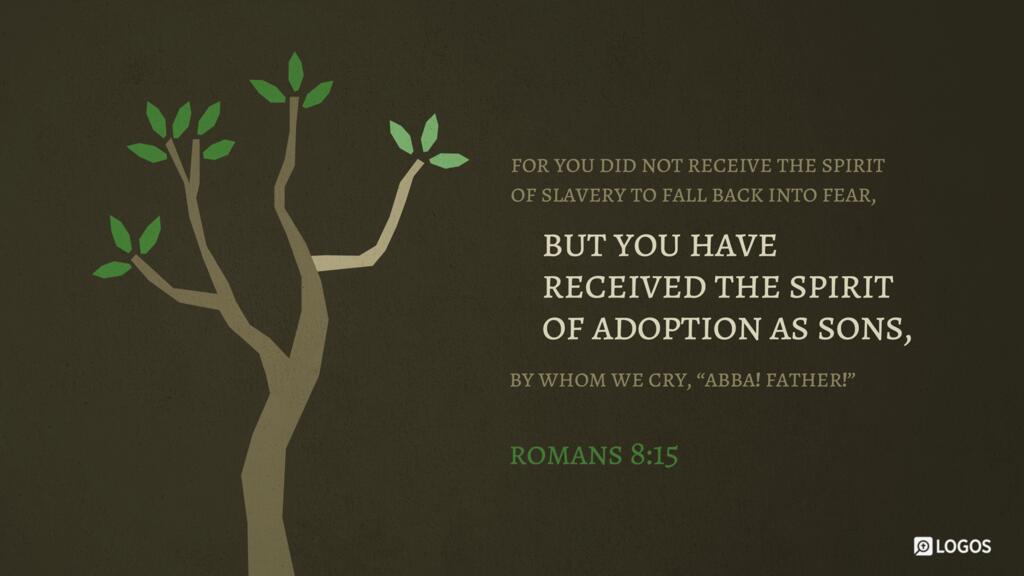
12So then, brothers, we are obligated not to the flesh, to live according to the flesh. 13For if you live according to the flesh, you are going to die, but if by the Spirit you put to death the deeds of the body, you will live. 14For all those who are led by the Spirit of God, these are sons of God. 15For you have not received a spirit of slavery leading to fear again, but you have received the Spirit of adoption, by whom we cry out, “Abba!c Father!” 16The Spirit himself confirms to our spirit that we are children of God, 17and if children, also heirs—heirs of God and fellow heirs with Christ, if indeed we suffer together with him so that we may also be glorified together with him.
The Glory that is to be Revealed
18For I consider that the sufferings of the present time are not worthy to be compared with the glory that is about to be revealed to us. 19For the eagerly expecting creation awaits eagerly the revelation of the sons of God. 20For the creation has been subjected to futility, not willingly, but because of the one who subjected it, in hope 21that the creation itself also will be set free from its servility to decay, into the glorious freedom of the children of God. 22For we know that the whole creation groans together and suffers agony together until now. 23Not only this, but we ourselves also, having the first fruits of the Spirit, even we ourselves groan within ourselves while we* await eagerly our adoption, the redemption of our body.
Footnotes
Copyright 2012 Lexham Press