Hebrews 9:1–22
The New King James VersionOther versions
English
- NKJV The New King James Version
- DARBY 1890 Darby Bible
- ASV American Standard Version
- AV 1873 The Cambridge Paragraph Bible of the Authorized English Version
- CSB Christian Standard Bible
- D-R Douay-Rheims Bible
- ESV English Standard Version
- GW GOD’S WORD Translation
- GNB Good News Translation
- HCSB The Holman Christian Standard Bible
- KJV 1900 King James Version
- LSB Legacy Standard Bible
- LEB The Lexham English Bible
- MSG The Message: The Bible in Contemporary Language
- NET The NET Bible
- NASB95 New American Standard Bible (1995)
- NCV New Century Version
- NIrV New International Reader’s Version (1998)
- NIV New International Version (2011)
- NLT New Living Translation
- NRSVue New Revised Standard Version: Updated Edition
- RSV The Revised Standard Version
- RSVCE The Revised Standard Version, Catholic Edition
- YLT Young’s Literal Translation
Arabic
Czech
French
German
Greek
Hungarian
Italian
Korean
Latin
Portuguese
Russian
Simplified Chinese
Spanish
Traditional Chinese
The Earthly Sanctuary
9Then indeed, even the first covenant had ordinances of divine service and athe earthly sanctuary. 2For a tabernacle was prepared: the first part, in which was the lampstand, the table, and the showbread, which is called the 1sanctuary; 3band behind the second veil, the part of the tabernacle which is called the Holiest of All, 4which had the cgolden censer and dthe ark of the covenant overlaid on all sides with gold, in which were ethe golden pot that had the manna, fAaron’s rod that budded, and gthe tablets of the covenant; 5and habove it were the cherubim of glory overshadowing the mercy seat. Of these things we cannot now speak in detail.
Limitations of the Earthly Service
6Now when these things had been thus prepared, ithe priests always went into the first part of the tabernacle, performing the services. 7But into the second part the high priest went alone jonce a year, not without blood, which he offered for khimself and for the people’s sins committed in ignorance; 8the Holy Spirit indicating this, that lthe way into the Holiest of All was not yet made manifest while the first tabernacle was still standing. 9It was symbolic for the present time in which both gifts and sacrifices are offered mwhich cannot make him who performed the service perfect in regard to the conscience—10concerned only with nfoods and drinks, ovarious 2washings, pand fleshly ordinances imposed until the time of reformation.
The Heavenly Sanctuary
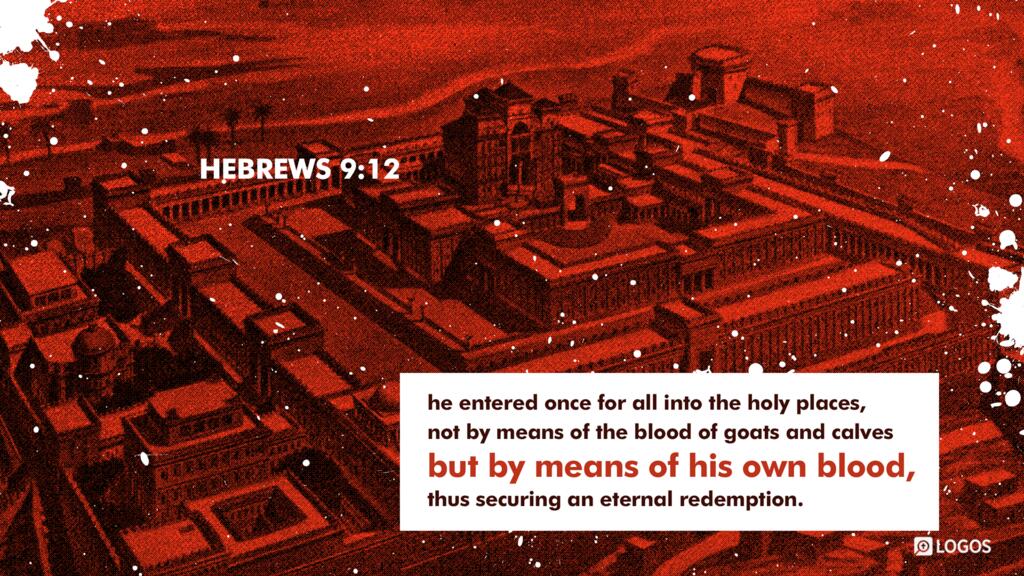
11But Christ came as High Priest of qthe good things 3to come, with the greater and more perfect tabernacle not made with hands, that is, not of this creation. 12Not rwith the blood of goats and calves, but swith His own blood He entered the Most Holy Place tonce for all, uhaving obtained eternal redemption. 13For if vthe blood of bulls and goats and wthe ashes of a heifer, sprinkling the unclean, 4sanctifies for the 5purifying of the flesh, 14how much more shall the blood of Christ, who through the eternal Spirit offered Himself without 6spot to God, xcleanse your conscience from ydead works zto serve the living God? 15And for this reason aHe is the Mediator of the new covenant, by means of death, for the redemption of the transgressions under the first covenant, that bthose who are called may receive the promise of the eternal inheritance.
The Mediator’s Death Necessary
16For where there is a testament, there must also of necessity be the death of the testator. 17For ca testament is in force after men are dead, since it has no power at all while the testator lives. 18dTherefore not even the first covenant was dedicated without blood. 19For when Moses had spoken every 7precept to all the people according to the law, ehe took the blood of calves and goats, fwith water, scarlet wool, and hyssop, and sprinkled both the book itself and all the people, 20saying, g“This is the hblood of the covenant which God has commanded you.” 21Then likewise ihe sprinkled with blood both the tabernacle and all the vessels of the ministry. 22And according to the law almost all things are 8purified with blood, and jwithout shedding of blood there is no 9remission.
Footnotes
Cross references
- aEx. 25:8; [Heb. 8:2; 9:11, 24]
- bEx. 26:31–35; 40:3
- cLev. 16:12
- dEx. 25:10
- eEx. 16:33
- fNum. 17:1–10
- gEx. 25:16; 34:29; Deut. 10:2–5
- hEx. 25:17, 20; Lev. 16:2; 1 Kin. 8:7
- iNum. 18:2–6; 28:3
- jEx. 30:10; Lev. 16:34; Heb. 10:3
- kHeb. 5:3
- l[John 14:6; Heb. 10:20]
- m[Gal. 3:21]; Heb. 7:19
- nLev. 11:2; Col. 2:16
- oNum. 19:7
- pEph. 2:15
- q[Eph. 1:3–11]; Heb. 10:1
- rHeb. 10:4
- sIs. 53:12; Eph. 1:7
- tZech. 3:9
- u[Dan. 9:24]
- vLev. 16:14, 15; Heb. 9:19; 10:4
- wNum. 19:2
- x1 John 1:7
- yHeb. 6:1
- zLuke 1:74
- aRom. 3:25
- bHeb. 3:1
- cGal. 3:15
- dEx. 24:6
- eEx. 24:5, 6
- fLev. 14:4, 7; Num. 19:6, 18
- g[Matt. 26:28]
- hEx. 24:3–8
- iEx. 29:12, 36
- jLev. 17:11
Copyright 1982 Thomas Nelson, Inc.