The Future of Bible Study Is Here.
 Loading…
A service of Logos Bible Software
8:title–9 Declarations of Yahweh’s majesty frame this hymn of praise (vv. 1, 9). In this praise psalm, the psalmist notes God’s special role for humanity in creation. He begins by proclaiming God’s glory (vv. 1–2), then examines the remarkable work of God and is amazed that God even gives thought to the people He created (vv. 3–4). The psalmist then praises God for glorifying and placing humanity above the rest of creation (vv. 5–8). |
 Types of Psalms Table
8:title music director See note on 4:title.
Gittith Also appears in the headings of Psa 81 and 84. It probably refers to an instrument or tune.
 Gittith HBD
Gittith EDB
A psalm of David See note on Ps 3:title.
8:1 Yahweh, our Lord The first Hebrew word used here, yhwh, is God’s personal covenant name to Israel, Yahweh (see note on Exod 3:14). The second Hebrew word, adon, conveys the sense of “master.” This statement declares that Yahweh is the master or ruler over the psalmist and God’s people.
 The Name Theology of the Old Testament
in all the earth Yahweh is the personal God of Israel, and the majesty of His name is known throughout the entire earth.
put your splendor above the heavens This Hebrew phrase used here could indicate that the heavens are the place where God in His glory dwells or that the heavens celebrate God’s glory. It seems that both options are appear elsewhere (Pss 19:1; 113:4).
8:2 children and infants The Hebrew words used here, olel and yoneq, both typically refer to nursing infants (1 Kgs 3:21), but can indicate children up to three years of age.
you have founded strength The psalmist contrasts the weakness of infants with the enemies of God. He declares that even the words of the most helpless about God are used by God to defend His people.
8:3 your heavens Psalms often express praise for God as the Creator (Pss 33:6–7; 104:1–30). These praises are meant to inspire awe and respect at Yahweh’s sovereign power (33:8–9).
your fingers The finger of God symbolizes His power: Pharaoh’s magicians attributed the third plague to the finger of God (Exod 8:19); the finger of God wrote the law on stone tablets (Exod 31:18; Deut 9:10); and in the nt, Jesus cast out demons by the finger of God (Luke 11:20).
Finger ISBE
8:4 that you think of him The psalmist marvels that God—the supreme Creator—involves Himself with humanity.
8:5 heavenly beings The Hebrew word used here, elohim, often refers to God, but it can also refer to other spiritual beings, such as the gods or angels (Psa 82:1, 6).
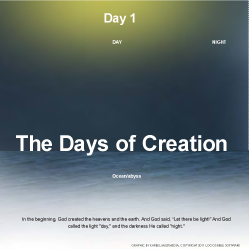
8:6–8 The psalmist expounds on Yahweh’s special role for humanity. Not only does Yahweh give special attention to humanity, He also gives humanity an elevated position: Humankind is put in charge of God’s creation (see Gen 1:28 and note). The psalmist is likely recalling the creation account from Gen 1:26–30 as he lists the same categories of animals—land, air, and sea. |
8:6 all things you have placed under his feet Paul applies this phrase to Christ in the nt (1 Cor 15:27–28). The author of Hebrews also quotes this psalm, applying it to Jesus (Heb 2:5–9). Both passages declare Christ’s ultimate lordship and reign, which will one day be fully realized in the world.
1 Corinthians 15:27 CNTUOT
Hebrews 2:6–8a CNTUOT
8:9 Yahweh, our Lord The psalm ends with the same praise as it began. See note on Ps 8:1.

|
About Faithlife Study BibleFaithlife Study Bible (FSB) is your guide to the ancient world of the Old and New Testaments, with study notes and articles that draw from a wide range of academic research. FSB helps you learn how to think about interpretation methods and issues so that you can gain a deeper understanding of the text. |
| Copyright |
Copyright 2012 Logos Bible Software. |
| Support Info | fsb |
Table of Contents