Luke 18:9–14
The NET BibleOther versions
English
- NET The NET Bible
- DARBY 1890 Darby Bible
- ASV American Standard Version
- AV 1873 The Cambridge Paragraph Bible of the Authorized English Version
- CSB Christian Standard Bible
- D-R Douay-Rheims Bible
- ESV English Standard Version
- GW GOD’S WORD Translation
- GNB Good News Translation
- HCSB The Holman Christian Standard Bible
- KJV 1900 King James Version
- LSB Legacy Standard Bible
- LEB The Lexham English Bible
- MSG The Message: The Bible in Contemporary Language
- NASB95 New American Standard Bible (1995)
- NCV New Century Version
- NIrV New International Reader’s Version (1998)
- NIV New International Version (2011)
- NKJV The New King James Version
- NLT New Living Translation
- NRSVue New Revised Standard Version: Updated Edition
- RSV The Revised Standard Version
- RSVCE The Revised Standard Version, Catholic Edition
- YLT Young’s Literal Translation
Arabic
Czech
French
German
Greek
Hungarian
Italian
Korean
Latin
Portuguese
Russian
Simplified Chinese
Spanish
Traditional Chinese
The Parable of the Pharisee and Tax Collector
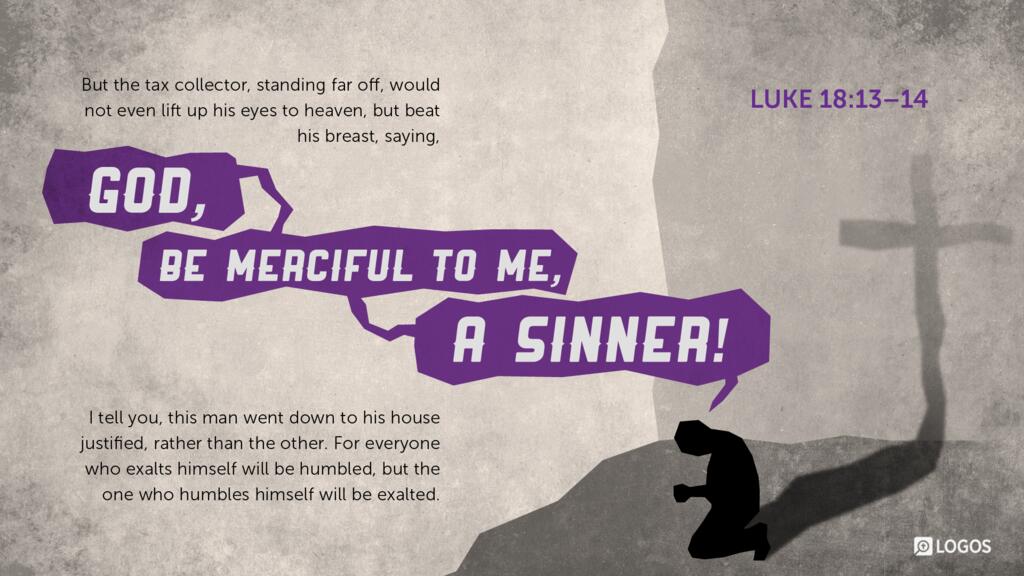
18:9Jesus24 also told this parable to some who were confident that they were righteous and looked down25 on everyone else. 18:10“Two men went up26 to the temple to pray, one a Pharisee27 and the other a tax collector.2818:11The Pharisee stood and prayed about himself like this:29 ‘God, I thank30 you that I am not like other people:31 extortionists,32 unrighteous people,33 adulterers—or even like this tax collector.3418:12I fast twice35 a week; I give a tenth36 of everything I get.’ 18:13The tax collector, however, stood37 far off and would not even look up38 to heaven, but beat his breast and said, ‘God, be merciful39 to me, sinner that I am!’4018:14I tell you that this man went down to his home justified41 rather than the Pharisee.42 For everyone who exalts43 himself will be humbled, but he who humbles himself will be exalted.”
Footnotes
- 24 Grk “He”; the referent has been specified in the translation for clarity.
- 25 Grk “and despised.” This is a second parable with an explanatory introduction.
- 26 The temple is on a hill in Jerusalem, so one would go up to enter its precincts.
- 27 See the note on Pharisees in .
- 28 See the note on tax collectors in .
- 29 Or “stood by himself and prayed like this.” The prepositional phrase πρὸς ἑαυτόν (pros eauton, “to/about himself”) could go with either the aorist participle σταθείς (statheis, “stood”) or with the imperfect verb προσηύχετο (prosēucheto, “he prayed”). If taken with the participle, then the meaning would seem at first glance to be: “stood ‘by himself’,” or “stood ‘alone’.” Now it is true that πρός can mean “by” or “with” when used with intransitive verbs such as ἵστημι (histēmi, “I stand”; cf. πρός 2.a), but πρὸς ἑαυτόν together never means “by himself” or “alone” in biblical Greek. On the other hand, if πρὸς ἑαυτόν is taken with the verb, then two different nuances emerge, both of which highlight in different ways the principal point Jesus seems to be making about the arrogance of this religious leader: (1) “prayed to himself,” but not necessarily silently, or (2) “prayed about himself,” with the connotation that he prayed out loud, for all to hear. Since his prayer is really a review of his moral résumé, directed both at advertising his own righteousness and exposing the perversion of the tax collector, whom he actually mentions in his prayer, the latter option seems preferable. If this is the case, then the Pharisee’s mention of God is really nothing more than a formality.
- 30 The Pharisee’s prayer started out as a thanksgiving psalm to God, but the praise ended up not being about God.
- 31 Here the plural Greek term ἀνθρώπων (anthrōpōn) is used as a generic and can refer to both men and women (, , “people”; , “everyone else”; , “the rest of humanity”).
- 32 Or “swindlers” ( ἅρπαξ 2); see also Isa 10:2; Josephus, 6.3.4 [6.203].
- 33 A general category for “sinners” (1 Cor 6:9; Lev 19:3).
- 34 Note what the Pharisee assumes about the righteousness of this tax collector by grouping him with extortionists, unrighteous people, and adulterers.
- 35 The law only required fasting on the Day of Atonement. Such voluntary fasting as this practiced twice a week by the Pharisee normally took place on Monday and Thursday.
- 36 Or “I tithe.”
- 37 Grk “standing”; the Greek participle has been translated as a finite verb.
- 38 Grk “even lift up his eyes” (an idiom).
- 39 The prayer is a humble call for forgiveness. The term for mercy (ἱλάσκομαι, hilaskomai) is associated with the concept of a request for atonement ( 1; Ps 51:1, 3; 25:11; 34:6, 18).
- 40 Grk “the sinner.” The tax collector views himself not just as any sinner but as the worst of all sinners. See .
- 41 The prayer that was heard and honored was the one given with humility; in a surprising reversal it was the tax collector who went down to his home justified.
- 42 Grk “the other”; the referent (the Pharisee, v. 10) has been specified in the translation for clarity.
- 43 Everyone who exalts himself. See Luke 14:11. Jesus often called for humility and condemned those who sought honor.
The NET Bible First Edition, Copyright 1996-2005 by Biblical Studies Press
In other versions
ESVEnglish Standard Version
He also told this parable to some who trusted in themselves that they were righteous, and treated others with contempt: “Two men went up into the temple to pray, one a Pharisee and the other a tax collector. The Pharisee, standing by himself, prayed thus: ‘God, I thank you that I am not like other men, extortioners, unjust, adulterers, or even like this tax collector. I fast twice a week; I give tithes of all that I get.’ But the tax collector, standing far off, would not even lift up his eyes to heaven, but beat his breast, saying, ‘God, be merciful to me, a sinner!’ I tell you, this man went down to his house justified, rather than the other. For everyone who exalts himself will be humbled, but the one who humbles himself will be exalted.”
Copyright 2001 Crossway Bibles
NIVNew International Version (2011)
To some who were confident of their own righteousness and looked down on everyone else, Jesus told this parable: “Two men went up to the temple to pray, one a Pharisee and the other a tax collector. The Pharisee stood by himself and prayed: ‘God, I thank you that I am not like other people—robbers, evildoers, adulterers—or even like this tax collector. I fast twice a week and give a tenth of all I get.’
“But the tax collector stood at a distance. He would not even look up to heaven, but beat his breast and said, ‘God, have mercy on me, a sinner.’
“I tell you that this man, rather than the other, went home justified before God. For all those who exalt themselves will be humbled, and those who humble themselves will be exalted.”
Copyright 1973, 1978, 1984, 2011 Biblica, Inc.
CSBChristian Standard Bible
He also told this parable to some who trusted in themselves that they were righteous and looked down on everyone else: “Two men went up to the temple to pray, one a Pharisee and the other a tax collector. The Pharisee was standing and praying like this about himself: ‘God, I thank you that I’m not like other people—greedy, unrighteous, adulterers, or even like this tax collector. I fast twice a week; I give a tenth of everything I get.’
“But the tax collector, standing far off, would not even raise his eyes to heaven but kept striking his chest and saying, ‘God, have mercy on me, a sinner!’ I tell you, this one went down to his house justified rather than the other, because everyone who exalts himself will be humbled, but the one who humbles himself will be exalted.”
Copyright 2017 Holman Bible Publishers
NLTNew Living Translation
Then Jesus told this story to some who had great confidence in their own righteousness and scorned everyone else: “Two men went to the Temple to pray. One was a Pharisee, and the other was a despised tax collector. The Pharisee stood by himself and prayed this prayer: ‘I thank you, God, that I am not like other people—cheaters, sinners, adulterers. I’m certainly not like that tax collector! I fast twice a week, and I give you a tenth of my income.’
“But the tax collector stood at a distance and dared not even lift his eyes to heaven as he prayed. Instead, he beat his chest in sorrow, saying, ‘O God, be merciful to me, for I am a sinner.’ I tell you, this sinner, not the Pharisee, returned home justified before God. For those who exalt themselves will be humbled, and those who humble themselves will be exalted.”
Holy Bible, New Living Translation, copyright © 1996, 2004, 2015 by Tyndale House Foundation. Used by permission of Tyndale House Publishers. All rights reserved.
LEBThe Lexham English Bible
And he also told this parable to some who trusted in themselves that they were righteous, and looked down on everyone else: “Two men went up to the temple to pray, one a Pharisee and the other a tax collector. The Pharisee stood and prayed these things with reference to himself: ‘God, I give thanks to you that I am not like other people—swindlers, unrighteous people, adulterers, or even like this tax collector! I fast twice a week; I give a tenth of all that I get.’ But the tax collector, standing far away, did not want even to raise his eyes to heaven, but was beating his breast, saying, ‘God, be merciful to me, a sinner!’ I tell you, this man went down to his house justified rather than that one! For everyone who exalts himself will be humbled, but the one who humbles himself will be exalted.”
Copyright 2012 Lexham Press
KJV 1900King James Version
And he spake this parable unto certain which trusted in themselves that they were righteous, and despised others: Two men went up into the temple to pray; the one a Pharisee, and the other a publican. The Pharisee stood and prayed thus with himself, God, I thank thee, that I am not as other men are, extortioners, unjust, adulterers, or even as this publican. I fast twice in the week, I give tithes of all that I possess. And the publican, standing afar off, would not lift up so much as his eyes unto heaven, but smote upon his breast, saying, God be merciful to me a sinner. I tell you, this man went down to his house justified rather than the other: for every one that exalteth himself shall be abased; and he that humbleth himself shall be exalted.
Public Domain