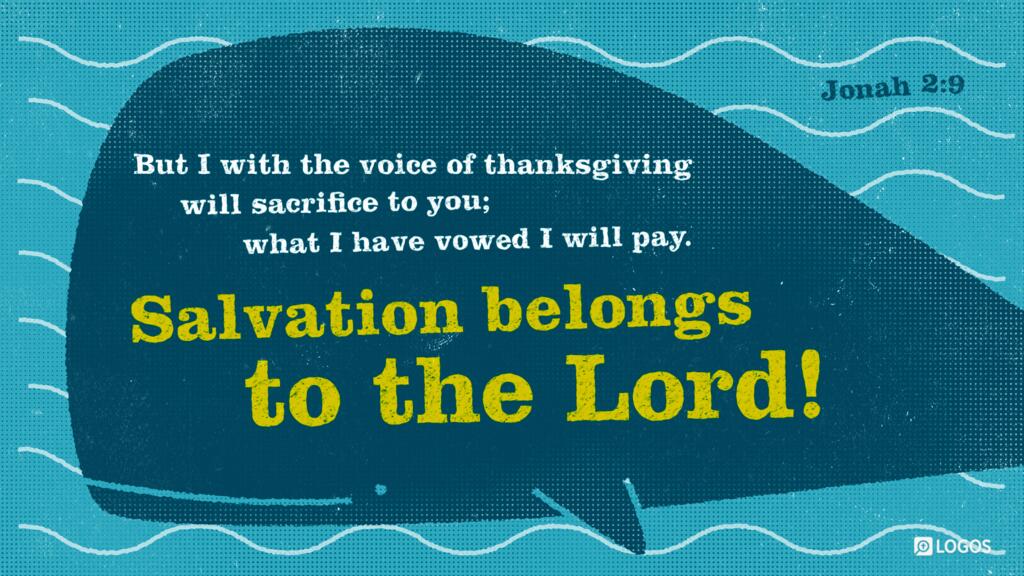
Jonah 2:9
The NET BibleOther versions
English
- NET The NET Bible
- DARBY 1890 Darby Bible
- ASV American Standard Version
- AV 1873 The Cambridge Paragraph Bible of the Authorized English Version
- CSB Christian Standard Bible
- D-R Douay-Rheims Bible
- ESV English Standard Version
- GW GOD’S WORD Translation
- GNB Good News Translation
- HCSB The Holman Christian Standard Bible
- KJV 1900 King James Version
- LSB Legacy Standard Bible
- LEB The Lexham English Bible
- MSG The Message: The Bible in Contemporary Language
- NASB95 New American Standard Bible (1995)
- NCV New Century Version
- NIrV New International Reader’s Version (1998)
- NIV New International Version (2011)
- NKJV The New King James Version
- NLT New Living Translation
- NRSVue New Revised Standard Version: Updated Edition
- RSV The Revised Standard Version
- RSVCE The Revised Standard Version, Catholic Edition
- TNIV Today’s New International Version
- YLT Young’s Literal Translation
Arabic
Czech
French
German
Hebrew
Hungarian
Italian
Korean
Latin
Portuguese
Russian
Simplified Chinese
Spanish
Traditional Chinese
2:9But as for me, I promise to offer a sacrifice to you with a public declaration38 of praise;39
Footnotes
- 38 Heb “voice” or “sound.”
- 39 The reads בְּקוֹל תּוֹדָה (béqol todah, “with a voice of thanksgiving”). Some of Jonah read “with the sound of hymns of thanksgiving” here in 2:9—the longer reading probably reflects an editorial gloss, explaining תּוֹדָה (“thanksgiving”) as “hymns of thanksgiving.” Heb “voice/sound of thanksgiving.” The genitive תּוֹדָה (todah, “thanksgiving”) specifies the kind of public statement that will accompany the sacrifice. The construct noun קוֹל (qol, “voice, sound”) functions as a metonymy of cause for effect, referring to the content of what the voice/sound produces: hymns of praise or declarative praise testimony.
- 40 The verbs translated “I will sacrifice” and “I will pay” are Hebrew cohortatives, expressing Jonah’s resolve and firm intention.
- 41 Heb “what I have vowed I will pay.” Jonah promises to offer a sacrifice and publicly announce why he is thankful. For similar pledges, see Pss 22:25–26; 50:14–15; 56:12; 69:29–33; 71:14–16, 22–24; 86:12–13; 116:12–19.
- 42 Or “deliverance” (, ).
- 43 Or “comes from the Lord.” For similar uses of the preposition lamed (לְ, lé) to convey a sort of ownership in which the owner does or may by right do something, see Lev 25:48; Deut 1:17; 1 Sam 17:47; Jer 32:7–8.
The NET Bible First Edition, Copyright 1996-2005 by Biblical Studies Press
In other versions
ESVEnglish Standard Version
But I with the voice of thanksgiving
will sacrifice to you;
what I have vowed I will pay.
Salvation belongs to the Lord!”
Copyright 2001 Crossway Bibles
NIVNew International Version (2011)
But I, with shouts of grateful praise,
will sacrifice to you.
What I have vowed I will make good.
I will say, ‘Salvation comes from the Lord.’ ”
Copyright 1973, 1978, 1984, 2011 Biblica, Inc.
CSBChristian Standard Bible
but as for me, I will sacrifice to you
with a voice of thanksgiving.
I will fulfill what I have vowed.
Salvation belongs to the Lord.
Copyright 2017 Holman Bible Publishers
NLTNew Living Translation
But I will offer sacrifices to you with songs of praise,
and I will fulfill all my vows.
For my salvation comes from the Lord alone.”
Holy Bible, New Living Translation, copyright © 1996, 2004, 2015 by Tyndale House Foundation. Used by permission of Tyndale House Publishers. All rights reserved.
LEBThe Lexham English Bible
But I, with a voice of thanksgiving,
will sacrifice to you;
I will fulfill what I have vowed.
Deliverance belongs to Yahweh!”
Copyright 2012 Lexham Press
KJV 1900King James Version
But I will sacrifice unto thee with the voice of thanksgiving;
I will pay that that I have vowed.
Salvation is of the Lord.
Public Domain