Exodus 3:14–16
The NET BibleOther versions
English
- NET The NET Bible
- DARBY 1890 Darby Bible
- ASV American Standard Version
- AV 1873 The Cambridge Paragraph Bible of the Authorized English Version
- CSB Christian Standard Bible
- D-R Douay-Rheims Bible
- ESV English Standard Version
- GW GOD’S WORD Translation
- GNB Good News Translation
- HCSB The Holman Christian Standard Bible
- KJV 1900 King James Version
- LSB Legacy Standard Bible
- LEB The Lexham English Bible
- MSG The Message: The Bible in Contemporary Language
- NASB95 New American Standard Bible (1995)
- NCV New Century Version
- NIrV New International Reader’s Version (1998)
- NIV New International Version (2011)
- NKJV The New King James Version
- NLT New Living Translation
- NRSVue New Revised Standard Version: Updated Edition
- RSV The Revised Standard Version
- RSVCE The Revised Standard Version, Catholic Edition
- TNIV Today’s New International Version
- YLT Young’s Literal Translation
Arabic
Czech
French
German
Hebrew
Hungarian
Italian
Korean
Latin
Portuguese
Russian
Simplified Chinese
Spanish
Traditional Chinese
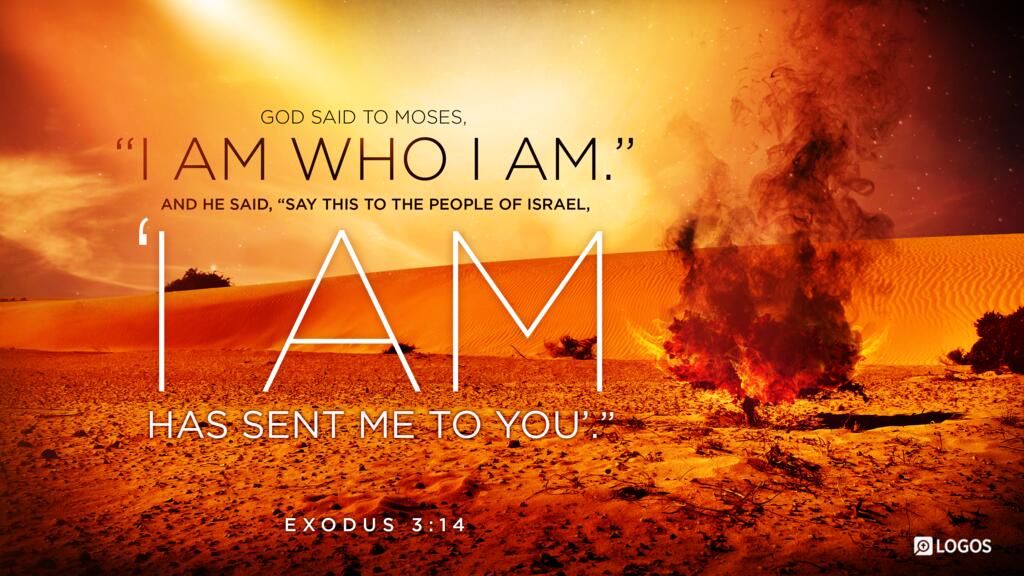
3:14God said to Moses, “I am that I am.”47 And he said, “You must say this48 to the Israelites, ‘I am has sent me to you.’ ” 3:15God also said to Moses, “You must say this to the Israelites, ‘The Lord49—the God of your fathers, the God of Abraham, the God of Isaac, and the God of Jacob—has sent me to you. This is my name50 forever, and this is my memorial from generation to generation.’51
3:16“Go and bring together52 the elders of Israel and tell them, ‘The Lord, the God of your fathers,53 appeared54 to me—the God of Abraham, Isaac, and Jacob—saying, “I have attended carefully55 to you and to what has been done56 to you in Egypt,
Footnotes
- 47 The verb form used here is אֶהְיֶה (’ehyeh), the Qal imperfect, first person common singular, of the verb הָיָה (haya, “to be”). It forms an excellent paronomasia with the name. So when God used the verb to express his name, he used this form saying, “I am.” When his people refer to him as Yahweh, which is the third person masculine singular form of the same verb, they say “he is.” Some commentators argue for a future tense translation, “I will be who I will be,” because the verb has an active quality about it, and the Israelites lived in the light of the promises for the future. They argue that “I am” would be of little help to the Israelites in bondage. But a translation of “I will be” does not effectively do much more except restrict it to the future. The idea of the verb would certainly indicate that God is not bound by time, and while he is present (“I am”) he will always be present, even in the future, and so “I am” would embrace that as well (see also Ruth 2:13; Ps 50:21; Hos 1:9). The Greek translation of the OT used a participle to capture the idea, and several times in the Gospels Jesus used the powerful “I am” with this significance (e.g., John 8:58). The point is that Yahweh is sovereignly independent of all creation and that his presence guarantees the fulfillment of the covenant (cf. Isa 41:4; 42:6, 8; 43:10–11; 44:6; 45:5–7). Others argue for a causative Hiphil translation of “I will cause to be,” but nowhere in the Bible does this verb appear in Hiphil or Piel. A good summary of the views can be found in G. H. Parke-Taylor, Yahweh, the Divine Name in the Bible. See among the many articles: B. Beitzel, “Exodus 3:14 and the Divine Name: A Case of Biblical Paronomasia,” 1 (1980): ; C. D. Isbell, “The Divine Name ehyeh as a Symbol of Presence in Israelite Tradition,” 2 (1978): 101–18; J. G. Janzen, “What’s in a Name? Yahweh in Exodus 3 and the Wider Biblical Context,” 33 (1979): 227–39; J. R. Lundbom, “God’s Use of the Idem per Idem to Terminate Debate,” 71 (1978): 193–201; A. R. Millard, “Yw and Yhw Names,” 30 (1980): 208–12; and R. Youngblood, “A New Occurrence of the Divine Name ‘I AM,’ ” 15 (1972): .
- 48 Or “Thus you shall say” (also in the following verse). The word “must” in the translation conveys the instructional and imperatival force of the statement.
- 49 Heb “Yahweh,” traditionally rendered “the Lord.” First the verb “I AM” was used (v. 14) in place of the name to indicate its meaning and to remind Moses of God’s promise to be with him (v. 12). Now in v. 15 the actual name is used for clear identification: “Yahweh … has sent me.” This is the name that the patriarchs invoked and proclaimed in the land of Canaan.
- 50 The words “name” and “memorial” are at the heart of the two parallel clauses that form a poetic pair. The Hebrew word “remembrance” is a poetical synonym for “name” (cf. Job 18:17; Ps 135:13; Prov 10:7; Isa 26:8) and conveys the idea that the nature or character of the person is to be remembered and praised (S. R. Driver, Exodus, ).
- 51 The repetition of “generation” in this expression serves as a periphrasis for the superlative: “to the remotest generation” ( §133.l).
- 52 The form is the perfect tense with the sequential vav (ו) linking the nuance to the imperative that precedes it. Since the imperative calls for immediate action, this form either carries the same emphasis, or instructs action that immediately follows it. This applies likewise to “say,” which follows.
- 53 “The God of your fathers” is in simple apposition to the name “the Lord” (Heb “Yahweh”) as a recognizable identification. If the holy name were a new one to the Israelites, an explanation would have been needed. Meanwhile, the title “God of my/your/our father(s)” was widely used in the ancient Near East and also in Genesis (26:24; 28:13; 31:5, 29; 46:1, 3; N. M. Sarna, Exodus [], ).
- 54 The form is the Niphal perfect of the verb “to see.” See the note on “appeared” in .
- 55 The verb פָּקַד (paqad) has traditionally been rendered “to visit.” This only partially communicates the point of the word. When God “visited” someone, it meant that he intervened in their lives to change their circumstances or their destiny. When he visited the Amalekites, he destroyed them (1 Sam 15:2). When he visited Sarah, he provided the long awaited child (Gen 21:1). It refers to God’s active involvement in human affairs for blessing or for cursing. Here it would mean that God had begun to act to deliver the Israelites from bondage and give them the blessings of the covenant. The form is joined here with the infinitive absolute to underscore the certainty—“I have indeed visited you.” Some translate it “remember”; others say “watch over.” These do not capture the idea of intervention to bless, and often with the idea of vengeance or judgment on the oppressors. If God were to visit what the Egyptians did, he would stop the oppression and also bring retribution for it. The nuance of the perfect tense could be a perfect of resolve (“I have decided to visit”), or an instantaneous perfect (“I hereby visit”), or a prophetic perfect (“I have visited” = “I will visit”). The infinitive absolute reinforces the statement (so “carefully”), the rendering “attended to” attempts to convey the ideas of personal presence, mental awareness, and action, as when a nurse or physician “attends” a patient. The same word was used in the same kind of construction at the end of Genesis (50:24) when Joseph promised, “God will surely visit you” (but there the imperfect tense with the infinitive absolute). Here is another link to the patriarchal narratives. This work of Moses would be interpreted as a fulfillment of Joseph’s prophecy.
- 56 The second object for the verb is the passive participle הֶעָשׂוּי (he’asuy). To say that God has visited the oppression (or “attended to” it) affirms that God has decided to judge the oppressing people as he blesses Israel.
The NET Bible First Edition, Copyright 1996-2005 by Biblical Studies Press
In other versions
ESVEnglish Standard Version
God said to Moses, “I am who I am.” And he said, “Say this to the people of Israel: ‘I am has sent me to you.’ ” God also said to Moses, “Say this to the people of Israel: ‘The Lord, the God of your fathers, the God of Abraham, the God of Isaac, and the God of Jacob, has sent me to you.’ This is my name forever, and thus I am to be remembered throughout all generations. Go and gather the elders of Israel together and say to them, ‘The Lord, the God of your fathers, the God of Abraham, of Isaac, and of Jacob, has appeared to me, saying, “I have observed you and what has been done to you in Egypt,
Copyright 2001 Crossway Bibles
NIVNew International Version (2011)
God said to Moses, “I am who I am. This is what you are to say to the Israelites: ‘I am has sent me to you.’ ”
God also said to Moses, “Say to the Israelites, ‘The Lord, the God of your fathers—the God of Abraham, the God of Isaac and the God of Jacob—has sent me to you.’
“This is my name forever,
the name you shall call me
from generation to generation.
“Go, assemble the elders of Israel and say to them, ‘The Lord, the God of your fathers—the God of Abraham, Isaac and Jacob—appeared to me and said: I have watched over you and have seen what has been done to you in Egypt.
Copyright 1973, 1978, 1984, 2011 Biblica, Inc.
CSBChristian Standard Bible
God replied to Moses, “I AM WHO I AM. This is what you are to say to the Israelites: I AM has sent me to you.” God also said to Moses, “Say this to the Israelites: The Lord, the God of your ancestors, the God of Abraham, the God of Isaac, and the God of Jacob, has sent me to you. This is my name forever; this is how I am to be remembered in every generation.
“Go and assemble the elders of Israel and say to them: The Lord, the God of your ancestors, the God of Abraham, Isaac, and Jacob, has appeared to me and said: I have paid close attention to you and to what has been done to you in Egypt.
Copyright 2017 Holman Bible Publishers
NLTNew Living Translation
God replied to Moses, “I Am Who I Am. Say this to the people of Israel: I Am has sent me to you.” God also said to Moses, “Say this to the people of Israel: Yahweh, the God of your ancestors—the God of Abraham, the God of Isaac, and the God of Jacob—has sent me to you.
This is my eternal name,
my name to remember for all generations.
“Now go and call together all the elders of Israel. Tell them, ‘Yahweh, the God of your ancestors—the God of Abraham, Isaac, and Jacob—has appeared to me. He told me, “I have been watching closely, and I see how the Egyptians are treating you.
Holy Bible, New Living Translation, copyright © 1996, 2004, 2015 by Tyndale House Foundation. Used by permission of Tyndale House Publishers. All rights reserved.
LEBThe Lexham English Bible
And God said to Moses, “I am that I am.” And he said, “So you must say to the Israelites, ‘I am sent me to you.’ ”
And God said again to Moses, “So you must say to the Israelites, ‘Yahweh, the God of your ancestors, the God of Abraham, the God of Isaac, and the God of Jacob, has sent me to you. This is my name forever, and this is my remembrance from generation to generation.’ Go and gather the elders of Israel and say to them, ‘Yahweh, the God of your ancestors, appeared to me, the God of Abraham, Isaac, and Jacob, saying, “I have carefully attended to you and what has been done to you in Egypt.”
Copyright 2012 Lexham Press
KJV 1900King James Version
And God said unto Moses, I AM THAT I AM: and he said, Thus shalt thou say unto the children of Israel, I AM hath sent me unto you. And God said moreover unto Moses, Thus shalt thou say unto the children of Israel, The Lord God of your fathers, the God of Abraham, the God of Isaac, and the God of Jacob, hath sent me unto you: this is my name for ever, and this is my memorial unto all generations. Go, and gather the elders of Israel together, and say unto them, The Lord God of your fathers, the God of Abraham, of Isaac, and of Jacob, appeared unto me, saying, I have surely visited you, and seen that which is done to you in Egypt:
Public Domain