Acts 17:1–16
The NET BibleOther versions
English
- NET The NET Bible
- DARBY 1890 Darby Bible
- ASV American Standard Version
- AV 1873 The Cambridge Paragraph Bible of the Authorized English Version
- CSB Christian Standard Bible
- D-R Douay-Rheims Bible
- ESV English Standard Version
- GW GOD’S WORD Translation
- GNB Good News Translation
- HCSB The Holman Christian Standard Bible
- KJV 1900 King James Version
- LSB Legacy Standard Bible
- LEB The Lexham English Bible
- MSG The Message: The Bible in Contemporary Language
- NASB95 New American Standard Bible (1995)
- NCV New Century Version
- NIrV New International Reader’s Version (1998)
- NIV New International Version (2011)
- NKJV The New King James Version
- NLT New Living Translation
- NRSVue New Revised Standard Version: Updated Edition
- RSV The Revised Standard Version
- RSVCE The Revised Standard Version, Catholic Edition
- TNIV Today’s New International Version
- YLT Young’s Literal Translation
Arabic
Czech
French
German
Greek
Hungarian
Italian
Korean
Latin
Portuguese
Russian
Simplified Chinese
Spanish
Traditional Chinese
Paul and Silas at Thessalonica
17:1After they traveled through1 Amphipolis2 and Apollonia,3 they came to Thessalonica,4 where there was a Jewish synagogue.517:2Paul went to the Jews in the synagogue,6 as he customarily did, and on three Sabbath days he addressed7 them from the scriptures, 17:3explaining and demonstrating8 that the Christ9 had to suffer and to rise from the dead,10 saying,11 “This Jesus I am proclaiming to you is the Christ.”1217:4Some of them were persuaded13 and joined Paul and Silas, along with a large group14 of God-fearing Greeks15 and quite a few16 prominent women. 17:5But the Jews became jealous,17 and gathering together some worthless men from the rabble in the marketplace,18 they formed a mob19 and set the city in an uproar.20 They attacked Jason’s house,21 trying to find Paul and Silas22 to bring them out to the assembly.2317:6When they did not find them, they dragged24 Jason and some of the brothers before the city officials,25 screaming, “These people who have stirred up trouble26 throughout the world27 have come here too, 17:7and28 Jason has welcomed them as guests! They29 are all acting against Caesar’s30 decrees, saying there is another king named31 Jesus!”3217:8They caused confusion among33 the crowd and the city officials34 who heard these things. 17:9After35 the city officials36 had received bail37 from Jason and the others, they released them.
Paul and Silas at Berea
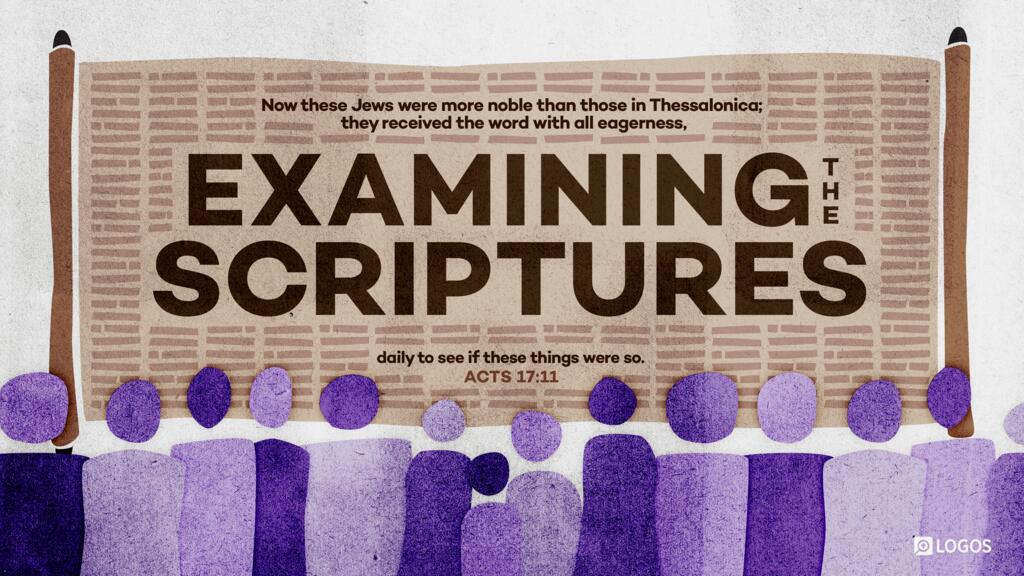
17:10The brothers sent Paul and Silas off to Berea38 at once, during the night. When they arrived,39 they went to the Jewish synagogue.4017:11These Jews41 were more open-minded42 than those in Thessalonica,43 for they eagerly44 received45 the message, examining46 the scriptures carefully every day47 to see if these things were so. 17:12Therefore many of them believed, along with quite a few48 prominent49 Greek women and men. 17:13But when the Jews from Thessalonica50 heard that Paul had also proclaimed the word of God51 in Berea,52 they came there too, inciting53 and disturbing54 the crowds. 17:14Then the brothers sent Paul away to the coast55 at once, but Silas and Timothy remained in Berea.5617:15Those who accompanied Paul escorted him as far as Athens,57 and after receiving an order for Silas and Timothy to come to him as soon as possible, they left.58
Paul at Athens
17:16While Paul was waiting for them in Athens,59 his spirit was greatly upset60 because he saw61 the city was full of idols.
Footnotes
- 1 διοδεύω 1 has “go, travel through” for this verse.
- 2 Amphipolis. The capital city of the southeastern district of Macedonia ( Ἀμφίπολις). It was a military post. From Philippi this was about 33 mi (53 km).
- 3 Apollonia was a city in Macedonia about 27 mi (43 km) west southwest of Amphipolis.
- 4 Thessalonica (modern Salonica) was a city in Macedonia about 33 mi (53 km) west of Apollonia. It was the capital of Macedonia. The road they traveled over was called the Via Egnatia. It is likely they rode horses, given their condition in Philippi. The implication of v. 1 is that the two previously mentioned cities lacked a synagogue. For location see ; ; ; .
- 5 See the note on synagogue in .
- 6 Grk “he went in to them”; the referent (the Jews in the synagogue) has been specified in the translation for clarity.
- 7 Although the word διελέξατο (dielexato; from διαλέγομαι, dialegomai) is frequently translated “reasoned,” “disputed,” or “argued,” this sense comes from its classical meaning where it was used of philosophical disputation, including the Socratic method of questions and answers. However, there does not seem to be contextual evidence for this kind of debate in Acts 17:2. As G. Schrenk ( 2:94–95) points out, “What is at issue is the address which any qualified member of a synagogue might give.” Other examples of this may be found in the NT in Matt 4:23 and Mark 1:21.
- 8 παρατίθημι 2.b has “demonstrate, point out” here.
- 9 Or “Messiah”; both “Christ” (Greek) and “Messiah” (Hebrew and Aramaic) mean “one who has been anointed.” See the note on Christ in .
- 10 The Christ had to suffer and to rise from the dead. These two points (suffering and resurrection) would have been among the more controversial aspects of Paul’s messianic preaching. The term translated “had to” (δεῖ, dei) shows how divine design and scripture corresponded here.
- 11 The Greek words used here (καὶ ὅτι, kai hoti, “and that”) mark the switch from indirect to direct discourse. Contemporary English requires the use of an introductory verb of speaking or saying to make this transition.
- 12 Or “Messiah”; both “Christ” (Greek) and “Messiah” (Hebrew and Aramaic) mean “one who has been anointed.” See the note on Christ in . The identification of the Messiah with Jesus indicates Paul was proclaiming the fulfillment of messianic promise.
- 13 Or “convinced.”
- 14 Or “a large crowd.”
- 15 Or “of devout Greeks,” but this is practically a technical term for the category called God-fearers, Gentiles who worshiped the God of Israel and in many cases kept the Mosaic law, but did not take the final step of circumcision necessary to become a proselyte to Judaism. See further K. G. Kuhn, 6:732–34, 743–44. Luke frequently mentions such people (Acts 13:43, 50; 16:14; 17:17; 18:7).
- 16 Grk “not a few”; this use of negation could be misleading to the modern English reader, however, and so has been translated as “quite a few” (which is the actual meaning of the expression).
- 17 Grk “becoming jealous.” The participle ζηλώσαντες (zēlōsantes) has been translated as a finite verb due to requirements of contemporary English style. So elsewhere in Acts (5:17; 7:9; 13:45).
- 18 Literally ἀγοραῖος (agoraios) refers to the crowd in the marketplace, although ἀγοραῖος 1 gives the meaning, by extension, as “rabble.” Such a description is certainly appropriate in this context. L&N 15.127 translates the phrase “worthless men from the streets.”
- 19 On this term, which is a NT , see ὀχλοποιέω.
- 20 θορυβέω 1 has “set the city in an uproar, start a riot in the city” for the meaning of ἐθορύβουν (ethoruboun) in this verse.
- 21 The attack took place at Jason’s house because this was probably the location of the new house church.
- 22 Grk “them”; the referents (Paul and Silas) have been specified in the translation for clarity.
- 23 δῆμος 2 has “in a Hellenistic city, a convocation of citizens called together for the purpose of transacting official business, popular assembly προάγειν εἰς τὸν δ. Ac 17:5.”
- 24 See σύρω on this verb. It was used in everyday speech of dragging in fish by a net, or dragging away someone’s (presumably) dead body (Paul in Acts 14:19).
- 25 L&N 37.93 defines πολιτάρχης (politarchēs) as “a public official responsible for administrative matters within a town or city and a member of the ruling council of such a political unit—‘city official’ ” (see also ).
- 26 Or “rebellion.” ἀναστατόω has “disturb, trouble, upset,” but in light of the references in the following verse to political insurrection, “stirred up rebellion” would also be appropriate.
- 27 Or “the empire.” This was a way of referring to the Roman empire ( οἰκουμένη 2.b). Throughout the world. Note how some of those present had knowledge of what had happened elsewhere. Word about Paul and his companions and their message was spreading.
- 28 Grk “whom.” Because of the awkwardness in English of having two relative clauses follow one another (“who have stirred up trouble … whom Jason has welcomed”) the relative pronoun here (“whom”) has been replaced by the conjunction “and,” creating a clause that is grammatically coordinate but logically subordinate in the translation.
- 29 Grk “and they.” Because of the length of the Greek sentence, the conjunction καί (kai) has not been translated here. Instead a new English sentence is begun.
- 30 Or “the emperor’s” (“Caesar” is a title for the Roman emperor).
- 31 The word “named” is not in the Greek text, but is supplied for clarity.
- 32 Acting … saying … Jesus. The charges are serious, involving sedition (Luke 23:2). If the political charges were true, Rome would have to react.
- 33 Grk “They troubled the crowd and the city officials”; but this could be understood to mean “they bothered” or “they annoyed.” In reality the Jewish instigators managed to instill doubt and confusion into both the mob and the officials by their false charges of treason. Verse 8 suggests the charges raised again Paul, Silas, Jason, and the others were false.
- 34 L&N 37.93 defines πολιτάρχης (politarchēs) as “a public official responsible for administrative matters within a town or city and a member of the ruling council of such a political unit—‘city official.’ ”
- 35 Grk “And after.” Because of the difference between Greek style, which often begins sentences or clauses with “and,” and English style, which generally does not, καί (kai) has not been translated here.
- 36 Grk “they”; the referent (the city officials) has been specified in the translation for clarity.
- 37 That is, “a payment” or “a pledge of security” ( ἱκανός 1) for which “bail” is the most common contemporary English equivalent.
- 38 Berea (alternate spelling in Beroea; Greek Beroia) was a very old city in Macedonia on the river Astraeus about 45 mi (75 km) west of Thessalonica. For location see ; ; ; .
- 39 Grk “who arriving there, went to.” Because of the length and complexity of the Greek sentence, the relative pronoun (οἵτινες, hoitines) has been left untranslated and a new English sentence begun. The participle παραγενόμενοι (paragenomenoi) has been taken temporally.
- 40 See the note on synagogue in .
- 41 Grk “These”; the referent (the Jews in the synagogue at Berea) has been specified in the translation for clarity.
- 42 Or “more willing to learn.” L&N 27.48 and εὐγενής 2 both use the term “open-minded” here. The point is that they were more receptive to Paul’s message.
- 43 Thessalonica was a city in Macedonia (modern Salonica). For location see ; ; ; .
- 44 Or “willingly,” “readily”; Grk “with all eagerness.”
- 45 Grk “who received.” Here the relative pronoun (“who”) has been translated as a pronoun (“they”) preceded by a semicolon, which is less awkward in contemporary English than a relative clause at this point.
- 46 This verb ( ἀνακρίνω 1) refers to careful examination.
- 47 ἡμέρα 2.c has “every day” for this phrase in this verse.
- 48 Grk “not a few”; this use of negation could be misleading to the modern English reader, however, and so has been translated as “quite a few” (which is the actual meaning of the expression).
- 49 Or “respected.”
- 50 Thessalonica was a city in Macedonia (modern Salonica).
- 51 Grk “that the word of God had also been proclaimed by Paul.” This passive construction has been converted to an active one in the translation for stylistic reasons.
- 52 Berea (alternate spelling in Beroea; Greek Beroia) was a very old city in Macedonia on the river Astraeus about 45 mi (75 km) from Thessalonica.
- 53 σαλεύω 2 has “incite” for σαλεύοντες (saleuontes) in Acts 17:13. Inciting. Ironically, it was the Jews who were disturbing the peace, not the Christians.
- 54 Or “stirring up” ( ταράσσω 2). The point is the agitation of the crowds.
- 55 Grk “to the sea.” Here ἕως ἐπὶ τὴν θάλασσαν (heōs epi tēn thalassan) must mean “to the edge of the sea,” that is, “to the coast.” Since there is no mention of Paul taking a ship to Athens, he presumably traveled overland. The journey would have been about 340 mi (550 km).
- 56 Grk “remained there”; the referent (Berea) has been specified in the translation for clarity.
- 57 For location see ; ; ; .
- 58 They left. See 1 Thess 3:1–2, which shows they went from here to Thessalonica.
- 59 For location see ; ; ; .
- 60 Grk “greatly upset within him,” but the words “within him” were not included in the translation because they are redundant in English. See L&N 88.189. The term could also be rendered “infuriated.” His spirit was greatly upset. See Rom 1:18–32 for Paul’s feelings about idolatry. Yet he addressed both Jews and Gentiles with tact and reserve.
- 61 Or “when he saw.” The participle θεωροῦντος (theōrountos) has been translated as a causal adverbial participle; it could also be translated as temporal.
The NET Bible First Edition, Copyright 1996-2005 by Biblical Studies Press