1 John 4:10
The NET BibleOther versions
English
- NET The NET Bible
- DARBY 1890 Darby Bible
- ASV American Standard Version
- AV 1873 The Cambridge Paragraph Bible of the Authorized English Version
- CSB Christian Standard Bible
- D-R Douay-Rheims Bible
- ESV English Standard Version
- GW GOD’S WORD Translation
- GNB Good News Translation
- HCSB The Holman Christian Standard Bible
- KJV 1900 King James Version
- LSB Legacy Standard Bible
- LEB The Lexham English Bible
- MSG The Message: The Bible in Contemporary Language
- NASB95 New American Standard Bible (1995)
- NCV New Century Version
- NIrV New International Reader’s Version (1998)
- NIV New International Version (2011)
- NKJV The New King James Version
- NLT New Living Translation
- NRSVue New Revised Standard Version: Updated Edition
- RSV The Revised Standard Version
- RSVCE The Revised Standard Version, Catholic Edition
- TNIV Today’s New International Version
- YLT Young’s Literal Translation
Arabic
Czech
French
German
Greek
Hungarian
Italian
Korean
Latin
Portuguese
Russian
Simplified Chinese
Spanish
Traditional Chinese
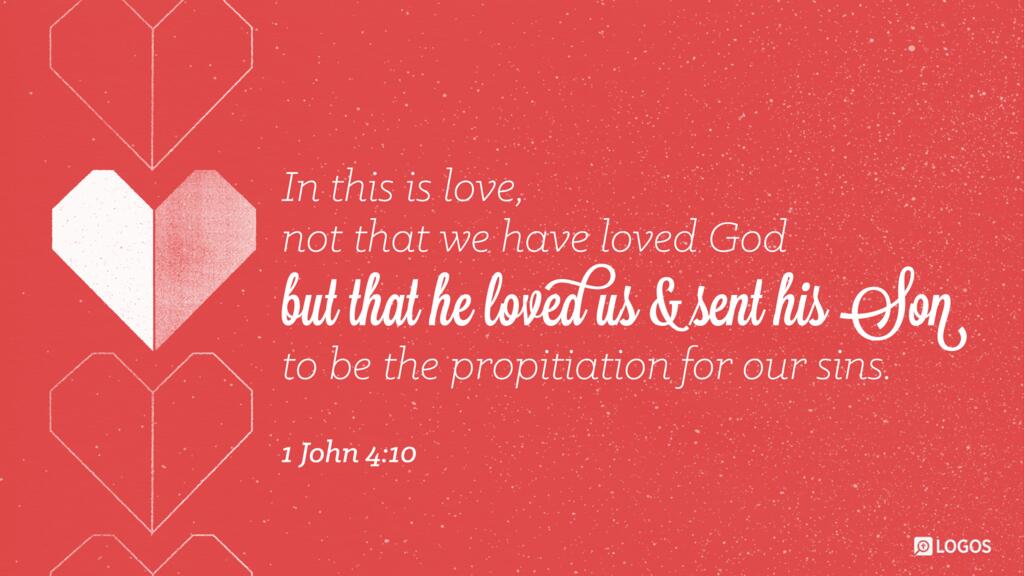
4:10In this25 is love: not that26 we have loved God, but that he loved us and sent his Son to be the atoning sacrifice27 for our sins.
Footnotes
- 25 Once again there is the (by now familiar) problem of determining whether the referent of this phrase (1) precedes or (2) follows. Here there are two ὅτι (hoti) clauses which follow, both of which are epexegetical to the phrase ἐν τούτῳ (en toutō) and explain what the love of God consists of: first, stated negatively, “not that we have loved God,” and then positively, “but that he loved us and sent his Son to be the atoning sacrifice for our sins.”
- 26 The two ὅτι (hoti) clauses are epexegetical to the phrase ἐν τούτῳ (en toutō) which begins the verse. What is important (as far as the author is concerned) is not whether we love God (or say that we love God—a claim of the opponents is probably behind this), but that God has loved us and sent his Son to be the atoning sacrifice which removes believers’ sins. This latter point is similar to the point made in 2:2 and is at the heart of the author’s dispute with the opponents, because they were denying any salvific value to Jesus’ earthly life and ministry, including his death on the cross.
- 27 As explained at 2:2, inherent in the meaning of the word translated atoning sacrifice (ἱλασμός, hilasmos) is the idea of turning away the divine wrath, so that “propitiation” is the closest English equivalent. God’s love for us is expressed in his sending his Son to be the propitiation (the propitiatory sacrifice) for our sins on the cross. This is an indirect way for the author to allude to one of the main points of his controversy with the opponents: the significance for believers’ salvation of Jesus’ earthly life and ministry, including especially his sacrificial death on the cross. The contemporary English “atoning sacrifice” communicates this idea more effectively.
The NET Bible First Edition, Copyright 1996-2005 by Biblical Studies Press
In other versions
ESVEnglish Standard Version
In this is love, not that we have loved God but that he loved us and sent his Son to be the propitiation for our sins.
Copyright 2001 Crossway Bibles
NIVNew International Version (2011)
This is love: not that we loved God, but that he loved us and sent his Son as an atoning sacrifice for our sins.
Copyright 1973, 1978, 1984, 2011 Biblica, Inc.
CSBChristian Standard Bible
Love consists in this: not that we loved God, but that he loved us and sent his Son to be the atoning sacrifice for our sins.
Copyright 2017 Holman Bible Publishers
NLTNew Living Translation
This is real love—not that we loved God, but that he loved us and sent his Son as a sacrifice to take away our sins.
Holy Bible, New Living Translation, copyright © 1996, 2004, 2015 by Tyndale House Foundation. Used by permission of Tyndale House Publishers. All rights reserved.
LEBThe Lexham English Bible
In this is love: not that we have loved God, but that he loved us and sent his Son to be the propitiation for our sins.
Copyright 2012 Lexham Press
KJV 1900King James Version
Herein is love, not that we loved God, but that he loved us, and sent his Son to be the propitiation for our sins.
Public Domain