Exodus 3:4–14
New Century VersionOther versions
English
- NCV New Century Version
- DARBY 1890 Darby Bible
- ASV American Standard Version
- AV 1873 The Cambridge Paragraph Bible of the Authorized English Version
- CSB Christian Standard Bible
- D-R Douay-Rheims Bible
- ESV English Standard Version
- GW GOD’S WORD Translation
- GNB Good News Translation
- HCSB The Holman Christian Standard Bible
- KJV 1900 King James Version
- LSB Legacy Standard Bible
- LEB The Lexham English Bible
- MSG The Message: The Bible in Contemporary Language
- NET The NET Bible
- NASB95 New American Standard Bible (1995)
- NIrV New International Reader’s Version (1998)
- NIV New International Version (2011)
- NKJV The New King James Version
- NLT New Living Translation
- NRSVue New Revised Standard Version: Updated Edition
- RSV The Revised Standard Version
- RSVCE The Revised Standard Version, Catholic Edition
- YLT Young’s Literal Translation
Arabic
Czech
French
German
Hebrew
Hungarian
Italian
Korean
Latin
Portuguese
Russian
Simplified Chinese
Spanish
Traditional Chinese
4When the Lord saw Moses was coming to look at the bush, God called to him from the bush, “Moses, Moses!”
And Moses said, “Here I am.”
5Then God said, “Do not come any closer. Take off your sandals, because you are standing on holy ground. 6I am the God of your ancestors—the God of Abraham, the God of Isaac, and the God of Jacob.” Moses covered his face because he was afraid to look at God.
7The Lord said, “I have seen the troubles my people have suffered in Egypt, and I have heard their cries when the Egyptian slave masters hurt them. I am concerned about their pain, 8and I have come down to save them from the Egyptians. I will bring them out of that land and lead them to a good land with lots of room—a fertile land. It is the land of the Canaanites, Hittites, Amorites, Perizzites, Hivites, and Jebusites. 9I have heard the cries of the people of Israel, and I have seen the way the Egyptians have made life hard for them. 10So now I am sending you to the king of Egypt. Go! Bring my people, the Israelites, out of Egypt!”
11But Moses said to God, “I am not a great man! How can I go to the king and lead the Israelites out of Egypt?”
12God said, “I will be with you. This will be the proof that I am sending you: After you lead the people out of Egypt, all of you will worship me on this mountain.”
13Moses said to God, “When I go to the Israelites, I will say to them, ‘The God of your ancestors sent me to you.’ What if the people say, ‘What is his name?’ What should I tell them?”
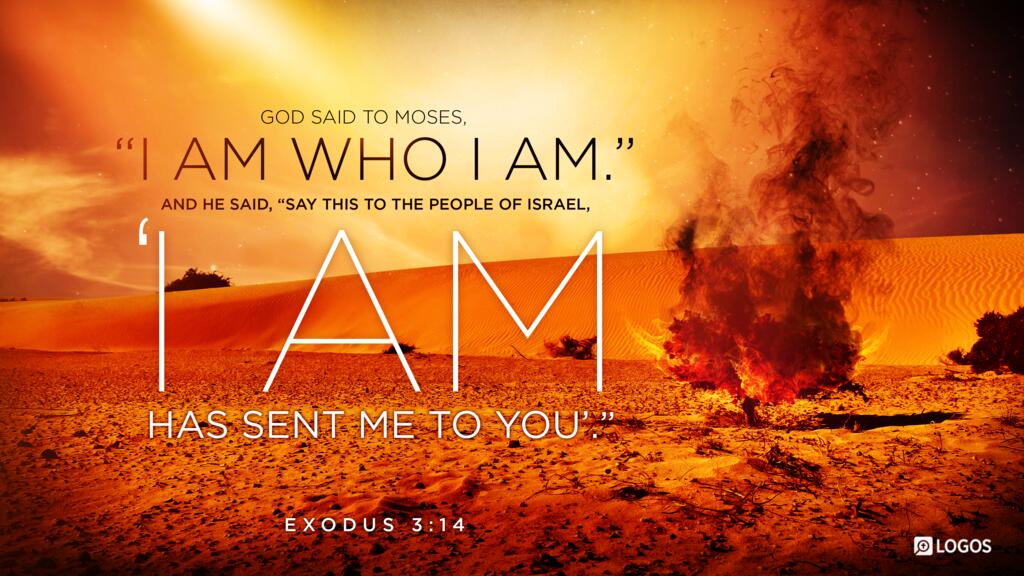
14Then God said to Moses, “I am who I am. n When you go to the people of Israel, tell them, ‘I am sent me to you.’ ”
Footnotes
- nI … I am The Hebrew words are like the name “Yahweh.” This Hebrew name for God, usually called “Lord,” shows that God always lives and is always with his people.
Copyright 2005 by Thomas Nelson, Inc.