Romans 10:8–18
The Message: The Bible in Contemporary LanguageOther versions
English
- MSG The Message: The Bible in Contemporary Language
- DARBY 1890 Darby Bible
- ASV American Standard Version
- AV 1873 The Cambridge Paragraph Bible of the Authorized English Version
- CSB Christian Standard Bible
- D-R Douay-Rheims Bible
- ESV English Standard Version
- GW GOD’S WORD Translation
- GNB Good News Translation
- HCSB The Holman Christian Standard Bible
- KJV 1900 King James Version
- LSB Legacy Standard Bible
- LEB The Lexham English Bible
- NET The NET Bible
- NASB95 New American Standard Bible (1995)
- NCV New Century Version
- NIrV New International Reader’s Version (1998)
- NIV New International Version (2011)
- NKJV The New King James Version
- NLT New Living Translation
- NRSVue New Revised Standard Version: Updated Edition
- RSV The Revised Standard Version
- RSVCE The Revised Standard Version, Catholic Edition
- TNIV Today’s New International Version
- YLT Young’s Literal Translation
Arabic
Czech
French
German
Greek
Hungarian
Italian
Korean
Latin
Portuguese
Russian
Simplified Chinese
Spanish
Traditional Chinese
So what exactly was Moses saying?
The word that saves is right here,
as near as the tongue in your mouth,
as close as the heart in your chest.
It’s the word of faith that welcomes God to go to work and set things right for us. This is the core of our preaching. Say the welcoming word to God—“Jesus is my Master”—embracing, body and soul, God’s work of doing in us what he did in raising Jesus from the dead. That’s it. You’re not “doing” anything; you’re simply calling out to God, trusting him to do it for you. That’s salvation. With your whole being you embrace God setting things right, and then you say it, right out loud: “God has set everything right between him and me!”
11–13Scripture reassures us, “No one who trusts God like this—heart and soul—will ever regret it.” It’s exactly the same no matter what a person’s religious background may be: the same God for all of us, acting the same incredibly generous way to everyone who calls out for help. “Everyone who calls, ‘Help, God!’ gets help.”
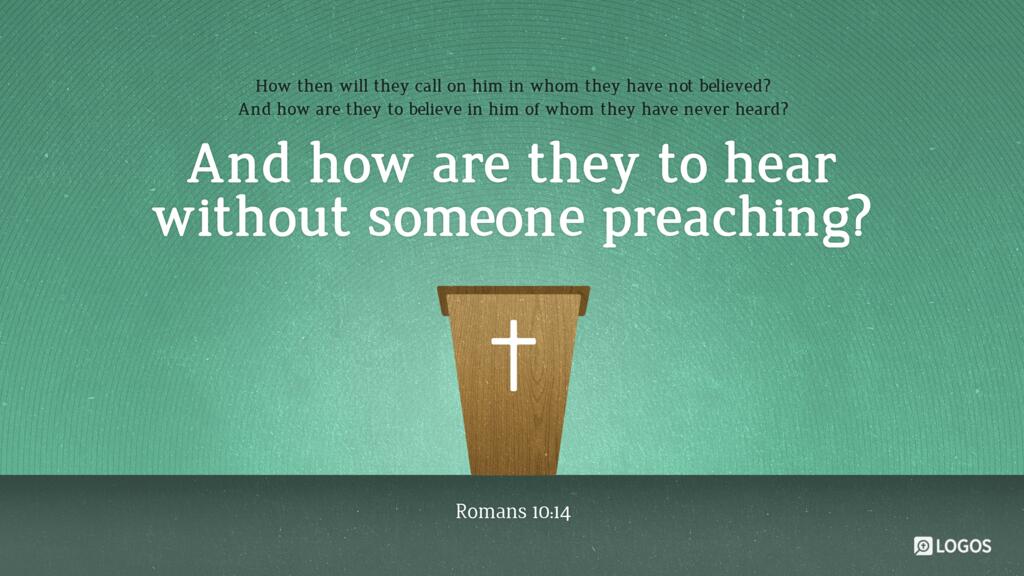
14–17But how can people call for help if they don’t know who to trust? And how can they know who to trust if they haven’t heard of the One who can be trusted? And how can they hear if nobody tells them? And how is anyone going to tell them, unless someone is sent to do it? That’s why Scripture exclaims,
A sight to take your breath away!
Grand processions of people
telling all the good things of God!
But not everybody is ready for this, ready to see and hear and act. Isaiah asked what we all ask at one time or another: “Does anyone care, God? Is anyone listening and believing a word of it?” The point is: Before you trust, you have to listen. But unless Christ’s Word is preached, there’s nothing to listen to.
18–21But haven’t there been plenty of opportunities for Israel to listen and understand what’s going on? Plenty, I’d say.
Preachers’ voices have gone ’round the world,
Their message to earth’s seven seas.
Copyright 2005 Eugene H. Peterson.