Matthew 20:17–34
The Holman Christian Standard BibleOther versions
English
- HCSB The Holman Christian Standard Bible
- DARBY 1890 Darby Bible
- ASV American Standard Version
- AV 1873 The Cambridge Paragraph Bible of the Authorized English Version
- CSB Christian Standard Bible
- D-R Douay-Rheims Bible
- ESV English Standard Version
- GW GOD’S WORD Translation
- GNB Good News Translation
- KJV 1900 King James Version
- LSB Legacy Standard Bible
- LEB The Lexham English Bible
- MSG The Message: The Bible in Contemporary Language
- NET The NET Bible
- NASB95 New American Standard Bible (1995)
- NCV New Century Version
- NIrV New International Reader’s Version (1998)
- NIV New International Version (2011)
- NKJV The New King James Version
- NLT New Living Translation
- NRSVue New Revised Standard Version: Updated Edition
- RSV The Revised Standard Version
- RSVCE The Revised Standard Version, Catholic Edition
- YLT Young’s Literal Translation
Arabic
Czech
French
German
Greek
Hungarian
Italian
Korean
Latin
Portuguese
Russian
Simplified Chinese
Spanish
Traditional Chinese
The Third Prediction of His Death
17While going up to Jerusalem, zJesus took the 12 disciples aside privately and said to them on the way: 18“Listen! We are going up to Jerusalem. The •Son of Man will be handed over to the •chief priests and •scribes, and they will condemn Him to death. a19Then they will hand Him over to the Gentiles bto be mocked, flogged, cand crucified, and He will be resurrected don the third day.”
Suffering and Service
20Then the mother of Zebedee’s sons approached Him with her sons. eShe knelt down to ask Him for something. f21“What do you want?” He asked her.
“Promise,” gshe said to Him, “that these two sons of mine may sit, one on Your right and the other on Your left, in Your kingdom.” h
22But Jesus answered, “You don’t know what you’re asking. Are you able to drink the cup ithat I am about to drink?” jk
“We are able,” they said to Him.
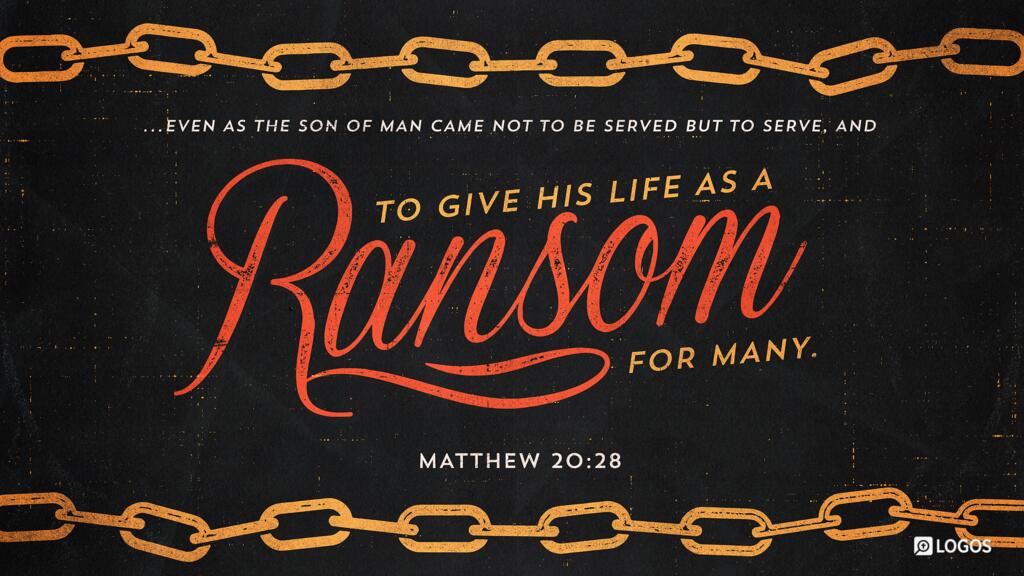
23He told them, “You will indeed drink My cup. lBut to sit at My right and left is not Mine to give; instead, it belongs to those for whom it has been prepared by My Father.” m 24When the 10 disciples heard this, they became indignant with the two brothers. 25But Jesus called them over and said, “You know that the rulers of the Gentiles dominate them, and the men of high position exercise power over them. 26It must not be like that among you. On the contrary, whoever wants to become great among you must be your servant, n27and whoever wants to be first among you must be your •slave; 28just as the Son of Man did not come to be served, but to serve, oand to give His life—a ransom for many.” p
Two Blind Men Healed
29As they were leaving Jericho, a large crowd followed Him. q30There were two blind men sitting by the road. When they heard that Jesus was passing by, they cried out, “Lord, have mercy on us, Son of David!” 31The crowd told them to keep quiet, but they cried out all the more, “Lord, have mercy on us, Son of David!” r
32Jesus stopped, called them, and said, “What do you want Me to do for you?”
33“Lord,” they said to Him, “open our eyes!” 34Moved with compassion, Jesus touched their eyes. Immediately they could see, and they followed Him.
Footnotes
- •Most frequent title Jesus used for Himself (Dn 7:13; Mt 8:20)
- •A group of Jewish temple officers that included the high priest, captain of the temple, temple overseers, and treasurers
- •A professional group in Judaism that copied the law of Moses and interpreted it, especially in legal cases
- c20:19 Or scourged
- d20:19 Other read will rise again
- g20:21 Say
- i20:22 Figurative language referring to His coming suffering; Mt 26:39; Jn 18:11
- j20:22 Other add and (or) to be baptized with the baptism that I am baptized with?”
- l20:23 Other add and be baptized with the baptism that I am baptized with.
- •The strong Greek word doulos cannot be accurately translated in English as servant or bond servant; the HCSB translates this word as slave, not out of insensitivity to the legitimate concerns of modern English speakers, but out of a commitment to accurately convey the brutal reality of the Roman empire’s inhumane institution as well as the ownership called for by Christ.
Cross references
- z20:17–19 Mk 10:32–34; Lk 18:31–33
- a20:18 Mt 16:21; 26:66; Jn 19:7
- b20:19 Mt 27:2; Ac 2:23; 3:13; 4:27; 21:11
- e20:20–28 Mk 10:35–45; Lk 22:24–27
- f20:20 Mt 4:21; 8:2
- h20:21 Mt 16:28; 19:28; 25:31, 34; Lk 23:42
- k20:22 Is 51:22; Jr 49:12; Mk 14:36
- m20:23 Ac 12:2; Rv 1:9
- n20:26 Mt 23:11; Mk 9:35
- o20:28 Lk 22:27; Jn 13:13–15; 2Co 8:9; Php 2:7
- p20:28 Mt 26:28; 1Tm 2:6; Ti 2:14; Heb 9:28
- q20:29–34 Mk 10:46–52; Lk 18:35–43
- r20:30–31 Mt 9:27; 21:9; 22:42
Copyright 2002, 2003, 2009 Holman Bible Publishers