Exodus 20:12–17
The NET BibleOther versions
English
- NET The NET Bible
- DARBY 1890 Darby Bible
- ASV American Standard Version
- AV 1873 The Cambridge Paragraph Bible of the Authorized English Version
- CSB Christian Standard Bible
- D-R Douay-Rheims Bible
- ESV English Standard Version
- GW GOD’S WORD Translation
- GNB Good News Translation
- HCSB The Holman Christian Standard Bible
- KJV 1900 King James Version
- LSB Legacy Standard Bible
- LEB The Lexham English Bible
- MSG The Message: The Bible in Contemporary Language
- NASB95 New American Standard Bible (1995)
- NCV New Century Version
- NIrV New International Reader’s Version (1998)
- NIV New International Version (2011)
- NKJV The New King James Version
- NLT New Living Translation
- NRSVue New Revised Standard Version: Updated Edition
- RSV The Revised Standard Version
- RSVCE The Revised Standard Version, Catholic Edition
- YLT Young’s Literal Translation
Arabic
Czech
French
German
Hebrew
Hungarian
Italian
Korean
Latin
Portuguese
Russian
Simplified Chinese
Spanish
Traditional Chinese
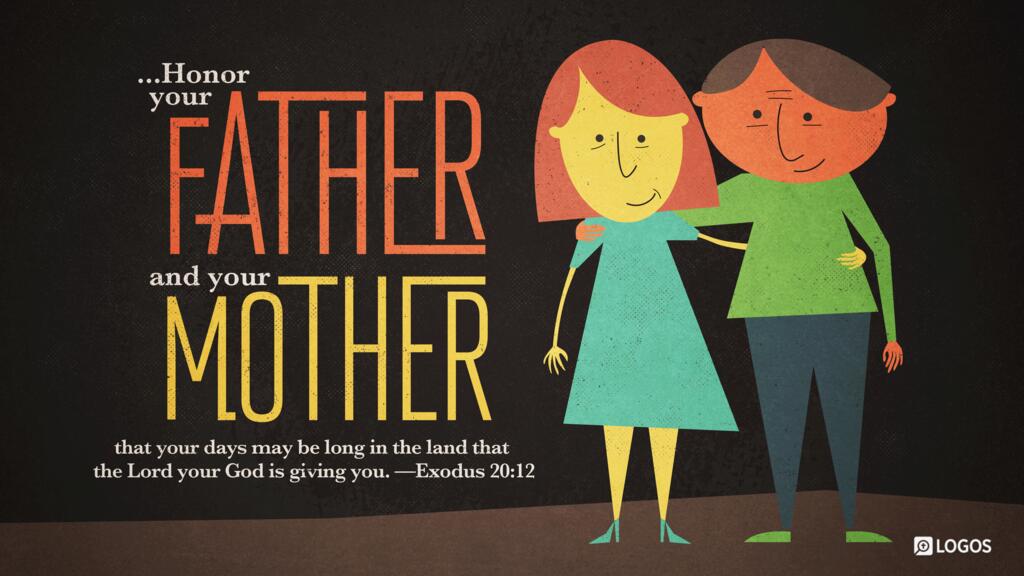
20:12“Honor32 your father and your mother, that you may live a long time33 in the land34 the Lord your God is giving to you.
20:13“You shall not murder.35
20:14“You shall not commit adultery.36
20:15“You shall not steal.37
20:16“You shall not give38 false testimony39 against your neighbor.
20:17“You shall not covet40 your neighbor’s house. You shall not covet your neighbor’s wife, nor his male servant, nor his female servant, nor his ox, nor his donkey, nor anything that belongs to your neighbor.”41
Footnotes
- 32 The verb כַּבֵּד (kabbed) is a Piel imperative; it calls for people to give their parents the respect and honor that is appropriate for them. It could be paraphrased to say, give them the weight of authority that they deserve. Next to God, parents were to be highly valued, cared for, and respected.
- 33 Heb “that your days may be long.”
- 34 The promise here is national rather than individual, although it is certainly true that the blessing of life was promised for anyone who was obedient to God’s commands (Deut 4:1, 8:1, etc.). But as W. C. Kaiser (“Exodus,” 2:) summarizes, the land that was promised was the land of Canaan, and the duration of Israel in the land was to be based on morality and the fear of God as expressed in the home (Deut 4:26, 33, 40; 32:46–47). The captivity was in part caused by a breakdown in this area (Ezek 22:7, 15). Malachi would announce at the end of his book that Elijah would come at the end of the age to turn the hearts of the children and the parents toward each other again.
- 35 The verb רָצַח (ratsakh) refers to the premeditated or accidental taking of the life of another human being; it includes any unauthorized killing (it is used for the punishment of a murderer, but that would not be included in the prohibition). This commandment teaches the sanctity of all human life. See J. H. Yoder, “Exodus 20, 13: ‘Thou Shalt Not Kill’,” 34 (1980): 394–99; and A. Phillips, “Another Look at Murder,” 28 (1977): 105–26.
- 36 This is a sin against the marriage of a fellow citizen—it destroys the home. The Law distinguished between adultery (which had a death penalty) and sexual contact with a young woman (which carried a monetary fine and usually marriage if the father was willing). So it distinguished fornication and adultery. Both were sins, but the significance of each was different. In the ancient world this sin is often referred to as “the great sin.”
- 37 This law protected the property of the Israelite citizen. See D. Little, “Exodus 20, 15: ‘Thou Shalt Not Steal’,” 34 (1980): 399–405.
- 38 Heb “answer” as in a court of law.
- 39 The expression עֵד שָׁקֶר (’ed shaqer) means “a lying witness” (B. S. Childs, Exodus [], 388). In this verse the noun is an adverbial accusative, “you will not answer as a lying witness.” The prohibition is against perjury. While the precise reference would be to legal proceedings, the law probably had a broader application to lying about other people in general (see Lev 5:1; Hos 4:2).
- 40 The verb חָמַד (khamad) focuses not on an external act but on an internal mental activity behind the act, the motivation for it. The word can be used in a very good sense (Ps 19:10; 68:16), but it has a bad connotation in contexts where the object desired is off limits. This command is aimed at curtailing the greedy desire for something belonging to a neighbor, a desire that leads to the taking of it or the attempt to take it. It was used in the story of the Garden of Eden for the tree that was desired.
- 41 See further G. Wittenburg, “The Tenth Commandment in the Old Testament,” Journal for Theology in South Africa 21 (1978): 3–17: and E. W. Nicholson, “The Decalogue as the Direct Address of God,” 27 (1977): 422–33.
The NET Bible First Edition, Copyright 1996-2005 by Biblical Studies Press
In other versions
ESVEnglish Standard Version
“Honor your father and your mother, that your days may be long in the land that the Lord your God is giving you.
“You shall not murder.
“You shall not commit adultery.
“You shall not steal.
“You shall not bear false witness against your neighbor.
“You shall not covet your neighbor’s house; you shall not covet your neighbor’s wife, or his male servant, or his female servant, or his ox, or his donkey, or anything that is your neighbor’s.”
Copyright 2001 Crossway Bibles
NIVNew International Version (2011)
“Honor your father and your mother, so that you may live long in the land the Lord your God is giving you.
“You shall not murder.
“You shall not commit adultery.
“You shall not steal.
“You shall not give false testimony against your neighbor.
“You shall not covet your neighbor’s house. You shall not covet your neighbor’s wife, or his male or female servant, his ox or donkey, or anything that belongs to your neighbor.”
Copyright 1973, 1978, 1984, 2011 Biblica, Inc.
CSBChristian Standard Bible
Honor your father and your mother so that you may have a long life in the land that the Lord your God is giving you.
Do not murder.
Do not commit adultery.
Do not steal.
Do not give false testimony against your neighbor.
Do not covet your neighbor’s house. Do not covet your neighbor’s wife, his male or female servant, his ox or donkey, or anything that belongs to your neighbor.
Copyright 2017 Holman Bible Publishers
NLTNew Living Translation
“Honor your father and mother. Then you will live a long, full life in the land the Lord your God is giving you.
“You must not murder.
“You must not commit adultery.
“You must not steal.
“You must not testify falsely against your neighbor.
“You must not covet your neighbor’s house. You must not covet your neighbor’s wife, male or female servant, ox or donkey, or anything else that belongs to your neighbor.”
Holy Bible, New Living Translation, copyright © 1996, 2004, 2015 by Tyndale House Foundation. Used by permission of Tyndale House Publishers. All rights reserved.
LEBThe Lexham English Bible
“Honor your father and your mother, so that your days can be long on the land that Yahweh your God is giving you.
“You shall not murder.
“You shall not commit adultery.
“You shall not steal.
“You shall not testify against your neighbor with a false witness.
“You shall not covet the house of your neighbor; you will not covet the wife of your neighbor or his male servant or his female servant or his ox or his donkey or anything that is your neighbor’s.”
Copyright 2012 Lexham Press
KJV 1900King James Version
Honour thy father and thy mother: that thy days may be long upon the land which the Lord thy God giveth thee. Thou shalt not kill. Thou shalt not commit adultery. Thou shalt not steal. Thou shalt not bear false witness against thy neighbour. Thou shalt not covet thy neighbour’s house, thou shalt not covet thy neighbour’s wife, nor his manservant, nor his maidservant, nor his ox, nor his ass, nor any thing that is thy neighbour’s.
Public Domain