The Future of Bible Study Is Here.
 Loading…
A service of Logos Bible Software
Sargon—(In the inscriptions, “Sarra-yukin” [the god] has appointed the king; also “Sarru-kinu,” the legitimate king.) On the death of Shalmaneser (b.c. 723), one of the Assyrian generals established himself on the vacant throne, taking the name of “Sargon,” after that of the famous monarch, the Sargon of Accad, founder of the first Semitic empire, as well as of one of the most famous libraries of Chaldea. He forthwith began a conquering career, and became one of the most powerful of the Assyrian monarchs. He is mentioned by name in the Bible only in connection with the siege of Ashdod (Isa. 20:1).
At the very beginning of his reign he besieged and took the city of Samaria (2 Kings 17:6; 18:9–12). On an inscription found in the palace he built at Khorsabad, near Nieveh, he says, “The city of Samaria I besieged, I took; 27,280 of its inhabitants I carried away; fifty chariots that were among them I collected,” etc. The northern kingdom he changed into an Assyrian satrapy. He afterwards drove Merodach-baladan (q.v.), who kept him at bay for twelve years, out of Babylon, which he entered in triumph. By a succession of victories he gradually enlarged and consolidated the empire, which now extended from the frontiers of Egypt in the west to the mountains of Elam in the east, and thus carried almost to completion the ambitious designs of Tiglath-pileser (q.v.). He was murdered by one of his own soldiers (b.c. 705) in his palace at Khorsabad, after a reign of sixteen years, and was succeeded by his son Sennacherib.
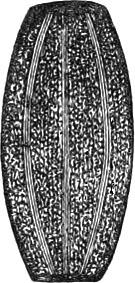
CYLINDER RECORDING THE CONQUEST OF SAMARIA BY SARGON.

|
About Easton’s Bible DictionaryEaston’s Bible Dictionary provides informative explanations of histories, people and customs of the Bible. An excellent and readily understandable source of information for the student and layperson. One of Matthew George Easton’s most significant literary achievements. |
| Support Info | eastons |
Table of Contents