Get the #1 Bible app for transformative study, preaching, and teaching.
 Loading…
A service of Logos Bible Software
Bulrush—(1.) In Isa. 58:5 the rendering of a word which denotes “belonging to a marsh,” from the nature of the soil in which it grows (Isa. 18:2). It was sometimes platted into ropes (Job. 41:2; A.V., “hook,” R.V., “rope,” lit. “cord of rushes”).
(2.) In Ex. 2:3, Isa. 18:2 (R.V., “papyrus”) this word is the translation of the Hebrew gome, which designates the plant as absorbing moisture. In Isa. 35:7 and Job 8:11 it is rendered “rush.” This was the Egyptian papyrus (papyrus Nilotica). It was anciently very abundant in Egypt. The Egyptians made garments and shoes and various utensils of it. It was used for the construction of the ark of Moses (Ex. 2:3, 5). The root portions of the stem were used for food. The inside bark was cut into strips, which were sewed together and dried in the sun, forming the papyrus used for writing. It is no longer found in Egypt, but grows luxuriantly in Palestine, in the marshes of the Huleh, and in the swamps at the north end of the Lake of Gennesaret. (See CANE.)
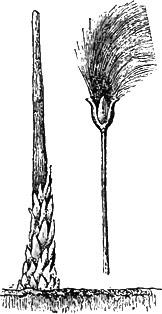
EGYPTIAN PAPYRUS.

|
About Easton’s Bible DictionaryEaston’s Bible Dictionary provides informative explanations of histories, people and customs of the Bible. An excellent and readily understandable source of information for the student and layperson. One of Matthew George Easton’s most significant literary achievements. |
| Support Info | eastons |
Table of Contents