Psalm 16:1–11
The NET BibleOther versions
English
- NET The NET Bible
- DARBY 1890 Darby Bible
- ASV American Standard Version
- AV 1873 The Cambridge Paragraph Bible of the Authorized English Version
- CSB Christian Standard Bible
- D-R Douay-Rheims Bible
- ESV English Standard Version
- GW GOD’S WORD Translation
- GNB Good News Translation
- HCSB The Holman Christian Standard Bible
- KJV 1900 King James Version
- LSB Legacy Standard Bible
- LEB The Lexham English Bible
- MSG The Message: The Bible in Contemporary Language
- NASB95 New American Standard Bible (1995)
- NCV New Century Version
- NIrV New International Reader’s Version (1998)
- NIV New International Version (2011)
- NKJV The New King James Version
- NLT New Living Translation
- NRSVue New Revised Standard Version: Updated Edition
- RSV The Revised Standard Version
- RSVCE The Revised Standard Version, Catholic Edition
- TNIV Today’s New International Version
- YLT Young’s Literal Translation
Arabic
Czech
French
German
Hebrew
Hungarian
Italian
Korean
Latin
Portuguese
Russian
Simplified Chinese
Spanish
Traditional Chinese
16:1Protect me, O God, for I have taken shelter in you.1
16:2I say to the Lord, “You are the Lord,
my only source of well-being.”2
16:3As for God’s chosen people who are in the land,
and the leading officials I admired so much3—
16:4their troubles multiply,
they desire other gods.4
I will not pour out drink offerings of blood to their gods,5
nor will I make vows in the name of their gods.6
16:5Lord, you give me stability and prosperity;7
you make my future secure.8
16:6It is as if I have been given fertile fields
or received a beautiful tract of land.9
16:7I will praise10 the Lord who11 guides12 me;
yes, during the night I reflect and learn.13
16:8I constantly trust in the Lord;14
because he is at my right hand, I will not be upended.
16:9So my heart rejoices
and I am happy;15
My life is safe.16
16:10You will not abandon me17 to Sheol;18
you will not allow your faithful follower19 to see20 the Pit.21
16:11You lead me in22 the path of life;23
I experience absolute joy in your presence;24
you always give me sheer delight.25
Footnotes
- 1 The Hebrew perfect verbal form probably refers here to a completed action with continuing results (see 7:1; 11:1). Taken shelter. “Taking shelter” in the Lord is an idiom for seeking his protection. Seeking his protection presupposes and even demonstrates the subject’s loyalty to the Lord. In the psalms those who “take shelter” in the Lord are contrasted with the wicked and equated with those who love, fear and serve the Lord (Pss 5:11–12; 31:17–20; 34:21–22).
- 2 Heb “my good [is] not beyond you.” For the use of the preposition עַל (’al) in the sense of “beyond,” see 755 2.
- 3 Heb “regarding the holy ones who [are] in the land, they; and the mighty [ones] in [whom is/was] all my desire.” The difficult syntax makes the meaning of the verse uncertain. The phrase “holy ones” sometimes refers to God’s angelic assembly (see Ps 89:5, 7), but the qualifying clause “who are in the land” suggests that here it refers to God’s people (Ps 34:9) or to their priestly leaders (2 Chr 35:3).
- 4 Heb “their troubles multiply, another, they pay a dowry.” The meaning of the text is unclear. The Hebrew term עַצְּבוֹתָם (’atsévotam, “troubles”) appears to be a plural form of עַצֶּבֶת (’atsévet, “pain, wound”; see Job 9:28; Ps 147:3). Because idolatry appears to be in view (see v. 4b), some prefer to emend the noun to עַצְּבִים (’atsévim, “idols”). “Troubles” may be a wordplay on “idols” or a later alteration designed to emphasize that idolatry leads to trouble. The singular form אחר (“another”) is syntactically problematic here. Perhaps the form should be emended to a plural אֲחֵרִים (’akherim, “others”). (The final mem [ם] could have been lost by haplography; note the mem [ם] at the beginning of the next word.) In this case it might be taken as an abbreviated form of the well-attested phrase אֱלֹהִים אֲחֵרִים (’elohim ’akherim, “other gods”). (In Isa 42:8 the singular form אַחַר (’akher, “another”) is used of another god.) The verb מָהַר (mahar) appears in the Qal stem; the only other use of a Qal verbal form of a root מָהַר is in Exod 22:15, where the denominative verb מָהֹר (mahor, “purchase [a wife]”) appears; cf. the related noun מֹהַר (mohar, “bride money, purchase price for a wife”). If that verb is understood here, then the idolaters are pictured as eager bridegrooms paying the price to acquire the object of their desire. Another option is to emend the verb to a Piel and translate, “hurry (after).”
- 5 Heb “I will not pour out their drink offerings of blood.” The third masculine plural suffix would appear to refer back to the people/leaders mentioned in v. 3. However, if we emend אֲחֵר (’akher, “another”) to the plural אֲחֵרִים (’akherim, “other [gods]”) in v. 4, the suffix can be understood as referring to these gods—“the drink offerings [made to] them.” The next line favors this interpretation. Perhaps this refers to some type of pagan cultic ritual. Elsewhere wine is the prescribed content of drink offerings.
- 6 Heb “and I will not lift up their names upon my lips.” The expression “lift up the name” probably refers here to swearing an oath in the name of deity (see Exod 20:7; Deut 5:11). If so, the third masculine plural suffix on “names” likely refers to the pagan gods, not the people/leaders. See the preceding note.
- 7 Heb “O Lord, the portion of my possession and my cup”; or “the Lord [is] the portion of my possession and my cup.” The psalmist compares the Lord to landed property, which was foundational to economic stability in ancient Israel, and to a cup of wine, which may symbolize a reward (in Ps 11:6 it symbolizes the judgment one deserves) or divine blessing (see Ps 23:5). The metaphor highlights the fact that God is the psalmist’s source of security and prosperity.
- 8 Heb “you take hold of my lot.” The form תּוֹמִיךְ (tomikh) should be emended to a participle, תוֹמֵךְ (tomekh). The psalmist pictures the Lord as casting his lot (a method used to allot landed property) for him, thus assuring that he will receive a fertile piece of land (see v. 6). As in the previous line, land represents security and economic stability, thus “you make my future secure.”
- 9 Heb “measuring lines have fallen for me in pleasant [places]; yes, property [or “an inheritance”] is beautiful for me.” On the dative use of עַל, see 758 II.8. Extending the metaphor used in v. 5, the psalmist compares the divine blessings he has received to a rich, beautiful tract of land that one might receive by allotment or inheritance.
- 10 Heb “bless,” that is, “proclaim as worthy of praise.”
- 11 Or “because.”
- 12 Or “counsels, advises.”
- 13 Heb “yes, [during] nights my kidneys instruct [or “correct”] me.” The “kidneys” are viewed here as the seat of the psalmist’s moral character (see Ps 26:2). In the quiet darkness the Lord speaks to his inner being, as it were, and enables him to grow in moral understanding.
- 14 Heb “I set the Lord before me continually.” This may mean that the psalmist is aware of the Lord’s presence and sensitive to his moral guidance (see v. 7), or that he trusts in the Lord’s protection (see the following line).
- 15 Heb “my glory is happy.” Some view the Hebrew term כְּבוֹדִי (kévodiy, “my glory”) as a metonymy for man’s inner being (see 459 II כָּבוֹד 5), but it is preferable to emend the form to כְּבֵדִי (kévediy, “my liver”). Like the heart, the liver is viewed as the seat of one’s emotions. See also Pss 30:12; 57:9; 108:1, as well as H. W. Wolff, Anthropology of the Old Testament, 64, and M. Dahood, Psalms (), 1:. For an Ugaritic example of the heart/liver as the source of joy, see G. R. Driver, Canaanite Myths and Legends, 47–48: “her [Anat’s] liver swelled with laughter, her heart was filled with joy, the liver of Anat with triumph.”
- 16 Heb “yes, my flesh dwells securely.” The psalmist’s “flesh” stands by metonymy for his body and, by extension, his physical life.
- 17 Or “my life.” The suffixed form of נֶפֶשׁ (nefesh, “being”) is often equivalent to a pronoun in poetic texts.
- 18 In ancient Israelite cosmology Sheol is the realm of the dead, viewed as being under the earth’s surface. See L. I. J. Stadelmann, The Hebrew Conception of the World, 165–76.
- 19 A “faithful follower” (חָסִיד [khasid], traditionally rendered “holy one”) is one who does what is right in God’s eyes and remains faithful to God (see Pss 4:3; 12:1; 18:25; 31:23; 37:28; 86:2; 97:10). The psalmist here refers to himself, as the parallel line (“You will not abandon me to Sheol”) indicates.
- 20 That is, “experience.” The psalmist is confident that the Lord will protect him in his present crisis (see v. 1) and prevent him from dying. According to Peter, the words of Ps 16:8–11 are applicable to Jesus (Acts 2:25–29). Peter goes on to argue that David, being a prophet, foresaw future events and spoke of Jesus’ resurrection from the dead (Acts 2:30–33). Paul seems to concur with Peter in this understanding (see Acts 13:35–37). For a discussion of the NT application of these verses to Jesus’ resurrection, see R. B. Chisholm, Jr., “A Theology of the Psalms,” A Biblical Theology of the Old Testament, 292–95.
- 21 The Hebrew word שָׁחַת (shakhat, “pit”) is often used as a title for Sheol (see Pss 30:9; 49:9; 55:24; 103:4). Note the parallelism with the previous line.
- 22 Heb “cause me to know”; or “cause me to experience.”
- 23 This is a metaphorical way of saying, “you preserve my life.” The phrase “path of life” stands in contrast to death/Sheol in Prov 2:18–19; 5:5–6; 15:24.
- 24 Heb “abundance of joy [is] with your face.” The plural form of the noun שִׂמְחָה (simkhah, “joy”) occurs only here and in Ps 45:15. It may emphasize the degree of joy experienced.
- 25 Heb “delight [is] in your right hand forever.” The plural form of the adjective נָעִים (na’im, “pleasant, delightful”) may here emphasize the degree of delight experienced (see Job 36:11).
The NET Bible First Edition, Copyright 1996-2005 by Biblical Studies Press
In other versions
ESVEnglish Standard Version
Preserve me, O God, for in you I take refuge.
I say to the Lord, “You are my Lord;
I have no good apart from you.”
As for the saints in the land, they are the excellent ones,
in whom is all my delight.
The sorrows of those who run after another god shall multiply;
their drink offerings of blood I will not pour out
or take their names on my lips.
The Lord is my chosen portion and my cup;
you hold my lot.
The lines have fallen for me in pleasant places;
indeed, I have a beautiful inheritance.
I bless the Lord who gives me counsel;
in the night also my heart instructs me.
I have set the Lord always before me;
because he is at my right hand, I shall not be shaken.
Therefore my heart is glad, and my whole being rejoices;
my flesh also dwells secure.
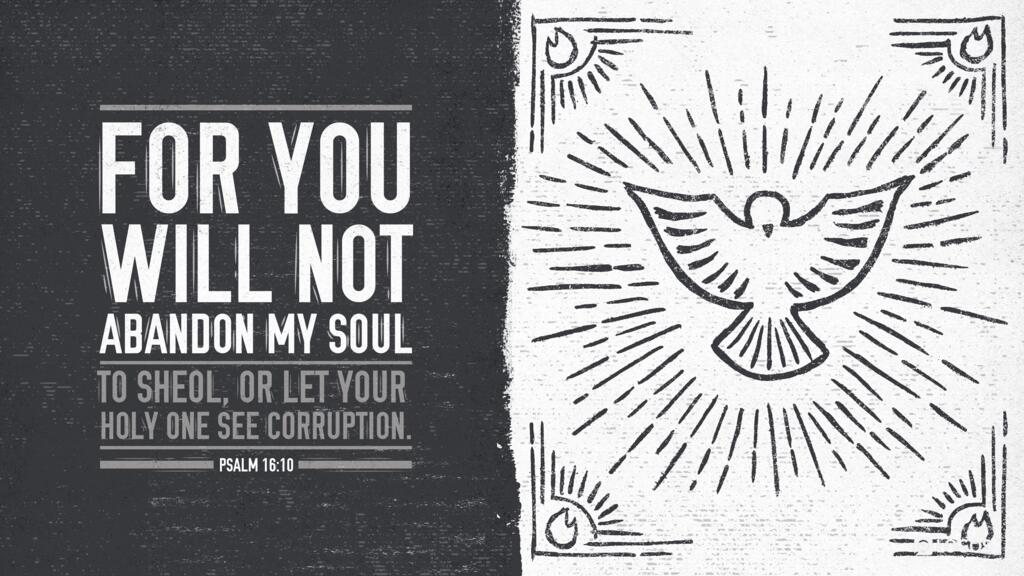
For you will not abandon my soul to Sheol,
or let your holy one see corruption.
You make known to me the path of life;
in your presence there is fullness of joy;
at your right hand are pleasures forevermore.
Copyright 2001 Crossway Bibles
NIVNew International Version (2011)
Keep me safe, my God,
for in you I take refuge.
I say to the Lord, “You are my Lord;
apart from you I have no good thing.”
I say of the holy people who are in the land,
“They are the noble ones in whom is all my delight.”
Those who run after other gods will suffer more and more.
I will not pour out libations of blood to such gods
or take up their names on my lips.
Lord, you alone are my portion and my cup;
you make my lot secure.
The boundary lines have fallen for me in pleasant places;
surely I have a delightful inheritance.
I will praise the Lord, who counsels me;
even at night my heart instructs me.
I keep my eyes always on the Lord.
With him at my right hand, I will not be shaken.
Therefore my heart is glad and my tongue rejoices;
my body also will rest secure,
because you will not abandon me to the realm of the dead,
nor will you let your faithful one see decay.
You make known to me the path of life;
you will fill me with joy in your presence,
with eternal pleasures at your right hand.
Copyright 1973, 1978, 1984, 2011 Biblica, Inc.
CSBChristian Standard Bible
Protect me, God, for I take refuge in you.
I said to the Lord, “You are my Lord;
I have nothing good besides you.”
As for the holy people who are in the land,
they are the noble ones.
All my delight is in them.
The sorrows of those who take another god
for themselves will multiply;
I will not pour out their drink offerings of blood,
and I will not speak their names with my lips.
Lord, you are my portion
and my cup of blessing;
you hold my future.
The boundary lines have fallen for me
in pleasant places;
indeed, I have a beautiful inheritance.
I will bless the Lord who counsels me—
even at night when my thoughts trouble me.
I always let the Lord guide me.
Because he is at my right hand,
I will not be shaken.
Therefore my heart is glad
and my whole being rejoices;
my body also rests securely.
For you will not abandon me to Sheol;
you will not allow your faithful one to see decay.
You reveal the path of life to me;
in your presence is abundant joy;
at your right hand are eternal pleasures.
Copyright 2017 Holman Bible Publishers
NLTNew Living Translation
Keep me safe, O God,
for I have come to you for refuge.
I said to the Lord, “You are my Master!
Every good thing I have comes from you.”
The godly people in the land
are my true heroes!
I take pleasure in them!
Troubles multiply for those who chase after other gods.
I will not take part in their sacrifices of blood
or even speak the names of their gods.
Lord, you alone are my inheritance, my cup of blessing.
You guard all that is mine.
The land you have given me is a pleasant land.
What a wonderful inheritance!
I will bless the Lord who guides me;
even at night my heart instructs me.
I know the Lord is always with me.
I will not be shaken, for he is right beside me.
No wonder my heart is glad, and I rejoice.
My body rests in safety.
For you will not leave my soul among the dead
or allow your holy one to rot in the grave.
You will show me the way of life,
granting me the joy of your presence
and the pleasures of living with you forever.
Holy Bible, New Living Translation, copyright © 1996, 2004, 2015 by Tyndale House Foundation. Used by permission of Tyndale House Publishers. All rights reserved.
LEBThe Lexham English Bible
Protect me, O God,
for I take refuge in you.
Oh my soul you have said to Yahweh, “You are my Lord.
I have no good apart from you.”
With regard to the saints who are in the land,
they are the noble ones in whom is all my desire.
Those who hurry after another god increase their sorrows.
I will not pour out their drink offerings of blood,
nor take up their names on my lips.
Yahweh is the portion which is my share and my cup.
You hold my lot.
The measuring lines have fallen for me in pleasant places.
Yes, my inheritance is delightful for me.
I will bless Yahweh who advises me;
yes, at night my innermost being instructs me.
I have set Yahweh before me always.
Because he is at my right hand I will not be shaken.
Therefore my heart is glad and my glory rejoices.
Yes, my body will dwell in safety,
for you will not abandon my soul to Sheol;
you will not give your faithful one to see the grave.
You will make known to me the path of life.
In your presence is fullness of joy.
At your right hand are pleasures forever.
Copyright 2012 Lexham Press
KJV 1900King James Version
Preserve me, O God: for in thee do I put my trust.
O my soul, thou hast said unto the Lord, Thou art my Lord:
My goodness extendeth not to thee;
But to the saints that are in the earth,
And to the excellent, in whom is all my delight.
Their sorrows shall be multiplied that hasten after another god:
Their drink offerings of blood will I not offer,
Nor take up their names into my lips.
The Lord is the portion of mine inheritance and of my cup:
Thou maintainest my lot.
The lines are fallen unto me in pleasant places;
Yea, I have a goodly heritage.
I will bless the Lord, who hath given me counsel:
My reins also instruct me in the night seasons.
I have set the Lord always before me:
Because he is at my right hand, I shall not be moved.
Therefore my heart is glad, and my glory rejoiceth:
My flesh also shall rest in hope.
For thou wilt not leave my soul in hell;
Neither wilt thou suffer thine Holy One to see corruption.
Thou wilt shew me the path of life:
In thy presence is fulness of joy;
At thy right hand there are pleasures for evermore.
Public Domain