Proverbs 4:14–19
The NET BibleOther versions
English
- NET The NET Bible
- DARBY 1890 Darby Bible
- ASV American Standard Version
- AV 1873 The Cambridge Paragraph Bible of the Authorized English Version
- CSB Christian Standard Bible
- D-R Douay-Rheims Bible
- ESV English Standard Version
- GW GOD’S WORD Translation
- GNB Good News Translation
- HCSB The Holman Christian Standard Bible
- KJV 1900 King James Version
- LSB Legacy Standard Bible
- LEB The Lexham English Bible
- MSG The Message: The Bible in Contemporary Language
- NASB95 New American Standard Bible (1995)
- NCV New Century Version
- NIrV New International Reader’s Version (1998)
- NIV New International Version (2011)
- NKJV The New King James Version
- NLT New Living Translation
- NRSVue New Revised Standard Version: Updated Edition
- RSV The Revised Standard Version
- RSVCE The Revised Standard Version, Catholic Edition
- TNIV Today’s New International Version
- YLT Young’s Literal Translation
Arabic
Czech
French
German
Hebrew
Hungarian
Italian
Korean
Latin
Portuguese
Russian
Simplified Chinese
Spanish
Traditional Chinese
4:14Do not enter the path of the wicked
or walk30 in the way of those who are evil.
4:15Avoid it, do not go on it;
turn away from it, and go on.31
4:16For they cannot sleep unless they cause harm;32
they are robbed of sleep33 until they make someone stumble.34
4:17For they eat bread35 gained from wickedness36
and drink wine obtained from violence.37
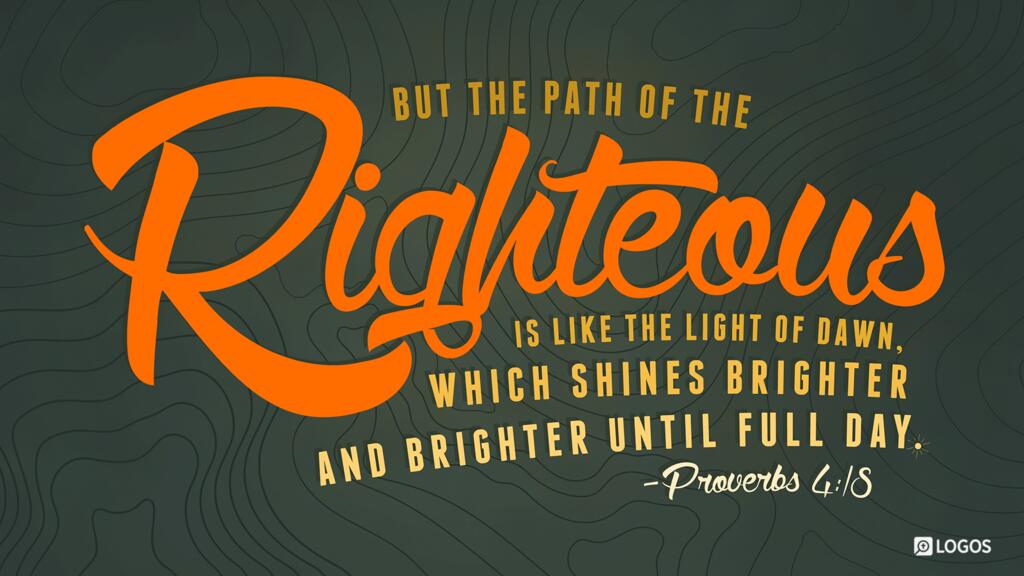
4:18But the path of the righteous is like the bright morning light,38
growing brighter and brighter39 until full day.40
4:19The way of the wicked is like gloomy darkness;41
they do not know what causes them to stumble.42
Footnotes
- 30 The verb אָשַׁר (’ashar, “to walk”) is not to be confused with the identically spelled homonym אָשַׁר “to pronounce happy” as in 80 אָשַׁר.
- 31 The verb עָבַר (’avar, “to cross over; to travel through”) ends both cola. In the first it warns against going on wrong paths; in the second it means “to go your own way,” but may hint that the way will cross over the wrong way. The rapid sequence of commands stresses the urgency of the matter.
- 32 The verb is רָעַע (ra’a’), which means “to do evil; to harm.” The verse is using the figure of hyperbole to stress the preoccupation of some people with causing trouble. R. L. Alden says, “How sick to find peace only at the price of another man’s misfortune” (Proverbs, 47).
- 33 Heb “their sleep is robbed/seized”; these expressions are metonymical for their restlessness in plotting evil.
- 34 The Hiphil imperfect (Kethib) means “cause to stumble.” This idiom (from hypocatastasis) means “bring injury/ruin to someone” ( 505–6 כָּשַׁל Hiph. 1).
- 35 The noun is a cognate accusative stressing that they consume wickedness.
- 36 Heb “the bread of wickedness” (so , , , ). There are two ways to take the genitives: (1) genitives of apposition: wickedness and violence are their food and drink (cf. , , ), or (2) genitives of source: they derive their livelihood from the evil they do (C. H. Toy, Proverbs [], ).
- 37 Heb “the wine of violence” (so , , , ). This is a genitive of source, meaning that the wine they drink was plundered from their violent crime. The Hebrew is structured in an : chiasm: “For they eat the bread of wickedness, and the wine of violence they drink.” The word order in the translation is reversed for the sake of smoothness and readability.
- 38 Heb “like light of brightness.” This construction is an attributive genitive: “bright light.” The word “light” (אוֹר, ’or) refers to the early morning light or the dawn ( 21 ). The point of the simile is that the course of life that the righteous follow is like the clear, bright morning light. It is illumined, clear, easy to follow, and healthy and safe—the opposite of what darkness represents.
- 39 The construction uses the Qal active participle of הָלַךְ (halakh) in a metaphorical sense to add the idea of continuance or continually to the participle הוֹלֵךְ (holekh). Here the path was growing light, but the added participle signifies continually.
- 40 Heb “until the day is established.” This expression refers to the coming of the full day or the time of high noon.
- 41 The simile describes ignorance or spiritual blindness, sinfulness, calamity, despair.
- 42 Heb “in what they stumble.”
The NET Bible First Edition, Copyright 1996-2005 by Biblical Studies Press
In other versions
ESVEnglish Standard Version
Do not enter the path of the wicked,
and do not walk in the way of the evil.
Avoid it; do not go on it;
turn away from it and pass on.
For they cannot sleep unless they have done wrong;
they are robbed of sleep unless they have made someone stumble.
For they eat the bread of wickedness
and drink the wine of violence.
But the path of the righteous is like the light of dawn,
which shines brighter and brighter until full day.
The way of the wicked is like deep darkness;
they do not know over what they stumble.
Copyright 2001 Crossway Bibles
NIVNew International Version (2011)
Do not set foot on the path of the wicked
or walk in the way of evildoers.
Avoid it, do not travel on it;
turn from it and go on your way.
For they cannot rest until they do evil;
they are robbed of sleep till they make someone stumble.
They eat the bread of wickedness
and drink the wine of violence.
The path of the righteous is like the morning sun,
shining ever brighter till the full light of day.
But the way of the wicked is like deep darkness;
they do not know what makes them stumble.
Copyright 1973, 1978, 1984, 2011 Biblica, Inc.
CSBChristian Standard Bible
Keep off the path of the wicked;
don’t proceed on the way of evil ones.
Avoid it; don’t travel on it.
Turn away from it, and pass it by.
For they can’t sleep
unless they have done what is evil;
they are robbed of sleep
unless they make someone stumble.
They eat the bread of wickedness
and drink the wine of violence.
The path of the righteous is like the light of dawn,
shining brighter and brighter until midday.
But the way of the wicked is like the darkest gloom;
they don’t know what makes them stumble.
Copyright 2017 Holman Bible Publishers
NLTNew Living Translation
Don’t do as the wicked do,
and don’t follow the path of evildoers.
Don’t even think about it; don’t go that way.
Turn away and keep moving.
For evil people can’t sleep until they’ve done their evil deed for the day.
They can’t rest until they’ve caused someone to stumble.
They eat the food of wickedness
and drink the wine of violence!
The way of the righteous is like the first gleam of dawn,
which shines ever brighter until the full light of day.
But the way of the wicked is like total darkness.
They have no idea what they are stumbling over.
Holy Bible, New Living Translation, copyright © 1996, 2004, 2015 by Tyndale House Foundation. Used by permission of Tyndale House Publishers. All rights reserved.
LEBThe Lexham English Bible
In the path of the wicked do not go;
do not walk in the way of those who do evil.
Avoid it; do not transgress it;
turn away from it and pass by.
For they will not sleep if they have not done wrong,
and they are robbed of their sleep if they do not cause stumbling.
For they ate the bread of wickedness,
and they drank the wine of violence.
But the path of the righteous ones is like the light of dawn,
leading and shining until the day is full.
The way of the wicked ones is like deep darkness;
they do not know what they stumble over.
Copyright 2012 Lexham Press
KJV 1900King James Version
Enter not into the path of the wicked,
And go not in the way of evil men.
Avoid it, pass not by it,
Turn from it, and pass away.
For they sleep not, except they have done mischief;
And their sleep is taken away, unless they cause some to fall.
For they eat the bread of wickedness,
And drink the wine of violence.
But the path of the just is as the shining light,
That shineth more and more unto the perfect day.
The way of the wicked is as darkness:
They know not at what they stumble.
Public Domain