Hebrews 5:1–10
The NET BibleOther versions
English
- NET The NET Bible
- DARBY 1890 Darby Bible
- ASV American Standard Version
- AV 1873 The Cambridge Paragraph Bible of the Authorized English Version
- CSB Christian Standard Bible
- D-R Douay-Rheims Bible
- ESV English Standard Version
- GW GOD’S WORD Translation
- GNB Good News Translation
- HCSB The Holman Christian Standard Bible
- KJV 1900 King James Version
- LSB Legacy Standard Bible
- LEB The Lexham English Bible
- MSG The Message: The Bible in Contemporary Language
- NASB95 New American Standard Bible (1995)
- NCV New Century Version
- NIrV New International Reader’s Version (1998)
- NIV New International Version (2011)
- NKJV The New King James Version
- NLT New Living Translation
- NRSVue New Revised Standard Version: Updated Edition
- RSV The Revised Standard Version
- RSVCE The Revised Standard Version, Catholic Edition
- TNIV Today’s New International Version
- YLT Young’s Literal Translation
Arabic
Czech
French
German
Greek
Hungarian
Italian
Korean
Latin
Portuguese
Russian
Simplified Chinese
Spanish
Traditional Chinese
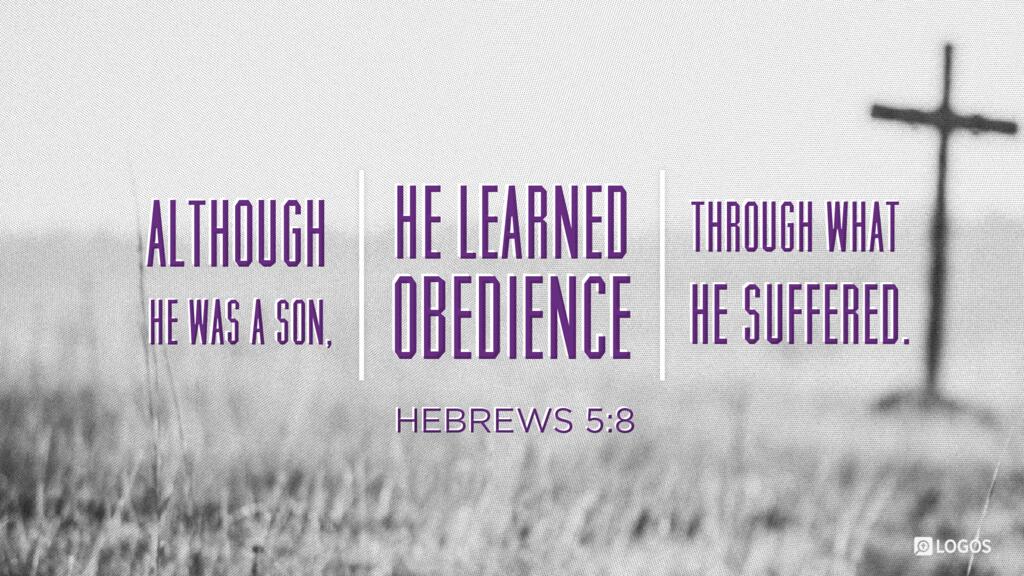
5:1For every high priest is taken from among the people1 and appointed2 to represent them before God,3 to offer both gifts and sacrifices for sins. 5:2He is able to deal compassionately with those who are ignorant and erring, since he also is subject to weakness, 5:3and for this reason he is obligated to make sin offerings for himself as well as for the people. 5:4And no one assumes this honor4 on his own initiative,5 but only when called to it by God,6 as in fact Aaron was. 5:5So also Christ did not glorify himself in becoming high priest, but the one who glorified him was God,7 who said to him, “You are my Son! Today I have fathered you,”85:6as also in another place God9 says, “You are a priest forever in the order of Melchizedek.”105:7During his earthly life11 Christ12 offered13 both requests and supplications, with loud cries and tears, to the one who was able to save him from death and he was heard because of his devotion. 5:8Although he was a son, he learned obedience through the things he suffered.145:9And by being perfected in this way, he became the source of eternal salvation to all who obey him, 5:10and he was designated15 by God as high priest in the order of Melchizedek.16
Footnotes
- 1 Grk “from among men,” but since the point in context is shared humanity (rather than shared maleness), the plural Greek term ἀνθρώπων (anthrōpōn) has been translated “people.”
- 2 Grk “who is taken from among people is appointed.”
- 3 Grk “appointed on behalf of people in reference to things relating to God.”
- 4 Honor refers here to the honor of the high priesthood.
- 5 Grk “by himself, on his own.”
- 6 Grk “being called by God.”
- 7 Grk “the one”; the referent (God) has been specified in the translation for clarity.
- 8 Grk “I have begotten you”; see Heb 1:5. A quotation from Ps 2:7.
- 9 Grk “he”; the referent (God) has been specified in the translation for clarity.
- 10 A quotation from Ps 110:4.
- 11 Grk “in the days of his flesh.”
- 12 Grk “he”; the referent (Christ) has been specified in the translation for clarity.
- 13 Grk “who … having offered,” continuing the description of Christ from Heb 5:5–6.
- 14 There is a wordplay in the Greek text between the verbs “learned” (ἔμαθεν, emathen) and “suffered” (ἔπαθεν, epathen).
- 15 Grk “having been designated,” continuing the thought of Heb 5:9.
- 16 The phrase in the order of Melchizedek picks up the quotation from Ps 110:4 in Heb 5:6.
The NET Bible First Edition, Copyright 1996-2005 by Biblical Studies Press