Genesis 3:7–13
The NET BibleOther versions
English
- NET The NET Bible
- DARBY 1890 Darby Bible
- ASV American Standard Version
- AV 1873 The Cambridge Paragraph Bible of the Authorized English Version
- CSB Christian Standard Bible
- D-R Douay-Rheims Bible
- ESV English Standard Version
- GW GOD’S WORD Translation
- GNB Good News Translation
- HCSB The Holman Christian Standard Bible
- KJV 1900 King James Version
- LSB Legacy Standard Bible
- LEB The Lexham English Bible
- MSG The Message: The Bible in Contemporary Language
- NASB95 New American Standard Bible (1995)
- NCV New Century Version
- NIrV New International Reader’s Version (1998)
- NIV New International Version (2011)
- NKJV The New King James Version
- NLT New Living Translation
- NRSVue New Revised Standard Version: Updated Edition
- RSV The Revised Standard Version
- RSVCE The Revised Standard Version, Catholic Edition
- TNIV Today’s New International Version
- YLT Young’s Literal Translation
Arabic
Czech
French
German
Hebrew
Hungarian
Italian
Korean
Latin
Portuguese
Russian
Simplified Chinese
Spanish
Traditional Chinese
3:7Then the eyes of both of them opened, and they knew they were naked; so they sewed fig leaves together and made coverings for themselves.
The Judgment Oracles of God at the Fall
3:8Then the man and his wife heard the sound of the Lord God moving about21 in the orchard at the breezy time22 of the day, and they hid23 from the Lord God among the trees of the orchard. 3:9But the Lord God called to24 the man and said to him, “Where are you?”25 3:10The man replied,26 “I heard you moving about27 in the orchard, and I was afraid because I was naked, so I hid.” 3:11And the Lord God28 said, “Who told you that you were naked?29 Did you eat from the tree that I commanded you not to eat from?”30 3:12The man said, “The woman whom you gave me, she gave31 me some fruit32 from the tree and I ate it.” 3:13So the Lord God said to the woman, “What is this33 you have done?” And the woman replied, “The serpent34 tricked35 me, and I ate.”
Footnotes
- 21 The Hitpael participle of הָלָךְ (halakh, “to walk, to go”) here has an iterative sense, “moving” or “going about.” While a translation of “walking about” is possible, it assumes a theophany, the presence of the Lord God in a human form. This is more than the text asserts.
- 22 The expression is traditionally rendered “cool of the day,” because the Hebrew word רוּחַ (ruakh) can mean “wind.” U. Cassuto (Genesis: From Adam to Noah, ) concludes after lengthy discussion that the expression refers to afternoon when it became hot and the sun was beginning to decline. J. J. Niehaus (God at Sinai [], 155–57) offers a different interpretation of the phrase, relating יוֹם (yom, usually understood as “day”) to an Akkadian cognate umu (“storm”) and translates the phrase “in the wind of the storm.” If Niehaus is correct, then God is not pictured as taking an afternoon stroll through the orchard, but as coming in a powerful windstorm to confront the man and woman with their rebellion. In this case קוֹל יְהוָה (qol yéhvah, “sound of the Lord”) may refer to God’s thunderous roar, which typically accompanies his appearance in the storm to do battle or render judgment (e.g., see Ps 29).
- 23 The verb used here is the Hitpael, giving the reflexive idea (“they hid themselves”). In v. 10, when Adam answers the Lord, the Niphal form is used with the same sense: “I hid.”
- 24 The Hebrew verb קָרָא (qara’, “to call”) followed by the preposition אֶל־ or לְ (’el- or lé, “to, unto”) often carries the connotation of “summon.”
- 25 Where are you? The question is probably rhetorical (a figure of speech called erotesis) rather than literal, because it was spoken to the man, who answers it with an explanation of why he was hiding rather than a location. The question has more the force of “Why are you hiding?”
- 26 Heb “and he said.”
- 27 Heb “your sound.” If one sees a storm theophany here (see the note on the word “time” in v. ), then one could translate, “your powerful voice.”
- 28 Heb “and he said.” The referent (the Lord God) has been specified in the translation for clarity.
- 29 Who told you that you were naked? This is another rhetorical question, asking more than what it appears to ask. The second question in the verse reveals the Lord God’s real concern.
- 30 The Hebrew word order (“Did you from the tree—which I commanded you not to eat from it—eat?”) is arranged to emphasize that the man’s and the woman’s eating of the fruit was an act of disobedience. The relative clause inserted immediately after the reference to the tree brings out this point very well.
- 31 The Hebrew construction in this sentence uses an independent nominative absolute (formerly known as a casus pendens). “The woman” is the independent nominative absolute; it is picked up by the formal subject, the pronoun “she” written with the verb (“she gave”). The point of the construction is to throw the emphasis on “the woman.” But what makes this so striking is that a relative clause has been inserted to explain what is meant by the reference to the woman: “whom you gave me.” Ultimately, the man is blaming God for giving him the woman who (from the man’s viewpoint) caused him to sin.
- 32 The words “some fruit” here and the pronoun “it” at the end of the sentence are not in the Hebrew text, but are supplied for stylistic reasons.
- 33 The use of the demonstrative pronoun is enclitic, serving as an undeclined particle for emphasis. It gives the sense of “What in the world have you done?” (see R. J. Williams, Hebrew Syntax, 24, §118).
- 34 The Hebrew word order puts the subject (“the serpent”) before the verb here, giving prominence to it.
- 35 This verb (the Hiphil of נָשָׁא, nasha) is used elsewhere of a king or god misleading his people into false confidence (2 Kgs 18:29 = 2 Chr 32:15 = Isa 36:14; 2 Kgs 19:10 = Isa 37:10), of an ally deceiving a partner (Obad 7), of God deceiving his sinful people as a form of judgment (Jer 4:10), of false prophets instilling their audience with false hope (Jer 29:8), and of pride and false confidence producing self-deception (Jer 37:9; 49:16; Obad 3).
The NET Bible First Edition, Copyright 1996-2005 by Biblical Studies Press
In other versions
ESVEnglish Standard Version
Then the eyes of both were opened, and they knew that they were naked. And they sewed fig leaves together and made themselves loincloths.
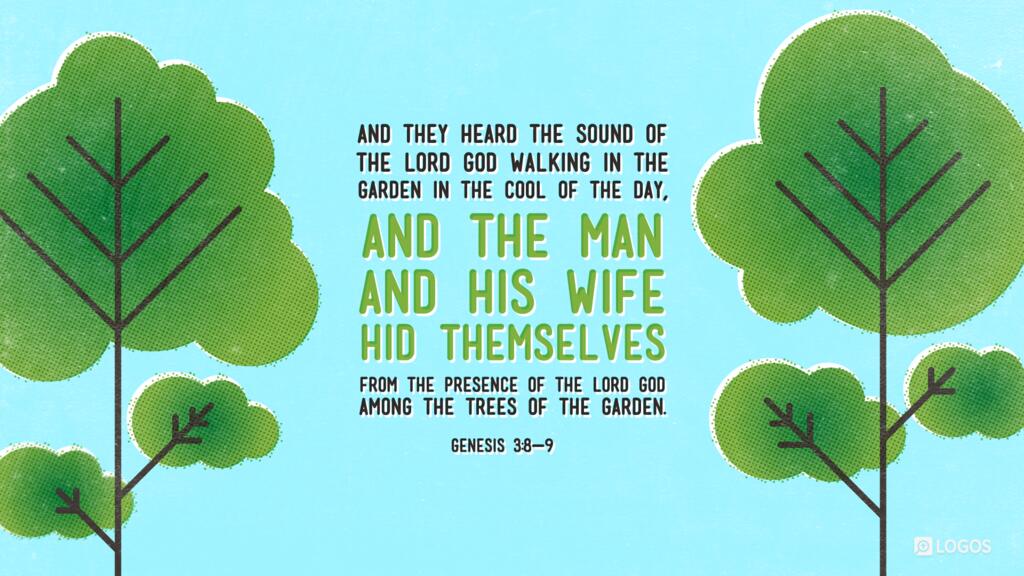
And they heard the sound of the Lord God walking in the garden in the cool of the day, and the man and his wife hid themselves from the presence of the Lord God among the trees of the garden. But the Lord God called to the man and said to him, “Where are you?” And he said, “I heard the sound of you in the garden, and I was afraid, because I was naked, and I hid myself.” He said, “Who told you that you were naked? Have you eaten of the tree of which I commanded you not to eat?” The man said, “The woman whom you gave to be with me, she gave me fruit of the tree, and I ate.” Then the Lord God said to the woman, “What is this that you have done?” The woman said, “The serpent deceived me, and I ate.”
Copyright 2001 Crossway Bibles
NIVNew International Version (2011)
Then the eyes of both of them were opened, and they realized they were naked; so they sewed fig leaves together and made coverings for themselves.
Then the man and his wife heard the sound of the Lord God as he was walking in the garden in the cool of the day, and they hid from the Lord God among the trees of the garden. But the Lord God called to the man, “Where are you?”
He answered, “I heard you in the garden, and I was afraid because I was naked; so I hid.”
And he said, “Who told you that you were naked? Have you eaten from the tree that I commanded you not to eat from?”
The man said, “The woman you put here with me—she gave me some fruit from the tree, and I ate it.”
Then the Lord God said to the woman, “What is this you have done?”
The woman said, “The serpent deceived me, and I ate.”
Copyright 1973, 1978, 1984, 2011 Biblica, Inc.
CSBChristian Standard Bible
Then the eyes of both of them were opened, and they knew they were naked; so they sewed fig leaves together and made coverings for themselves.
Then the man and his wife heard the sound of the Lord God walking in the garden at the time of the evening breeze, and they hid from the Lord God among the trees of the garden. So the Lord God called out to the man and said to him, “Where are you?”
And he said, “I heard you in the garden, and I was afraid because I was naked, so I hid.”
Then he asked, “Who told you that you were naked? Did you eat from the tree that I commanded you not to eat from?”
The man replied, “The woman you gave to be with me—she gave me some fruit from the tree, and I ate.”
So the Lord God asked the woman, “What have you done?”
And the woman said, “The serpent deceived me, and I ate.”
Copyright 2017 Holman Bible Publishers
NLTNew Living Translation
At that moment their eyes were opened, and they suddenly felt shame at their nakedness. So they sewed fig leaves together to cover themselves.
When the cool evening breezes were blowing, the man and his wife heard the Lord God walking about in the garden. So they hid from the Lord God among the trees. Then the Lord God called to the man, “Where are you?”
He replied, “I heard you walking in the garden, so I hid. I was afraid because I was naked.”
“Who told you that you were naked?” the Lord God asked. “Have you eaten from the tree whose fruit I commanded you not to eat?”
The man replied, “It was the woman you gave me who gave me the fruit, and I ate it.”
Then the Lord God asked the woman, “What have you done?”
“The serpent deceived me,” she replied. “That’s why I ate it.”
Holy Bible, New Living Translation, copyright © 1996, 2004, 2015 by Tyndale House Foundation. Used by permission of Tyndale House Publishers. All rights reserved.
LEBThe Lexham English Bible
Then the eyes of both of them were opened, and they knew that they were naked. And they sewed together fig leaves and they made for themselves coverings.
Then they heard the sound of Yahweh God walking in the garden at the windy time of day. And the man and his wife hid themselves from the presence of Yahweh God among the trees of the garden. And Yahweh God called to the man and said to him, “Where are you?” And he replied, “I heard the sound of you in the garden, and I was afraid because I am naked, so I hid myself.” Then he asked, “Who told you that you were naked? Have you eaten from the tree from which I forbade you to eat?” And the man replied, “The woman whom you gave to be with me—she gave to me from the tree and I ate.” Then Yahweh God said to the woman, “What is this you have done?” And the woman said, “The serpent deceived me, and I ate.”
Copyright 2012 Lexham Press
KJV 1900King James Version
And the eyes of them both were opened, and they knew that they were naked; and they sewed fig leaves together, and made themselves aprons. And they heard the voice of the Lord God walking in the garden in the cool of the day: and Adam and his wife hid themselves from the presence of the Lord God amongst the trees of the garden. And the Lord God called unto Adam, and said unto him, Where art thou? And he said, I heard thy voice in the garden, and I was afraid, because I was naked; and I hid myself. And he said, Who told thee that thou wast naked? Hast thou eaten of the tree, whereof I commanded thee that thou shouldest not eat? And the man said, The woman whom thou gavest to be with me, she gave me of the tree, and I did eat. And the Lord God said unto the woman, What is this that thou hast done? And the woman said, The serpent beguiled me, and I did eat.
Public Domain