1 John 2:3–5
The NET BibleOther versions
English
- NET The NET Bible
- DARBY 1890 Darby Bible
- ASV American Standard Version
- AV 1873 The Cambridge Paragraph Bible of the Authorized English Version
- CSB Christian Standard Bible
- D-R Douay-Rheims Bible
- ESV English Standard Version
- GW GOD’S WORD Translation
- GNB Good News Translation
- HCSB The Holman Christian Standard Bible
- KJV 1900 King James Version
- LSB Legacy Standard Bible
- LEB The Lexham English Bible
- MSG The Message: The Bible in Contemporary Language
- NASB95 New American Standard Bible (1995)
- NCV New Century Version
- NIrV New International Reader’s Version (1998)
- NIV New International Version (2011)
- NKJV The New King James Version
- NLT New Living Translation
- NRSVue New Revised Standard Version: Updated Edition
- RSV The Revised Standard Version
- RSVCE The Revised Standard Version, Catholic Edition
- TNIV Today’s New International Version
- YLT Young’s Literal Translation
Arabic
Czech
French
German
Greek
Hungarian
Italian
Korean
Latin
Portuguese
Russian
Simplified Chinese
Spanish
Traditional Chinese
Keeping God’s Commandments
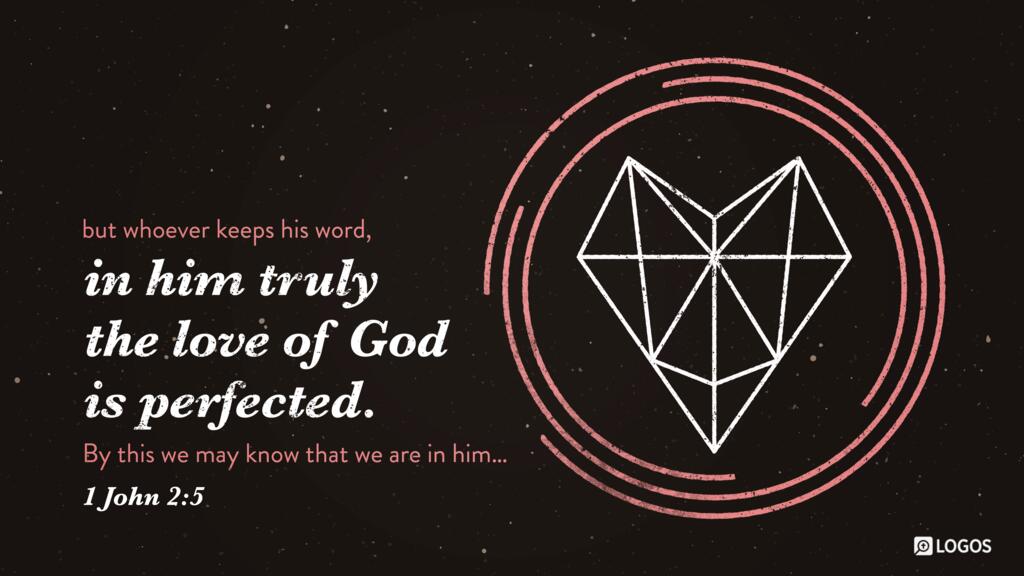
2:3Now7 by this we know that we have come to know God:8 if we keep his commandments. 2:4The one who says “I have come to know God”9 and yet does not keep his commandments is a liar, and the truth is not in such a person. 2:5But whoever obeys his10 word, truly in this person11 the love of God has been perfected. By this we know that we are in him.
Footnotes
- 7 The translation of καί (kai) at the beginning of 2:3 is important for understanding the argument, because a similar καί occurs at the beginning of 1:5. The use here is not just a simple continuative or connective use, but has more of a resumptive force, pointing back to the previous use in 1:5. Now. The author, after discussing three claims of the opponents in 1:6, 8, and 10 and putting forward three counterclaims of his own in 1:7, 1:9, and 2:1, now returns to the theme of “God as light” introduced in 1:5. The author will now discuss how a Christian may have assurance that he or she has come to know the God who is light, again by contrast with the opponents who make the same profession of knowing God, but lack the reality of such knowledge, as their behavior makes clear.
- 8 Grk “know him.” (1) Many take the third person pronoun αὐτον (auton) to refer to Jesus Christ, since he is mentioned in 2:1 and the pronoun αὐτός (autos) at the beginning of 2:2 clearly refers to him. But (2) it is more likely that God is the referent here, since (a) the assurance the author is discussing here is assurance that one has come to know God (all the claims of the opponents in 1:5–2:11 concern knowing and having fellowship with the God who is light); (b) when Jesus Christ is explicitly mentioned as an example to follow in 1 John 2:6, the pronoun ἐκεῖνος (ekeinos) is used to distinguish this from previous references with αὐτός; (c) the καί (kai) which begins 2:3 is parallel to the καί which begins 1:5, suggesting that the author is now returning to the discussion of God who is light, a theme introduced in 1:5. The author will now discuss how a Christian may have assurance that he or she has come to know the God who is light.
- 9 Grk “know him.” See the note on the phrase “know God” in for explanation.
- 10 The referent of this pronoun is probably to be understood as God, since God is the nearest previous antecedent.
- 11 Grk “in him.”
The NET Bible First Edition, Copyright 1996-2005 by Biblical Studies Press
In other versions
ESVEnglish Standard Version
And by this we know that we have come to know him, if we keep his commandments. Whoever says “I know him” but does not keep his commandments is a liar, and the truth is not in him, but whoever keeps his word, in him truly the love of God is perfected. By this we may know that we are in him:
Copyright 2001 Crossway Bibles
NIVNew International Version (2011)
We know that we have come to know him if we keep his commands. Whoever says, “I know him,” but does not do what he commands is a liar, and the truth is not in that person. But if anyone obeys his word, love for God is truly made complete in them. This is how we know we are in him:
Copyright 1973, 1978, 1984, 2011 Biblica, Inc.
CSBChristian Standard Bible
This is how we know that we know him: if we keep his commands. The one who says, “I have come to know him,” and yet doesn’t keep his commands, is a liar, and the truth is not in him. But whoever keeps his word, truly in him the love of God is made complete. This is how we know we are in him:
Copyright 2017 Holman Bible Publishers
NLTNew Living Translation
And we can be sure that we know him if we obey his commandments. If someone claims, “I know God,” but doesn’t obey God’s commandments, that person is a liar and is not living in the truth. But those who obey God’s word truly show how completely they love him. That is how we know we are living in him.
Holy Bible, New Living Translation, copyright © 1996, 2004, 2015 by Tyndale House Foundation. Used by permission of Tyndale House Publishers. All rights reserved.
LEBThe Lexham English Bible
And by this we know that we have come to know him, if we keep his commandments. The one who says “I have come to know him,” and does not keep his commandments is a liar, and the truth is not in this person. But whoever keeps his word, truly in this person the love of God has been perfected. By this we know that we are in him.
Copyright 2012 Lexham Press
KJV 1900King James Version
And hereby we do know that we know him, if we keep his commandments. He that saith, I know him, and keepeth not his commandments, is a liar, and the truth is not in him. But whoso keepeth his word, in him verily is the love of God perfected: hereby know we that we are in him.
Public Domain