Ephesians 1:3–14
The Lexham English BibleOther versions
English
- LEB The Lexham English Bible
- DARBY 1890 Darby Bible
- ASV American Standard Version
- AV 1873 The Cambridge Paragraph Bible of the Authorized English Version
- CSB Christian Standard Bible
- D-R Douay-Rheims Bible
- ESV English Standard Version
- GW GOD’S WORD Translation
- GNB Good News Translation
- HCSB The Holman Christian Standard Bible
- KJV 1900 King James Version
- LSB Legacy Standard Bible
- MSG The Message: The Bible in Contemporary Language
- NET The NET Bible
- NASB95 New American Standard Bible (1995)
- NCV New Century Version
- NIrV New International Reader’s Version (1998)
- NIV New International Version (2011)
- NKJV The New King James Version
- NLT New Living Translation
- NRSVue New Revised Standard Version: Updated Edition
- RSV The Revised Standard Version
- RSVCE The Revised Standard Version, Catholic Edition
- YLT Young’s Literal Translation
Arabic
Czech
French
German
Greek
Hungarian
Italian
Korean
Latin
Portuguese
Russian
Simplified Chinese
Spanish
Traditional Chinese
Praise to God for Spiritual Blessings
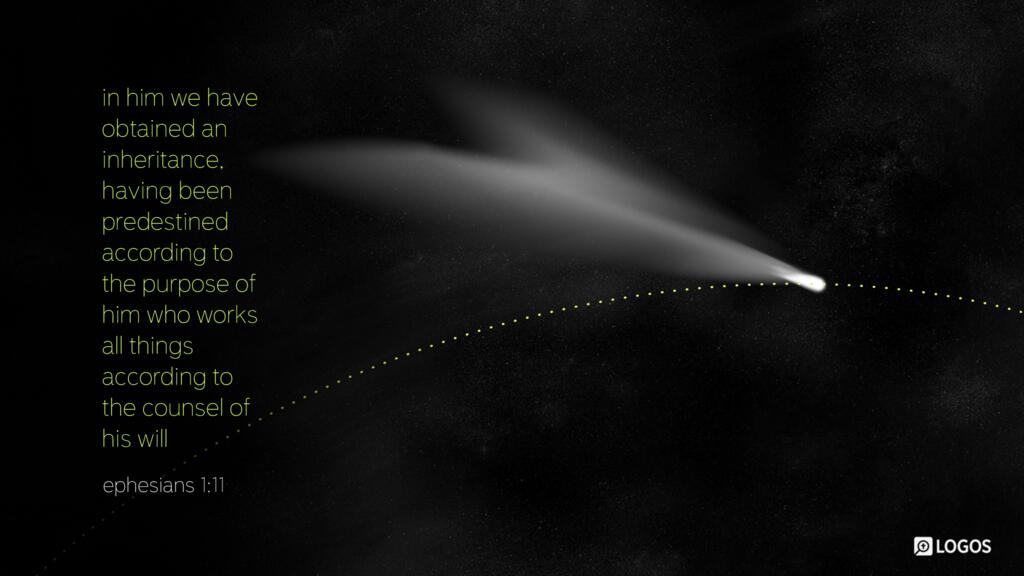
3Blessed isb the God and Father of our Lord Jesus Christ, who has blessed us with every spiritual blessing in the heavenly places in Christ, 4just as he chose us in him before the foundation of the world, that we should be holy and blameless before him in love,c 5having predestined us to adoption through Jesus Christ to himself according to the good pleasure of his will, 6to the praise of the glory of his grace that he bestowed on us in the beloved, 7in whom we have redemption through his blood, the forgiveness of sins, according to the riches of his grace, 8that he caused to abound to us in all wisdom and insight, 9making known to us the mystery of his will, according to his good pleasure that he purposed in him, 10for the administration of the fullness of times, to bring together all things in Christ, the things in the heavens and the things on the earth, in him 11in whom also we were chosen, having been predestined according to the purpose of the One who works all things according to the counsel of his will, 12that we who hoped beforehand in Christ should be for the praise of his glory, 13in whom also you, when you heard* the word of truth, the gospel of your salvation, in whom also when you believed you were sealed with the promised Holy Spirit, 14who is the down payment of our inheritance, until the redemption of the possession, to the praise of his glory.
Footnotes
Copyright 2012 Lexham Press