Luke 24:1–27
The Holman Christian Standard BibleOther versions
English
- HCSB The Holman Christian Standard Bible
- DARBY 1890 Darby Bible
- ASV American Standard Version
- AV 1873 The Cambridge Paragraph Bible of the Authorized English Version
- CSB Christian Standard Bible
- D-R Douay-Rheims Bible
- ESV English Standard Version
- GW GOD’S WORD Translation
- GNB Good News Translation
- KJV 1900 King James Version
- LSB Legacy Standard Bible
- LEB The Lexham English Bible
- MSG The Message: The Bible in Contemporary Language
- NET The NET Bible
- NASB95 New American Standard Bible (1995)
- NCV New Century Version
- NIrV New International Reader’s Version (1998)
- NIV New International Version (2011)
- NKJV The New King James Version
- NLT New Living Translation
- NRSVue New Revised Standard Version: Updated Edition
- RSV The Revised Standard Version
- RSVCE The Revised Standard Version, Catholic Edition
- YLT Young’s Literal Translation
Arabic
Czech
French
German
Greek
Hungarian
Italian
Korean
Latin
Portuguese
Russian
Simplified Chinese
Spanish
Traditional Chinese
Resurrection Morning
24On zthe first day of the week, avery early in the morning, they bcame to the tomb, bringing the spices they had prepared. 2They found the stone rolled away from the tomb. 3They went in but did not find the body cof the Lord Jesus. d4While they were perplexed about this, suddenly two men stood by them in dazzling eclothes. 5So the women were terrified and bowed down to the ground. f
“Why are you looking for the living among the dead?” asked the men. 6“He is not here, but He has been resurrected! gRemember how He spoke to you when He was still in Galilee, h7saying, ‘The •Son of Man must be betrayed iinto the hands of sinful men, be crucified, and rise jon the third day’?” 8And they remembered His words.
9Returning from the tomb, they reported all these things to the Eleven kand to all the rest. 10Mary Magdalene, Joanna, Mary the mother of James, land the other women with them were telling the apostles mthese things. 11But these words seemed like nonsense to them, and they did not believe nthe women. 12Peter, ohowever, got up and ran to the tomb. When he stooped to look in, he saw only the linen cloths. pqSo he went home, amazed rat what had happened.
The Emmaus Disciples
13Now sthat same day two of them were on their way to a village called tEmmaus, which was about seven miles uvfrom Jerusalem. w14Together they were discussing everything that had taken place. 15And while they were discussing and arguing, Jesus Himself came near and began to walk along with them. 16But they xwere prevented from recognizing Him. y17Then He asked them, “What is this dispute that you’re having zwith each other as you are walking?” And they stopped walking and looked discouraged.
18The one named Cleopas answered Him, “Are You the only visitor in Jerusalem who doesn’t know the things that happened there in these days?” a
19“What things?” He asked them.
So they said to Him, “The things concerning Jesus the Nazarene, bwho was a Prophet cpowerful in action and speech dbefore God and all the people, e20and how our chief priests and leaders fhanded Him over to be sentenced to death, gand they crucified Him. h21But we were hoping that He was the One who was about to redeem iIsrael. Besides all this, it’s the third day jsince these things happened. 22Moreover, some women from our group astounded us. They arrived early at the tomb, 23and when they didn’t find His body, they came and reported that they had seen a vision of angels who said He was alive. 24Some of those who were with us went to the tomb and found it just as the women had said, but they didn’t see Him.” k
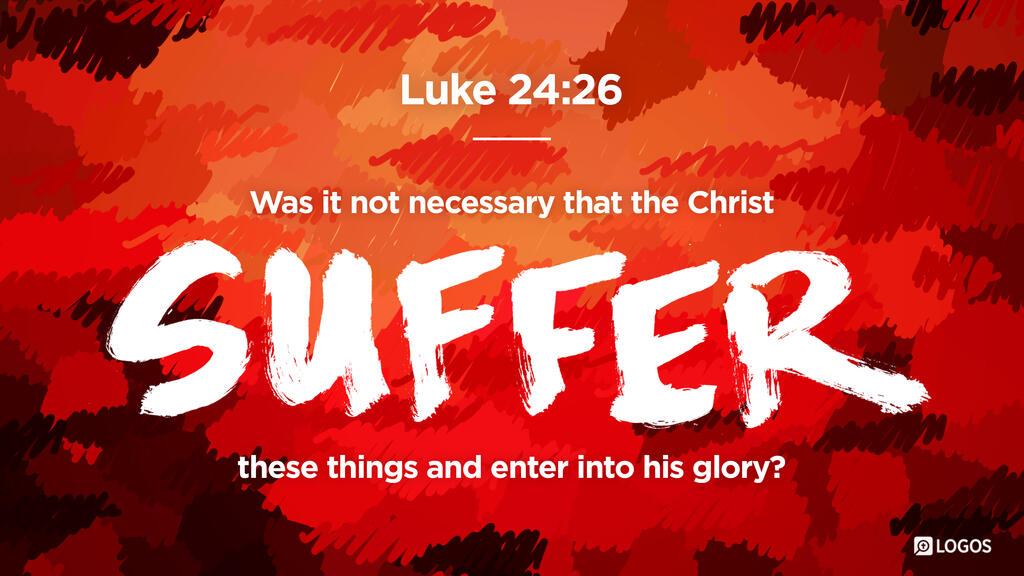
25He said to them, “How unwise and slow you are to believe in your hearts all that the prophets have spoken! l26Didn’t the •Messiah have to suffer mthese things and enter into His glory?” n27Then beginning with Moses oand all the Prophets, pHe interpreted for them the things concerning Himself in all the Scriptures. q
Footnotes
- b24:1 Other add and other women with them
- f24:5 and inclined their faces to the ground
- •Most frequent title Jesus used for Himself (Dn 7:13; Mt 8:20)
- p24:12 Other add lying there
- t24:13 village, which name is
- u24:13 about 60 stadia; 1 stadion = 600 feet
- x24:16 their eyes
- z24:17 What are these words that you are exchanging
- •Or the Christ; the Greek word is Christos and means the anointed one. Where the NT emphasizes Christos as a name of our Lord or has a Gentile context, “Christ” is used. Where the NT Christos has a Jewish context, the title “Messiah” is used.
Cross references
- z24:1–12 Mt 28:1–10; Mk 16:1–11; Jn 20:1–18
- a24:1 Ac 20:7; 1Co 16:2
- c24:3 Lk 12:4
- d24:3 Lk 7:13; Ac 1:21
- e24:4 Lk 2:9; 17:24; Ac 12:7
- g24:6 Mt 26:32; Mk 5:41; 9:27; Jn 2:19; 1Co 15:4
- h24:6 Mt 17:22–23; Mk 9:30–31; Lk 9:22, 44
- i24:7 Lk 9:22, 31, 44; 18:32–33; 23:21
- j24:7 Mt 17:9, 23; Mk 8:31; 9:31; 10:34; Lk 18:33; 24:46
- k24:9 Ac 1:15–26; 2:14
- l24:10 Mk 15:40; 16:1; Lk 8:2–3
- m24:10 Lk 6:13
- n24:11 Mt 28:17; Lk 24:41; Jn 20:25, 27
- o24:12 Lk 6:14; Ac 10:32
- q24:12 Lk 23:53
- r24:12 Lk 1:21, 63; 2:18, 33; 4:22; Ac 2:7; 3:12
- s24:13 Mk 16:12–13
- v24:13 Rv 21:16
- w24:13 Mt 23:37; Ac 8:1
- y24:16 Lk 9:45; 18:34; Jn 20:14–15; 21:4
- a24:18 Ac 26:26
- b24:19 Lk 4:34; 18:37; Ac 2:22
- c24:19 Dt 18:15; Lk 4:24
- d24:19 Lk 4:14; Ac 1:1; 2:22
- e24:19 Lk 18:43
- f24:20 Lk 23:13
- g24:20 Lk 9:44; 18:32; Ac 3:13; 13:27–28
- h24:20 Lk 23:21, 25; Ac 5:30
- i24:21 Lk 22:20; Ac 1:6
- j24:21 Lk 9:22; 13:32; 18:33
- k24:24 Lk 24:12; Jn 20:2–10
- l24:25 Lk 16:31; 18:31; Ac 26:27; 2Pt 1:21
- m24:26 Lk 24:44–48; 1Co 15:3–5
- n24:26 Lk 9:26, 32; 21:27; 22:69; Ac 2:33; 7:55; 22:11
- o24:27 Gn 3:15; 12:3; 22:18; Nm 21:9; 24:17
- p24:27 2Sm 7:12–16; Is 7:14; 9:6; 52:13–53:12; Jr 23:5–6; Dn 7:13–14; Mc 5:2; Zch 9:9; 12:10
- q24:27 Lk 16:16
Copyright 2002, 2003, 2009 Holman Bible Publishers