1 John 4:7–21
The Holman Christian Standard BibleOther versions
English
- HCSB The Holman Christian Standard Bible
- DARBY 1890 Darby Bible
- ASV American Standard Version
- AV 1873 The Cambridge Paragraph Bible of the Authorized English Version
- CSB Christian Standard Bible
- D-R Douay-Rheims Bible
- ESV English Standard Version
- GW GOD’S WORD Translation
- GNB Good News Translation
- KJV 1900 King James Version
- LSB Legacy Standard Bible
- LEB The Lexham English Bible
- MSG The Message: The Bible in Contemporary Language
- NET The NET Bible
- NASB95 New American Standard Bible (1995)
- NCV New Century Version
- NIrV New International Reader’s Version (1998)
- NIV New International Version (2011)
- NKJV The New King James Version
- NLT New Living Translation
- NRSVue New Revised Standard Version: Updated Edition
- RSV The Revised Standard Version
- RSVCE The Revised Standard Version, Catholic Edition
- YLT Young’s Literal Translation
Arabic
Czech
French
German
Greek
Hungarian
Italian
Korean
Latin
Portuguese
Russian
Simplified Chinese
Spanish
Traditional Chinese
Knowing God through Love
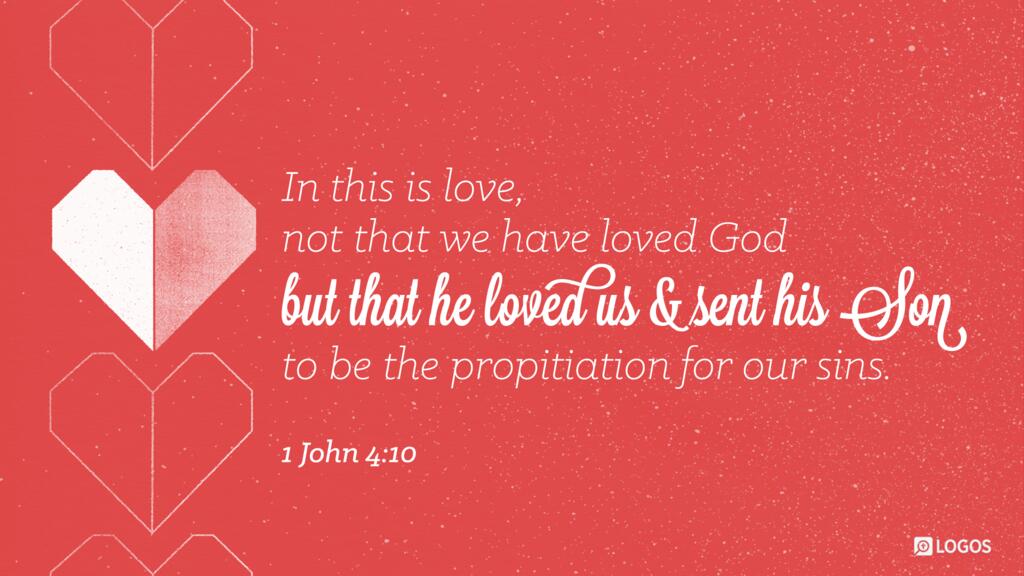
7Dear friends, let us love one another, because love is from God, and everyone who loves has been born of God xand knows God. 8The one who does not love does not know God, because God is love. 9God’s love was revealed among us in this way: yGod sent zHis One and Only Son ainto the world so that we might live bthrough Him. 10Love consists in this: not that we loved God, but that He loved us cand sent His Son to be the dpropitiation efor our sins. 11Dear friends, if God loved us in this way, we also must love one another. f12No one has ever seen God. ghIf we love one another, God remains in ius and His love is perfected in us.
13This is how we know that we remain in Him jand He in us: He has given assurance to us from His Spirit. k14And we have seen and we testify that the Father has sent His Son las the world’s Savior. 15Whoever confesses mnthat Jesus is the Son of God—God remains in him and he in God. 16And we have come to know and to believe the love that God has for us. God is love, and the one who remains in love remains in God, and God remains in him.
17In this, love is perfected with us so that we may have confidence in the day of judgment, ofor we are as He is in this world. p18There is no fear in love; instead, perfect love drives out fear, qbecause fear involves punishment. rSo the one who fears has not reached perfection in love. s19We love tbecause He first loved us. u
Keeping God’s Commands
20If anyone says, “I love God,” yet hates his brother, vhe is a liar. wFor the person who does not love his brother xhe has seen cannot love the God he has not seen. y21And we have this command from Him: The one who loves God must also love his brother.
Footnotes
- y4:9 Or revealed in us
- d4:10 Or a
- g4:12 Since God is an infinite being, no one can see Him in His absolute essential nature; Ex 33:18–23.
- i4:12 Or remains among
- m4:15 Or acknowledges
- r4:18 Or fear has its own punishment or torment
- t4:19 Other add Him
- y4:20 Other read has seen, how is he able to love … seen? (as a question)
Cross references
- x4:7 1Jn 2:29
- z4:9 Mk 9:37
- a4:9 Jn 1:14, 18; 3:16, 18
- b4:9 Jn 10:28
- c4:10 Jn 3:16
- e4:10 2Co 5:21; 1Jn 2:2
- f4:11 Jn 13:14; 15:12; Rm 13:8; 1Th 4:9; 1Pt 1:22
- h4:12 Ex 33:20
- j4:13 Jn 15:4–7; 1Jn 2:6, 24, 27–28; 3:6, 24; 4:15–16
- k4:13 Rv 3:22
- l4:14 Rm 1:3
- n4:15 Jn 9:22; Php 2:6
- o4:17 Mt 10:15; 11:22, 24; 12:36; 2Pt 2:9; 3:7; Jd 6
- p4:17 Jn 14:10–11; 15:9–10; 17:11, 15, 18
- q4:18 Rm 8:15
- s4:18 Eph 4:11–16
- u4:19 2Th 2:13
- v4:20 1Jn 2:9, 11; 3:15
- w4:20 1Jn 1:10
- x4:20 1Jn 2:10; 3:10, 14–17
Copyright 2002, 2003, 2009 Holman Bible Publishers