Psalm 133:1–134:3
The NET BibleOther versions
English
- NET The NET Bible
- DARBY 1890 Darby Bible
- ASV American Standard Version
- AV 1873 The Cambridge Paragraph Bible of the Authorized English Version
- CSB Christian Standard Bible
- D-R Douay-Rheims Bible
- ESV English Standard Version
- GW GOD’S WORD Translation
- GNB Good News Translation
- HCSB The Holman Christian Standard Bible
- KJV 1900 King James Version
- LSB Legacy Standard Bible
- LEB The Lexham English Bible
- MSG The Message: The Bible in Contemporary Language
- NASB95 New American Standard Bible (1995)
- NCV New Century Version
- NIrV New International Reader’s Version (1998)
- NIV New International Version (2011)
- NKJV The New King James Version
- NLT New Living Translation
- NRSVue New Revised Standard Version: Updated Edition
- RSV The Revised Standard Version
- RSVCE The Revised Standard Version, Catholic Edition
- YLT Young’s Literal Translation
Arabic
Czech
French
German
Hebrew
Hungarian
Italian
Korean
Latin
Portuguese
Russian
Simplified Chinese
Spanish
Traditional Chinese
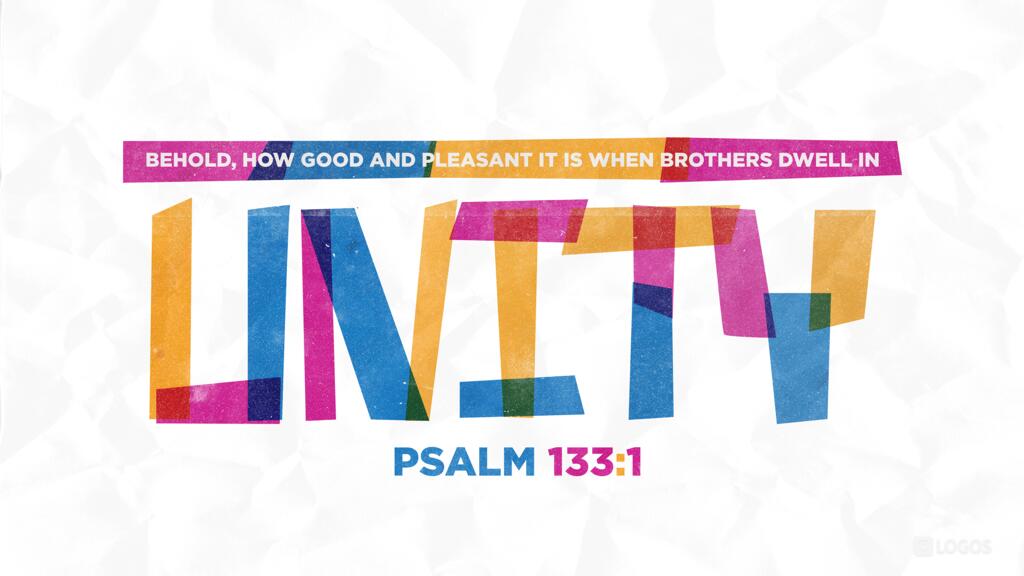
133:1Look! How good and how pleasant it is
when brothers live together!1
133:2It is like fine oil poured on the head
which flows down the beard2—
Aaron’s beard,
and then flows down his garments.3
133:3It is like the dew of Hermon,4
which flows down upon the hills of Zion.5
Indeed6 that is where the Lord has decreed
a blessing will be available—eternal life.7
Psalm 1348
A song of ascents.9
134:1Attention!1 Praise the Lord,
all you servants of the Lord,
who serve2 in the Lord’s temple during the night.
134:2Lift your hands toward the sanctuary
and praise the Lord!
134:3May the Lord, the Creator of heaven and earth,
Footnotes
- 1 This statement refers to the extended family structure of ancient Israel, where brothers would often live in proximity to one another (Deut 25:5), giving the family greater social prominence and security. However, in its later application in the Israelite cult it probably envisions unity within the covenant community. See L. C. Allen, Psalms 101–150 (), .
- 2 Heb “[it is] like the good oil on the head, going down on the beard.”
- 3 Heb “which goes down in accordance with his measured things.” The Hebrew phrase מִדּוֹתָיו (middotayv, “his measured things”) refers here to the robes worn by Aaron. *מַד derives the form from מַד (midah, “robe”) rather than מִדָּה (middah, “measured thing”). Ugaritic md means “robe” and is pluralized mdt.
- 4 Hermon refers to Mount Hermon, located north of Israel.
- 5 The hills of Zion are those surrounding Zion (see Pss 87:1; 125:2). The psalmist does not intend to suggest that the dew from Mt. Hermon in the distant north actually flows down upon Zion. His point is that the same kind of heavy dew that replenishes Hermon may also be seen on Zion’s hills. See A. Cohen, Psalms (), 439. “Dew” here symbolizes divine blessing, as the next line suggests.
- 6 Or “for.”
- 7 Heb “there the Lord has commanded the blessing, life forever.”
- 8 Psalm 134. The psalmist calls on the temple servants to praise God (vv. 1–2). They in turn pronounce a blessing on the psalmist (v. 3).
- 9 The precise significance of this title, which appears in Pss 120–134, is unclear. Perhaps worshipers recited these psalms when they ascended the road to Jerusalem to celebrate annual religious festivals. For a discussion of their background see L. C. Allen, Psalms 101–150 (), .
- 1 Heb “Look!”
- 2 Heb “stand.”
- 3 The pronominal suffix is second masculine singular, suggesting that the servants addressed in vv. 1–2 are responding to the psalmist.
- 4 Heb “may the Lord bless you from Zion, the maker of heaven and earth.”
The NET Bible First Edition, Copyright 1996-2005 by Biblical Studies Press