John 4:30–38
The NET BibleOther versions
English
- NET The NET Bible
- DARBY 1890 Darby Bible
- ASV American Standard Version
- AV 1873 The Cambridge Paragraph Bible of the Authorized English Version
- CSB Christian Standard Bible
- D-R Douay-Rheims Bible
- ESV English Standard Version
- GW GOD’S WORD Translation
- GNB Good News Translation
- HCSB The Holman Christian Standard Bible
- KJV 1900 King James Version
- LSB Legacy Standard Bible
- LEB The Lexham English Bible
- MSG The Message: The Bible in Contemporary Language
- NASB95 New American Standard Bible (1995)
- NCV New Century Version
- NIrV New International Reader’s Version (1998)
- NIV New International Version (2011)
- NKJV The New King James Version
- NLT New Living Translation
- NRSVue New Revised Standard Version: Updated Edition
- RSV The Revised Standard Version
- RSVCE The Revised Standard Version, Catholic Edition
- YLT Young’s Literal Translation
Arabic
Czech
French
German
Greek
Hungarian
Italian
Korean
Latin
Portuguese
Russian
Simplified Chinese
Spanish
Traditional Chinese
4:30So72 they left the town and began coming73 to him.
Workers for the Harvest
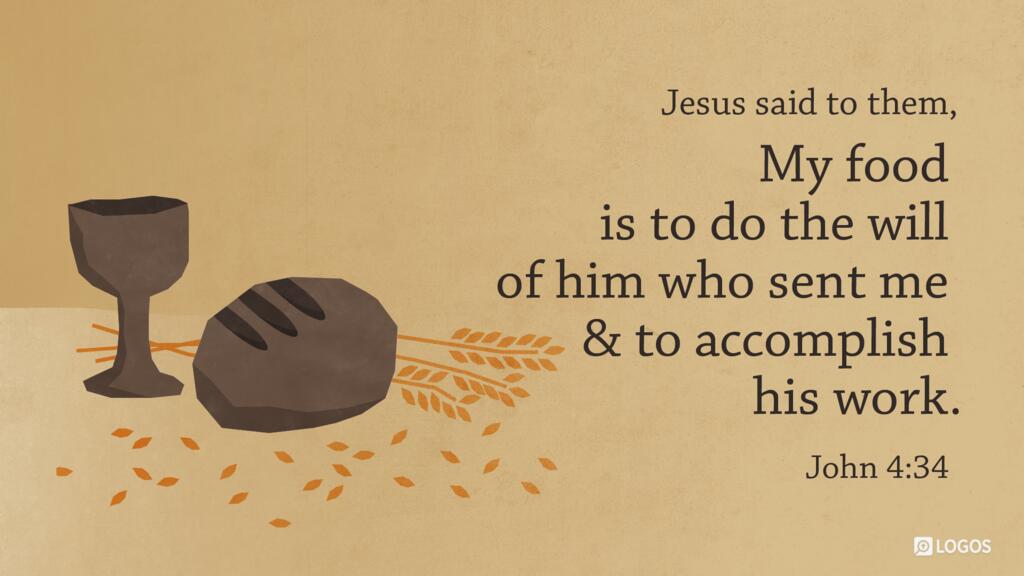
4:31Meanwhile the disciples were urging him,74 “Rabbi, eat something.”754:32But he said to them, “I have food to eat that you know nothing about.” 4:33So the disciples began to say76 to one another, “No one brought him anything77 to eat, did they?”784:34Jesus said to them, “My food is to do the will of the one who sent me79 and to complete80 his work.814:35Don’t you say,82 ‘There are four more months and then comes the harvest?’ I tell you, look up83 and see that the fields are already white84 for harvest! 4:36The one who reaps receives pay85 and gathers fruit for eternal life, so that the one who sows and the one who reaps can rejoice together. 4:37For in this instance the saying is true,86 ‘One sows and another reaps.’ 4:38I sent you to reap what you did not work for; others have labored and you have entered into their labor.”
Footnotes
- 72 “So” is supplied for transitional smoothness in English.
- 73 The imperfect tense is here rendered began coming for the author is not finished with this part of the story yet; these same Samaritans will appear again in v. 35.
- 74 Grk “were asking him, saying.”
- 75 The direct object of φάγε (phage) in Greek is understood; “something” is supplied in English.
- 76 An ingressive imperfect conveys the idea that Jesus’ reply provoked the disciples’ response.
- 77 The direct object of ἤνεγκεν (ēnenken) in Greek is understood; “anything” is supplied in English.
- 78 Questions prefaced with μή (mē) in Greek anticipate a negative answer. This can sometimes be indicated by using a “tag” at the end in English (here it is “did they?”).
- 79 The one who sent me refers to the Father.
- 80 Or “to accomplish.”
- 81 The substantival ἵνα (hina) clause has been translated as an English infinitive clause. No one brought him anything to eat, did they? In the discussion with the disciples which took place while the woman had gone into the city, note again the misunderstanding: The disciples thought Jesus referred to physical food, while he was really speaking figuratively and spiritually again. Thus Jesus was forced to explain what he meant, and the explanation that his food was his mission, to do the will of God and accomplish his work, leads naturally into the metaphor of the harvest. The fruit of his mission was represented by the Samaritans who were coming to him.
- 82 The recitative ὅτι (hoti) after λέγετε (legete) has not been translated.
- 83 Grk “lift up your eyes” (an idiom). ἐπαίρω 1 has “look up” here.
- 84 That is, “ripe.”
- 85 Or “a reward”; see L&N 38.14 and 57.173. This is something of a wordplay.
- 86 The recitative ὅτι (hoti) after ἀληθινός (alēthinos) has not been translated.
The NET Bible First Edition, Copyright 1996-2005 by Biblical Studies Press
In other versions
ESVEnglish Standard Version
They went out of the town and were coming to him.
Meanwhile the disciples were urging him, saying, “Rabbi, eat.” But he said to them, “I have food to eat that you do not know about.” So the disciples said to one another, “Has anyone brought him something to eat?” Jesus said to them, “My food is to do the will of him who sent me and to accomplish his work. Do you not say, ‘There are yet four months, then comes the harvest’? Look, I tell you, lift up your eyes, and see that the fields are white for harvest. Already the one who reaps is receiving wages and gathering fruit for eternal life, so that sower and reaper may rejoice together. For here the saying holds true, ‘One sows and another reaps.’ I sent you to reap that for which you did not labor. Others have labored, and you have entered into their labor.”
Copyright 2001 Crossway Bibles
NIVNew International Version (2011)
They came out of the town and made their way toward him.
Meanwhile his disciples urged him, “Rabbi, eat something.”
But he said to them, “I have food to eat that you know nothing about.”
Then his disciples said to each other, “Could someone have brought him food?”
“My food,” said Jesus, “is to do the will of him who sent me and to finish his work. Don’t you have a saying, ‘It’s still four months until harvest’? I tell you, open your eyes and look at the fields! They are ripe for harvest. Even now the one who reaps draws a wage and harvests a crop for eternal life, so that the sower and the reaper may be glad together. Thus the saying ‘One sows and another reaps’ is true. I sent you to reap what you have not worked for. Others have done the hard work, and you have reaped the benefits of their labor.”
Copyright 1973, 1978, 1984, 2011 Biblica, Inc.
CSBChristian Standard Bible
They left the town and made their way to him.
In the meantime the disciples kept urging him, “Rabbi, eat something.”
But he said, “I have food to eat that you don’t know about.”
The disciples said to one another, “Could someone have brought him something to eat?”
“My food is to do the will of him who sent me and to finish his work,” Jesus told them. “Don’t you say, ‘There are still four more months, and then comes the harvest’? Listen to what I’m telling you: Open your eyes and look at the fields, because they are ready for harvest. The reaper is already receiving pay and gathering fruit for eternal life, so that the sower and reaper can rejoice together. For in this case the saying is true: ‘One sows and another reaps.’ I sent you to reap what you didn’t labor for; others have labored, and you have benefited from their labor.”
Copyright 2017 Holman Bible Publishers
NLTNew Living Translation
So the people came streaming from the village to see him.
Meanwhile, the disciples were urging Jesus, “Rabbi, eat something.”
But Jesus replied, “I have a kind of food you know nothing about.”
“Did someone bring him food while we were gone?” the disciples asked each other.
Then Jesus explained: “My nourishment comes from doing the will of God, who sent me, and from finishing his work. You know the saying, ‘Four months between planting and harvest.’ But I say, wake up and look around. The fields are already ripe for harvest. The harvesters are paid good wages, and the fruit they harvest is people brought to eternal life. What joy awaits both the planter and the harvester alike! You know the saying, ‘One plants and another harvests.’ And it’s true. I sent you to harvest where you didn’t plant; others had already done the work, and now you will get to gather the harvest.”
Holy Bible, New Living Translation, copyright © 1996, 2004, 2015 by Tyndale House Foundation. Used by permission of Tyndale House Publishers. All rights reserved.
LEBThe Lexham English Bible
They went out from the town and were coming to him.
In the meanwhile the disciples were asking him, saying, “Rabbi, eat something!” But he said to them, “I have food to eat that you do not know about.” So the disciples began to say to one another, “No one brought him anything to eat, did they?” Jesus said to them, “My food is that I do the will of the one who sent me and complete his work. Do you not say, ‘There are yet four months and the harvest comes’? Behold, I say to you, lift up your eyes and look at the fields, that they are white for harvest already. The one who reaps receives wages and gathers fruit for eternal life, in order that the one who sows and the one who reaps can rejoice together. For in this instance the saying is true, ‘It is one who sows and another who reaps.’ I sent you to reap what you did not work for; others have worked, and you have entered into their work.”
Copyright 2012 Lexham Press
KJV 1900King James Version
Then they went out of the city, and came unto him.
In the mean while his disciples prayed him, saying, Master, eat. But he said unto them, I have meat to eat that ye know not of. Therefore said the disciples one to another, Hath any man brought him ought to eat? Jesus saith unto them, My meat is to do the will of him that sent me, and to finish his work. Say not ye, There are yet four months, and then cometh harvest? behold, I say unto you, Lift up your eyes, and look on the fields; for they are white already to harvest. And he that reapeth receiveth wages, and gathereth fruit unto life eternal: that both he that soweth and he that reapeth may rejoice together. And herein is that saying true, One soweth, and another reapeth. I sent you to reap that whereon ye bestowed no labour: other men laboured, and ye are entered into their labours.
Public Domain