2 Corinthians 5:1–9
The NET BibleOther versions
English
- NET The NET Bible
- DARBY 1890 Darby Bible
- ASV American Standard Version
- AV 1873 The Cambridge Paragraph Bible of the Authorized English Version
- CSB Christian Standard Bible
- D-R Douay-Rheims Bible
- ESV English Standard Version
- GW GOD’S WORD Translation
- GNB Good News Translation
- HCSB The Holman Christian Standard Bible
- KJV 1900 King James Version
- LSB Legacy Standard Bible
- LEB The Lexham English Bible
- MSG The Message: The Bible in Contemporary Language
- NASB95 New American Standard Bible (1995)
- NCV New Century Version
- NIrV New International Reader’s Version (1998)
- NIV New International Version (2011)
- NKJV The New King James Version
- NLT New Living Translation
- NRSVue New Revised Standard Version: Updated Edition
- RSV The Revised Standard Version
- RSVCE The Revised Standard Version, Catholic Edition
- YLT Young’s Literal Translation
Arabic
Czech
French
German
Greek
Hungarian
Italian
Korean
Latin
Portuguese
Russian
Simplified Chinese
Spanish
Traditional Chinese
Living by Faith, Not by Sight
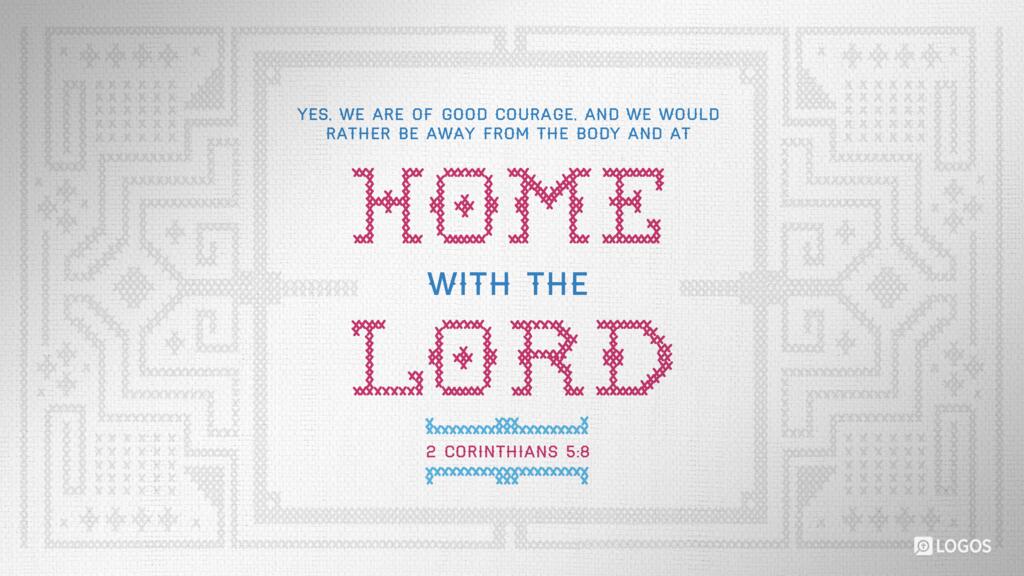
5:1For we know that if our earthly house, the tent we live in,1 is dismantled,2 we have a building from God, a house not built by human hands, that is eternal in the heavens. 5:2For in this earthly house3 we groan, because we desire to put on4 our heavenly dwelling, 5:3if indeed, after we have put on5 our heavenly house,6 we will not be found naked. 5:4For we groan while we are in this tent,7 since we are weighed down,8 because we do not want to be unclothed, but clothed, so that what is mortal may be swallowed up by life. 5:5Now the one who prepared us for this very purpose9 is God, who gave us the Spirit as a down payment.105:6Therefore we are always full of courage, and we know that as long as we are alive here on earth11 we are absent from the Lord—5:7for we live12 by faith, not by sight. 5:8Thus we are full of courage and would prefer to be away13 from the body and at home with the Lord. 5:9So then whether we are alive14 or away, we make it our ambition to please him.15
Footnotes
- 1 The expression the tent we live in refers to “our earthly house, our body.” Paul uses the metaphor of the physical body as a house or tent, the residence of the immaterial part of a person.
- 2 Or “destroyed.”
- 3 Or “dwelling place.”
- 4 Or “to be clothed with.”
- 5 Some read “taken off” (ἐκδυσάμενοι, ekdusamenoi) instead of “put on” (ἐνδυσάμενοι, endusamenoi). This alternative reading would change the emphasis of the verse from putting on “our heavenly house” to taking off “our earthly house” (see the following note regarding the specification of the referent). The difference between the two readings is one letter (ν or κ), either of which may be mistaken for the other especially when written in uncial script. ἐνδυσάμενοι enjoys strong support from the Alexandrian text (𝔓46 א B C 33 1739 1881), Byzantine witnesses, versions (lat sy co), and Clement of Alexandria. The Western text is the only texttype to differ: D*,c reads ἐκδυσάμενοι, as does ar fc Mcion Tert Spec; F and G read εκλ for εκδ which indirectly aligns them with D (and was surely due to confusion of letters in uncial script). Thus “put on” has the oldest and best external attestation by far. Internal evidence also favors this reading. At first glance, it may seem that “after we have put on our heavenly house we will not be found naked” is an obvious statement; the scribe of D may have thought so and changed the participle. But v. 3 seems parenthetical (so A. Plummer, Second Corinthians [], ), and the idea that “we do not want to be unclothed but clothed” is repeated in v. 4 with an explanatory “for.” This concept also shows up in v. 2 with the phrase “we desire to put on.” So the context can be construed to argue for “put on” as the original reading. B. M. Metzger argues against the reading of , stating that ἐκδυσάμενοι is “an early alteration to avoid apparent tautology” ( ; so also Plummer, 148). In addition, the reading ἐνδυσάμενοι fits the Pauline pattern of equivalence between apodosis and protasis that is found often enough in his conditional clauses. Thus, “put on” has the mark of authenticity and should be considered original.
- 6 Grk “it”; the referent (the “heavenly dwelling” of the previous verse) has been specified in the translation for clarity.
- 7 See the note in on the phrase the tent we live in.
- 8 Or “we are burdened.”
- 9 Grk “for this very thing.”
- 10 Or “first installment,” “pledge,” “deposit” (see the note on the phrase “down payment” in ).
- 11 Grk “we know that being at home in the body”; an idiom for being alive (L&N 23.91).
- 12 Grk “we walk.”
- 13 Or “be absent.”
- 14 Grk “whether we are at home” [in the body]; an idiom for being alive (L&N 23.91).
- 15 Grk “to be pleasing to him.”
The NET Bible First Edition, Copyright 1996-2005 by Biblical Studies Press
In other versions
ESVEnglish Standard Version
For we know that if the tent that is our earthly home is destroyed, we have a building from God, a house not made with hands, eternal in the heavens. For in this tent we groan, longing to put on our heavenly dwelling, if indeed by putting it on we may not be found naked. For while we are still in this tent, we groan, being burdened—not that we would be unclothed, but that we would be further clothed, so that what is mortal may be swallowed up by life. He who has prepared us for this very thing is God, who has given us the Spirit as a guarantee.
So we are always of good courage. We know that while we are at home in the body we are away from the Lord, for we walk by faith, not by sight. Yes, we are of good courage, and we would rather be away from the body and at home with the Lord. So whether we are at home or away, we make it our aim to please him.
Copyright 2001 Crossway Bibles
NIVNew International Version (2011)
For we know that if the earthly tent we live in is destroyed, we have a building from God, an eternal house in heaven, not built by human hands. Meanwhile we groan, longing to be clothed instead with our heavenly dwelling, because when we are clothed, we will not be found naked. For while we are in this tent, we groan and are burdened, because we do not wish to be unclothed but to be clothed instead with our heavenly dwelling, so that what is mortal may be swallowed up by life. Now the one who has fashioned us for this very purpose is God, who has given us the Spirit as a deposit, guaranteeing what is to come.
Therefore we are always confident and know that as long as we are at home in the body we are away from the Lord. For we live by faith, not by sight. We are confident, I say, and would prefer to be away from the body and at home with the Lord. So we make it our goal to please him, whether we are at home in the body or away from it.
Copyright 1973, 1978, 1984, 2011 Biblica, Inc.
CSBChristian Standard Bible
For we know that if our earthly tent we live in is destroyed, we have a building from God, an eternal dwelling in the heavens, not made with hands. Indeed, we groan in this tent, desiring to put on our heavenly dwelling, since, when we are clothed, we will not be found naked. Indeed, we groan while we are in this tent, burdened as we are, because we do not want to be unclothed but clothed, so that mortality may be swallowed up by life. Now the one who prepared us for this very purpose is God, who gave us the Spirit as a down payment.
So we are always confident and know that while we are at home in the body we are away from the Lord. For we walk by faith, not by sight. In fact, we are confident, and we would prefer to be away from the body and at home with the Lord. Therefore, whether we are at home or away, we make it our aim to be pleasing to him.
Copyright 2017 Holman Bible Publishers
NLTNew Living Translation
For we know that when this earthly tent we live in is taken down (that is, when we die and leave this earthly body), we will have a house in heaven, an eternal body made for us by God himself and not by human hands. We grow weary in our present bodies, and we long to put on our heavenly bodies like new clothing. For we will put on heavenly bodies; we will not be spirits without bodies. While we live in these earthly bodies, we groan and sigh, but it’s not that we want to die and get rid of these bodies that clothe us. Rather, we want to put on our new bodies so that these dying bodies will be swallowed up by life. God himself has prepared us for this, and as a guarantee he has given us his Holy Spirit.
So we are always confident, even though we know that as long as we live in these bodies we are not at home with the Lord. For we live by believing and not by seeing. Yes, we are fully confident, and we would rather be away from these earthly bodies, for then we will be at home with the Lord. So whether we are here in this body or away from this body, our goal is to please him.
Holy Bible, New Living Translation, copyright © 1996, 2004, 2015 by Tyndale House Foundation. Used by permission of Tyndale House Publishers. All rights reserved.
LEBThe Lexham English Bible
For we know that if our earthly house, the tent, is destroyed, we have a building from God, a house not made by hands, eternal in the heavens. For indeed, in this house we groan, because we desire to put on our dwelling from heaven, if indeed, even after we have taken it off, we will not be found naked. For indeed we who are in this tent groan, being burdened for this reason, that we do not want to be unclothed, but to be clothed, in order that what is mortal may be swallowed up by life. Now the one who has prepared us for this very thing is God, who has given us the down payment, the Spirit.
Therefore, although we are always confident and know that while we are at home in the body we are absent from the Lord—for we live by faith, not by sight—so we are confident and prefer rather to be absent from the body and to be at home with the Lord. Therefore indeed we have as our ambition, whether at home in the body or absent from the body, to be acceptable to him.
Copyright 2012 Lexham Press
KJV 1900King James Version
For we know that if our earthly house of this tabernacle were dissolved, we have a building of God, an house not made with hands, eternal in the heavens. For in this we groan, earnestly desiring to be clothed upon with our house which is from heaven: If so be that being clothed we shall not be found naked. For we that are in this tabernacle do groan, being burdened: not for that we would be unclothed, but clothed upon, that mortality might be swallowed up of life. Now he that hath wrought us for the selfsame thing is God, who also hath given unto us the earnest of the Spirit. Therefore we are always confident, knowing that, whilst we are at home in the body, we are absent from the Lord: (For we walk by faith, not by sight:) We are confident, I say, and willing rather to be absent from the body, and to be present with the Lord.
Wherefore we labour, that, whether present or absent, we may be accepted of him.
Public Domain