James 2:14–26
1890 Darby BibleOther versions
English
- DARBY 1890 Darby Bible
- ASV American Standard Version
- AV 1873 The Cambridge Paragraph Bible of the Authorized English Version
- CSB Christian Standard Bible
- D-R Douay-Rheims Bible
- ESV English Standard Version
- GW GOD’S WORD Translation
- GNB Good News Translation
- HCSB The Holman Christian Standard Bible
- KJV 1900 King James Version
- LSB Legacy Standard Bible
- LEB The Lexham English Bible
- MSG The Message: The Bible in Contemporary Language
- NET The NET Bible
- NASB95 New American Standard Bible (1995)
- NCV New Century Version
- NIrV New International Reader’s Version (1998)
- NIV New International Version (2011)
- NKJV The New King James Version
- NLT New Living Translation
- NRSVue New Revised Standard Version: Updated Edition
- RSV The Revised Standard Version
- RSVCE The Revised Standard Version, Catholic Edition
- TNIV Today’s New International Version
- YLT Young’s Literal Translation
Arabic
Czech
French
German
Greek
Hungarian
Italian
Korean
Latin
Portuguese
Russian
Simplified Chinese
Spanish
Traditional Chinese
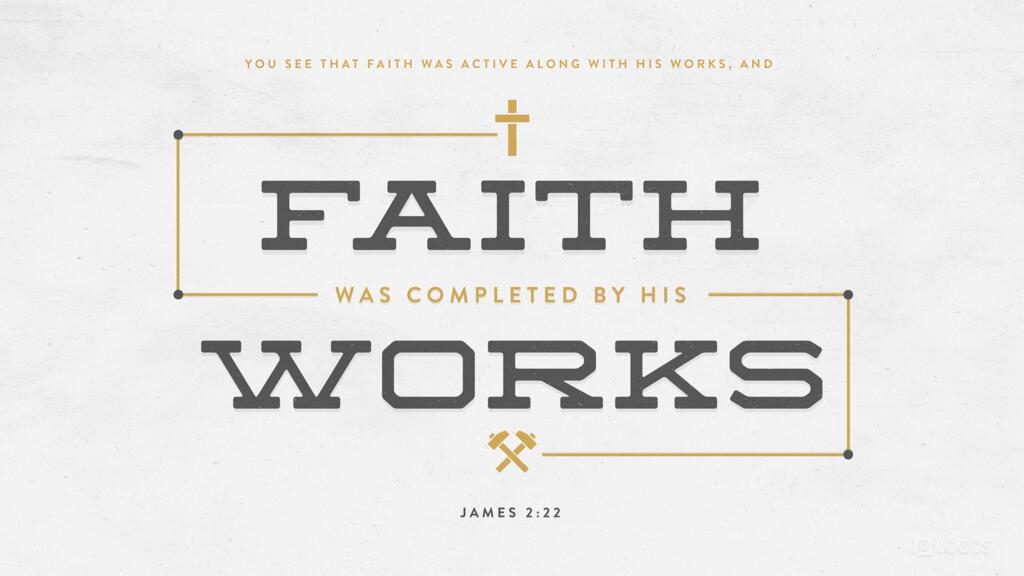
14What is the profit, my brethren, if any one say he have faith, but have not works? can faith save him? 15Now if a brother or a sister is naked and destitute of daily food, 16and one from amongst you say to them, Go in peace, be warmed and filled; but give not to them the needful things for the body, what is the profit? 17So also faith, if it have not works, is dead by itself. 18But some one will say, Thou hast faith and I have works. Shew me thy faith without works, and I from my works will shew thee my faith. 19Thou believest that God is one. Thou doest well. The demons even believe, and tremble. 20But wilt thou know, O vain man, that faith without works is dead? 21Was not Abraham our father justified by works when he had offered Isaac his son upon the altar? 22Thou seest that faith wrought with his works, and that by works faith was perfected. 23And the scripture was fulfilled which says, Abraham believed God, and it was reckoned to him as righteousness, and he was called Friend of God. 24Ye see that a man is justified on the principle of works, and not on the principle of faith only. 25But was not in like manner also Rahab the harlot justified on the principle of works, when she had received the messengers and put them forth by another way? 26For as the body without a spirit is dead, so also faith without works is dead.
Public Domain