Psalm 34:18–22
The NET BibleOther versions
English
- NET The NET Bible
- DARBY 1890 Darby Bible
- ASV American Standard Version
- AV 1873 The Cambridge Paragraph Bible of the Authorized English Version
- CSB Christian Standard Bible
- D-R Douay-Rheims Bible
- ESV English Standard Version
- GW GOD’S WORD Translation
- GNB Good News Translation
- HCSB The Holman Christian Standard Bible
- KJV 1900 King James Version
- LSB Legacy Standard Bible
- LEB The Lexham English Bible
- MSG The Message: The Bible in Contemporary Language
- NASB95 New American Standard Bible (1995)
- NCV New Century Version
- NIrV New International Reader’s Version (1998)
- NIV New International Version (2011)
- NKJV The New King James Version
- NLT New Living Translation
- NRSVue New Revised Standard Version: Updated Edition
- RSV The Revised Standard Version
- RSVCE The Revised Standard Version, Catholic Edition
- TNIV Today’s New International Version
- YLT Young’s Literal Translation
Arabic
Czech
French
German
Hebrew
Hungarian
Italian
Korean
Latin
Portuguese
Russian
Simplified Chinese
Spanish
Traditional Chinese
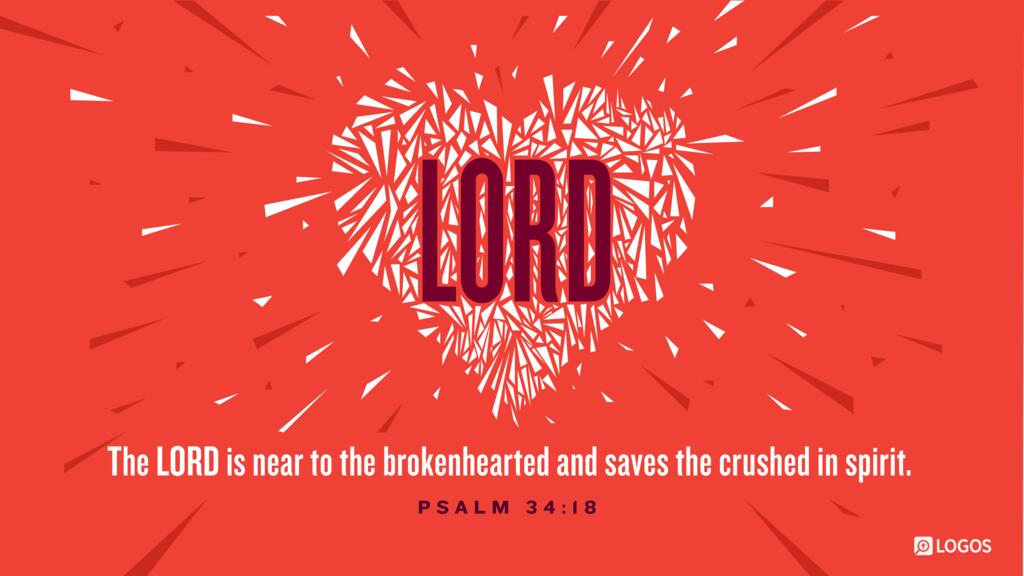
34:18The Lord is near the brokenhearted;
he delivers30 those who are discouraged.31
34:19The godly32 face many dangers,33
but the Lord saves34 them35 from each one of them.
34:20He protects36 all his bones;37
not one of them is broken.38
34:21Evil people self-destruct;39
those who hate the godly are punished.40
34:22The Lord rescues his servants;41
all who take shelter in him escape punishment.42
Footnotes
- 30 The Hebrew imperfect verbal form highlights the generalizing statement and draws attention to the fact that the Lord typically delivers the oppressed and needy.
- 31 Heb “the crushed in spirit.”
- 32 The Hebrew text uses the singular form; the representative or typical godly person is envisioned.
- 33 Or “trials.”
- 34 The Hebrew imperfect verbal form highlights the generalizing statement and draws attention to the fact that the Lord typically delivers the godly.
- 35 Heb “him,” agreeing with the singular form in the preceding line.
- 36 The Hebrew participial form suggests such protection is characteristic.
- 37 That is, he protects the godly from physical harm.
- 38 Not one of them is broken. The author of the Gospel of John saw a fulfillment of these words in Jesus’ experience on the cross (see John 19:31–37), for the Roman soldiers, when they saw that Jesus was already dead, did not break his legs as was customarily done to speed the death of crucified individuals. John’s use of the psalm seems strange, for the statement in its original context suggests that the Lord protects the godly from physical harm. Jesus’ legs may have remained unbroken, but he was brutally and unjustly executed by his enemies. John seems to give the statement a literal sense that is foreign to its original literary context by applying a promise of divine protection to a man who was seemingly not saved by God. However, John saw in this incident a foreshadowing of Jesus’ ultimate deliverance and vindication. His unbroken bones were a reminder of God’s commitment to the godly and a sign of things to come. Jesus’ death on the cross was not the end of the story; God vindicated him, as John goes on to explain in the following context (John 19:38–20:18).
- 39 Heb “evil kills the wicked [one].” The singular form is representative; the typical evil person is envisioned. The Hebrew imperfect verbal form draws attention to the typical nature of the action.
- 40 Heb “are guilty,” but the verb is sometimes used metonymically with the meaning “to suffer the consequences of guilt,” the effect being substituted for the cause.
- 41 Heb “redeems the life of his servants.” The Hebrew participial form suggests such deliverance is characteristic.
- 42 “Taking shelter” in the Lord is an idiom for seeking his protection. Seeking his protection presupposes and even demonstrates the subject’s loyalty to the Lord. In the psalms those who “take shelter” in the Lord are contrasted with the wicked and equated with those who love, fear, and serve the Lord (Pss 2:12; 5:11–12; 31:19).
The NET Bible First Edition, Copyright 1996-2005 by Biblical Studies Press
In other versions
ESVEnglish Standard Version
The Lord is near to the brokenhearted
and saves the crushed in spirit.
Many are the afflictions of the righteous,
but the Lord delivers him out of them all.
He keeps all his bones;
not one of them is broken.
Affliction will slay the wicked,
and those who hate the righteous will be condemned.
The Lord redeems the life of his servants;
none of those who take refuge in him will be condemned.
Copyright 2001 Crossway Bibles
NIVNew International Version (2011)
The Lord is close to the brokenhearted
and saves those who are crushed in spirit.
The righteous person may have many troubles,
but the Lord delivers him from them all;
he protects all his bones,
not one of them will be broken.
Evil will slay the wicked;
the foes of the righteous will be condemned.
The Lord will rescue his servants;
no one who takes refuge in him will be condemned.
Copyright 1973, 1978, 1984, 2011 Biblica, Inc.
CSBChristian Standard Bible
The Lord is near the brokenhearted;
he saves those crushed in spirit.
One who is righteous has many adversities,
but the Lord rescues him from them all.
He protects all his bones;
not one of them is broken.
Evil brings death to the wicked,
and those who hate the righteous will be punished.
The Lord redeems the life of his servants,
and all who take refuge in him will not be punished.
Copyright 2017 Holman Bible Publishers
NLTNew Living Translation
The Lord is close to the brokenhearted;
he rescues those whose spirits are crushed.
The righteous person faces many troubles,
but the Lord comes to the rescue each time.
For the Lord protects the bones of the righteous;
not one of them is broken!
Calamity will surely destroy the wicked,
and those who hate the righteous will be punished.
But the Lord will redeem those who serve him.
No one who takes refuge in him will be condemned.
Holy Bible, New Living Translation, copyright © 1996, 2004, 2015 by Tyndale House Foundation. Used by permission of Tyndale House Publishers. All rights reserved.
LEBThe Lexham English Bible
Yahweh is near to those who are heartbroken
and saves those who are crushed in spirit.
Many are the distresses of the righteous,
but Yahweh delivers him out of them all.
He protects all his bones;
not one of them is broken.
Evil will slay the wicked,
and those who hate the righteous will incur guilt.
Yahweh redeems the life of his servants,
and none who take refuge in him will incur guilt.
Copyright 2012 Lexham Press
KJV 1900King James Version
The Lord is nigh unto them that are of a broken heart;
And saveth such as be of a contrite spirit.
Many are the afflictions of the righteous:
But the Lord delivereth him out of them all.
He keepeth all his bones:
Not one of them is broken.
Evil shall slay the wicked:
And they that hate the righteous shall be desolate.
The Lord redeemeth the soul of his servants:
And none of them that trust in him shall be desolate.
Public Domain