Micah 6:1–8
The NET BibleOther versions
English
- NET The NET Bible
- DARBY 1890 Darby Bible
- ASV American Standard Version
- AV 1873 The Cambridge Paragraph Bible of the Authorized English Version
- CSB Christian Standard Bible
- D-R Douay-Rheims Bible
- ESV English Standard Version
- GW GOD’S WORD Translation
- GNB Good News Translation
- HCSB The Holman Christian Standard Bible
- KJV 1900 King James Version
- LSB Legacy Standard Bible
- LEB The Lexham English Bible
- MSG The Message: The Bible in Contemporary Language
- NASB95 New American Standard Bible (1995)
- NCV New Century Version
- NIrV New International Reader’s Version (1998)
- NIV New International Version (2011)
- NKJV The New King James Version
- NLT New Living Translation
- NRSVue New Revised Standard Version: Updated Edition
- RSV The Revised Standard Version
- RSVCE The Revised Standard Version, Catholic Edition
- TNIV Today’s New International Version
- YLT Young’s Literal Translation
Arabic
Czech
French
German
Hebrew
Hungarian
Italian
Korean
Latin
Portuguese
Russian
Simplified Chinese
Spanish
Traditional Chinese
The Lord Demands Justice, not Ritual
6:1Listen to what the Lord says:
“Get up! Defend yourself1 before the mountains!2
Present your case before the hills!”3
6:2Hear the Lord’s accusation, you mountains,
you enduring foundations of the earth!
For the Lord has a case against his people;
he has a dispute with Israel!4
6:3“My people, how have I wronged you?5
How have I wearied you? Answer me!
6:4In fact, I brought you up from the land of Egypt,
I delivered you from that place of slavery.
I sent Moses, Aaron, and Miriam to lead you.6
6:5My people, recall how King Balak of Moab planned to harm you,7
how Balaam son of Beor responded to him.
Recall how you journeyed from Shittim to Gilgal,
so you might acknowledge that the Lord has treated you fairly.”8
6:6With what should I9 enter the Lord’s presence?
With what10 should I bow before the sovereign God?11
Should I enter his presence with burnt offerings,
with year-old calves?
6:7Will the Lord accept a thousand rams,
or ten thousand streams of olive oil?
Should I give him my firstborn child as payment for my rebellion,
my offspring—my own flesh and blood—for my sin?12
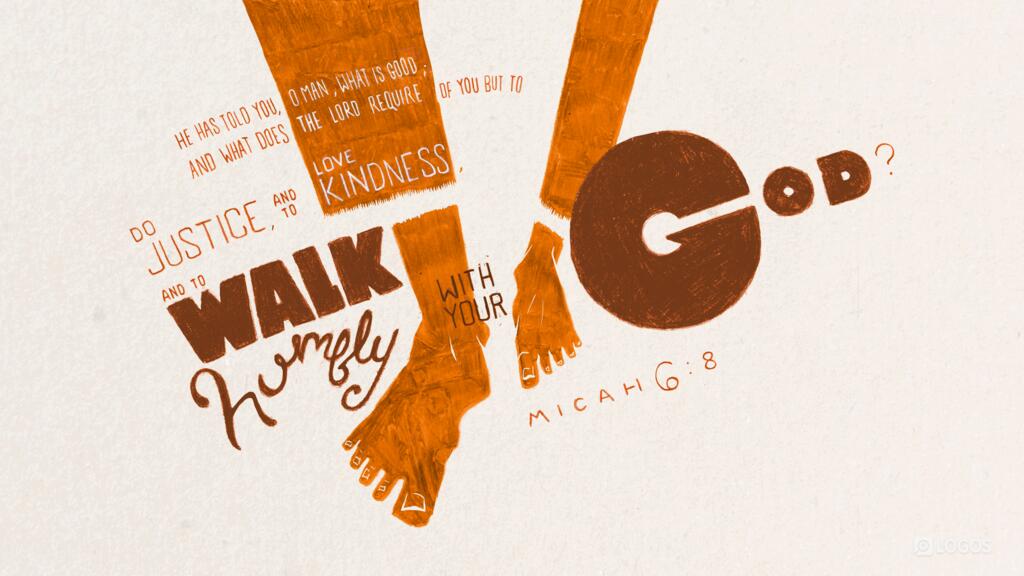
6:8He has told you, O man, what is good,
and what the Lord really wants from you:13
He wants you to14 promote15 justice, to be faithful,16
and to live obediently before17 your God.
Footnotes
- 1 Or “plead your case” (, , ); “present your plea”; “state your case.” Defend yourself. The Lord challenges Israel to defend itself against the charges he is bringing.
- 2 As in some ancient Near Eastern treaties, the mountains are personified as legal witnesses that will settle the dispute between God and Israel.
- 3 Heb “let the hills hear your voice.”
- 4 This verse briefly interrupts the Lord’s statement (see vv. 1, 3) as the prophet summons the mountains as witnesses. Because of this v. 2 has been placed in parentheses in the translation.
- 5 Heb “My people, what have I done to you?”
- 6 Heb “before you.”
- 7 Heb “remember what Balak … planned.”
- 8 Heb “From Shittim to Gilgal, in order to know the just acts of the Lord.” Something appears to be missing at the beginning of the line. The present translation supplies the words, “Recall how you went.” This apparently refers to how Israel crossed the Jordan River (see Josh 3:1; 4:19–24).
- 9 With what should I enter the Lord’s presence? The prophet speaks again, playing the role of an inquisitive worshiper who wants to know what God really desires from his followers.
- 10 The words “with what” do double duty in the parallelism and are supplied in the second line of the translation for clarification.
- 11 Or “the exalted God.”
- 12 Heb “the fruit of my body for the sin of my soul.” The Hebrew term נֶפֶשׁ (nefesh) is often translated “soul,” but the word usually refers to the whole person; here “the sin of my soul” = “my sin.”
- 13 What the Lord really wants from you. Now the prophet switches roles and answers the hypothetical worshiper’s question. He makes it clear that the Lord desires proper attitudes more than ritual and sacrifice.
- 14 Heb “except.” This statement is actually linked with what precedes, “What does he want from you except.…”
- 15 Heb “to do,” in the sense of “promote.”
- 16 Heb “to love faithfulness.”
- 17 Heb “to walk humbly [or perhaps, “carefully”] with.”
The NET Bible First Edition, Copyright 1996-2005 by Biblical Studies Press