Mark 1:14–15
The NET BibleOther versions
English
- NET The NET Bible
- DARBY 1890 Darby Bible
- ASV American Standard Version
- AV 1873 The Cambridge Paragraph Bible of the Authorized English Version
- CSB Christian Standard Bible
- D-R Douay-Rheims Bible
- ESV English Standard Version
- GW GOD’S WORD Translation
- GNB Good News Translation
- HCSB The Holman Christian Standard Bible
- KJV 1900 King James Version
- LSB Legacy Standard Bible
- LEB The Lexham English Bible
- MSG The Message: The Bible in Contemporary Language
- NASB95 New American Standard Bible (1995)
- NCV New Century Version
- NIrV New International Reader’s Version (1998)
- NIV New International Version (2011)
- NKJV The New King James Version
- NLT New Living Translation
- NRSVue New Revised Standard Version: Updated Edition
- RSV The Revised Standard Version
- RSVCE The Revised Standard Version, Catholic Edition
- TNIV Today’s New International Version
- YLT Young’s Literal Translation
Arabic
Czech
French
German
Greek
Hungarian
Italian
Korean
Latin
Portuguese
Russian
Simplified Chinese
Spanish
Traditional Chinese
Preaching in Galilee and the Call of the Disciples
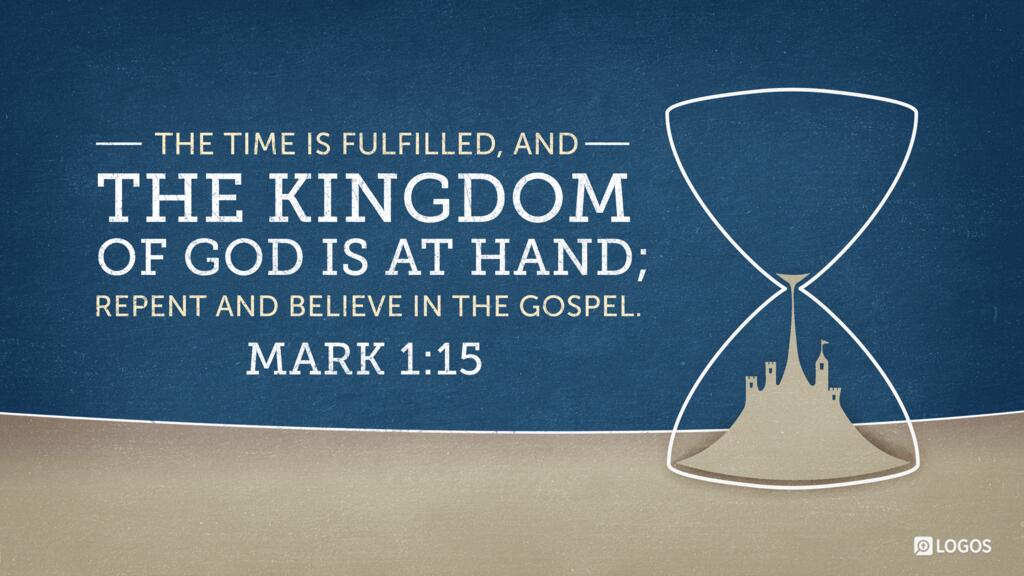
1:14Now after John was imprisoned,29 Jesus went into Galilee and proclaimed the gospel30 of God.311:15He32 said, “The time is fulfilled and the kingdom of God33 is near. Repent and believe the gospel!”
Footnotes
- 29 Or “arrested,” “taken into custody” (see L&N 37.12).
- 30 Most witnesses, especially later ones (A D W 𝔐 lat), have τῆς βασιλείας (tēs basileias) between τὸ εὐαγγέλιον (to euangelion) and τοῦ θεοῦ (tou theou): “the gospel of the kingdom of God.” On the one hand, it is perhaps possible that τῆς βασιλείας was omitted to conform the expression to that which is found in the epistles (cf. Rom 1:1; 15:16; 2 Cor 11:7; 1 Thess 2:2, 8, 9; 1 Pet 4:17). On the other hand, this expression, “the gospel of God,” occurs nowhere else in the Gospels, while “the gospel of the kingdom” is a Matthean expression (Matt 4:23; 9:35; 24:14), and “kingdom of God” is pervasive in the synoptic Gospels (occurring over 50 times). Scribes would thus be more prone to add τῆς βασιλείας than to omit it. Further, the external support for the shorter reading (א B L Θ f1, 13 28* 33 565 579 892 2427 sa) is significantly stronger than that for the longer reading. There is little doubt, therefore, that the shorter reading is authentic.
- 31 The genitive in the phrase τὸ εὐαγγέλιον τοῦ θεοῦ (to euangelion tou theou, “the gospel of God”) could be translated as either a subjective genitive (“the gospel which God brings”) or an objective genitive (“the gospel about God”). Either is grammatically possible. This is possibly an instance of a plenary genitive (see ; M. Zerwick, , §§36–39). If so, an interplay between the two concepts is intended: The gospel which God brings is in fact the gospel about himself.
- 32 Because of the length and complexity of the Greek sentence, a new sentence was started here in the translation.
- 33 The kingdom of God is a reference to the sovereign activity of God as he rules over his creation and brings his plans to realization.
The NET Bible First Edition, Copyright 1996-2005 by Biblical Studies Press
In other versions
ESVEnglish Standard Version
Now after John was arrested, Jesus came into Galilee, proclaiming the gospel of God, and saying, “The time is fulfilled, and the kingdom of God is at hand; repent and believe in the gospel.”
Copyright 2001 Crossway Bibles
NIVNew International Version (2011)
After John was put in prison, Jesus went into Galilee, proclaiming the good news of God. “The time has come,” he said. “The kingdom of God has come near. Repent and believe the good news!”
Copyright 1973, 1978, 1984, 2011 Biblica, Inc.
CSBChristian Standard Bible
After John was arrested, Jesus went to Galilee, proclaiming the good news of God: “The time is fulfilled, and the kingdom of God has come near. Repent and believe the good news!”
Copyright 2017 Holman Bible Publishers
NLTNew Living Translation
Later on, after John was arrested, Jesus went into Galilee, where he preached God’s Good News. “The time promised by God has come at last!” he announced. “The Kingdom of God is near! Repent of your sins and believe the Good News!”
Holy Bible, New Living Translation, copyright © 1996, 2004, 2015 by Tyndale House Foundation. Used by permission of Tyndale House Publishers. All rights reserved.
LEBThe Lexham English Bible
And after John had been taken into custody, Jesus went into Galilee proclaiming the gospel of God and saying, “The time is fulfilled and the kingdom of God has come near. Repent and believe in the gospel!”
Copyright 2012 Lexham Press
KJV 1900King James Version
Now after that John was put in prison, Jesus came into Galilee, preaching the gospel of the kingdom of God, And saying, The time is fulfilled, and the kingdom of God is at hand: repent ye, and believe the gospel.
Public Domain