Isaiah 1:17–23
The NET BibleOther versions
English
- NET The NET Bible
- DARBY 1890 Darby Bible
- ASV American Standard Version
- AV 1873 The Cambridge Paragraph Bible of the Authorized English Version
- CSB Christian Standard Bible
- D-R Douay-Rheims Bible
- ESV English Standard Version
- GW GOD’S WORD Translation
- GNB Good News Translation
- HCSB The Holman Christian Standard Bible
- KJV 1900 King James Version
- LSB Legacy Standard Bible
- LEB The Lexham English Bible
- MSG The Message: The Bible in Contemporary Language
- NASB95 New American Standard Bible (1995)
- NCV New Century Version
- NIrV New International Reader’s Version (1998)
- NIV New International Version (2011)
- NKJV The New King James Version
- NLT New Living Translation
- NRSVue New Revised Standard Version: Updated Edition
- RSV The Revised Standard Version
- RSVCE The Revised Standard Version, Catholic Edition
- TNIV Today’s New International Version
- YLT Young’s Literal Translation
Arabic
Czech
French
German
Hebrew
Hungarian
Italian
Korean
Latin
Portuguese
Russian
Simplified Chinese
Spanish
Traditional Chinese
1:17Learn to do what is right!
Promote justice!
Give the oppressed reason to celebrate!42
Take up the cause of the orphan!
Defend the rights of the widow!43
1:1844 Come, let’s consider your options,”45 says the Lord.
“Though your sins have stained you like the color red,
you can become46 white like snow;
though they are as easy to see as the color scarlet,
you can become47 white like wool.48
1:19If you have a willing attitude and obey,49
then you will again eat the good crops of the land.
1:20But if you refuse and rebel,
you will be devoured50 by the sword.”
Know for certain that the Lord has spoken.51
Purifying Judgment
1:21How tragic that the once-faithful city
has become a prostitute!52
She was once a center of53 justice,
fairness resided in her,
but now only murderers.54
1:22Your55 silver has become scum,56
your beer is diluted with water.57
1:23Your officials are rebels,58
they associate with59 thieves.
All of them love bribery,
They do not take up the cause of the orphan,62
or defend the rights of the widow.63
Footnotes
- 42 The precise meaning of this line is uncertain. The translation assumes an emendation of חָמוֹץ (khamots, “oppressor [?]”) to חָמוּץ (khamuts, “oppressed”), a passive participle from II חָמַץ (khamats, “oppress”; II חמץ) and takes the verb II אָשַׁר (’ashar) in the sense of “make happy” (the delocutive Piel, meaning “call/pronounce happy,” is metonymic here, referring to actually effecting happiness). The parallelism favors this interpretation, for the next two lines speak of positive actions on behalf of the destitute. The other option is to retain the pointing and translate, “set right the oppressor,” but the nuance “set right” is not clearly attested elsewhere for the verb I אשׁר. This verb does appear as a participle in Isa 3:12 and 9:16 with the meaning “to lead or guide.” If it can mean to “lead” or “rebuke/redirect” in this verse, the prophet could be contrasting this appeal for societal reformation (v. 17c) with a command to reorder their personal lives (v. 17a–b). J. A. Motyer (The Prophecy of Isaiah, 47) suggests that these three statements (v. 17a–c) provide “the contrast between the two ends of imperfect society, the oppressor and the needy, the one inflicting and the other suffering the hurt. Isaiah looks for a transformed society wherever it needs transforming.”
- 43 This word refers to a woman who has lost her husband, by death or divorce. The orphan and widow are often mentioned in the OT as epitomizing the helpless and impoverished who have been left without the necessities of life due to the loss of a family provider.
- 44 The Lord concludes his case against Israel by offering them the opportunity to be forgiven and by setting before them the alternatives of renewed blessing (as a reward for repentance) and final judgment (as punishment for persistence in sin).
- 45 Traditionally, “let us reason together,” but the context suggests a judicial nuance. The Lord is giving the nation its options for the future.
- 46 The imperfects must be translated as modal (indicating capability or possibility) to bring out the conditional nature of the offer. This purification will only occur if the people repent and change their ways.
- 47 The imperfects must be translated as modal (indicating capability or possibility) to bring out the conditional nature of the offer. This purification will only occur if the people repent and change their ways.
- 48 Heb “though your sins are like red, they will become white like snow; though they are red like scarlet, they will be like wool.” The point is not that the sins will be covered up, though still retained. The metaphorical language must be allowed some flexibility and should not be pressed into a rigid literalistic mold. The people’s sins will be removed and replaced by ethical purity. The sins that are now as obvious as the color red will be washed away and the ones who are sinful will be transformed.
- 49 Heb “listen”; “obedient”; “If you consent and obey.”
- 50 The wordplay in the Hebrew draws attention to the options. The people can obey, in which case they will “eat” v. 19 (תֹּאכֵלוּ [to’khelu], Qal active participle of אָכַל) God’s blessing, or they can disobey, in which case they will be devoured (Heb “eaten,” תְּאֻכְּלוּ, [té’ukkélu], Qal passive/Pual of אָכַל) by God’s judgment.
- 51 Heb “for the mouth of the Lord has spoken.” The introductory כִּי (ki) may be asseverative (as reflected in the translation) or causal/explanatory, explaining why the option chosen by the people will become reality (it is guaranteed by the divine word).
- 52 Heb “How she has become a prostitute, the faithful city!” The exclamatory אֵיכָה (’ekhah, “how!”) is used several times as the beginning of a lament (see Lam 1:1; 2; 1; 4:1–2). Unlike a number of other OT passages that link references to Israel’s harlotry to idolatry, Isaiah here makes the connection with social and moral violations.
- 53 Heb “filled with.”
- 54 Or “assassins.” This refers to the oppressive rich and/or their henchmen. R. Ortlund (Whoredom, 78) posits that it serves as a synecdoche for all varieties of criminals, the worst being mentioned to imply all lesser ones. Since Isaiah often addressed his strongest rebuke to the rulers and leaders of Israel, he may have in mind the officials who bore the responsibility to uphold justice and righteousness.
- 55 The pronoun is feminine singular; personified Jerusalem (see v. 21) is addressed.
- 56 Or “dross.” The word refers to the scum or impurites floating on the top of melted metal.
- 57 The metaphors of silver becoming impure and beer being watered down picture the moral and ethical degeneration that had occurred in Jerusalem.
- 58 Or “stubborn”; “have rejected me.”
- 59 Heb “and companions of” (so , ); “friends of crooks.”
- 60 Heb “pursue”; “chase after gifts.”
- 61 Isaiah may have chosen the word for gifts (שַׁלְמוֹנִים, shalmonim; a hapax legomena here), as a sarcastic pun on what these rulers should have been doing. Instead of attending to peace and wholeness (שָׁלוֹם, shalom), they sought after payoffs (שַׁלְמוֹנִים).
- 62 See the note at v. .
- 63 The rich oppressors referred to in Isaiah and the other eighth century prophets were not rich capitalists in the modern sense of the word. They were members of the royal military and judicial bureaucracies in Israel and Judah. As these bureaucracies grew, they acquired more and more land and gradually commandeered the economy and legal system. At various administrative levels bribery and graft become commonplace. The common people outside the urban administrative centers were vulnerable to exploitation in such a system, especially those, like widows and orphans, who had lost their family provider through death. Through confiscatory taxation, conscription, excessive interest rates, and other oppressive governmental measures and policies, they were gradually disenfranchised and lost their landed property, and with it, their rights as citizens. The socio-economic equilibrium envisioned in the law of Moses was radically disturbed.
The NET Bible First Edition, Copyright 1996-2005 by Biblical Studies Press
In other versions
ESVEnglish Standard Version
learn to do good;
seek justice,
correct oppression;
bring justice to the fatherless,
plead the widow’s cause.
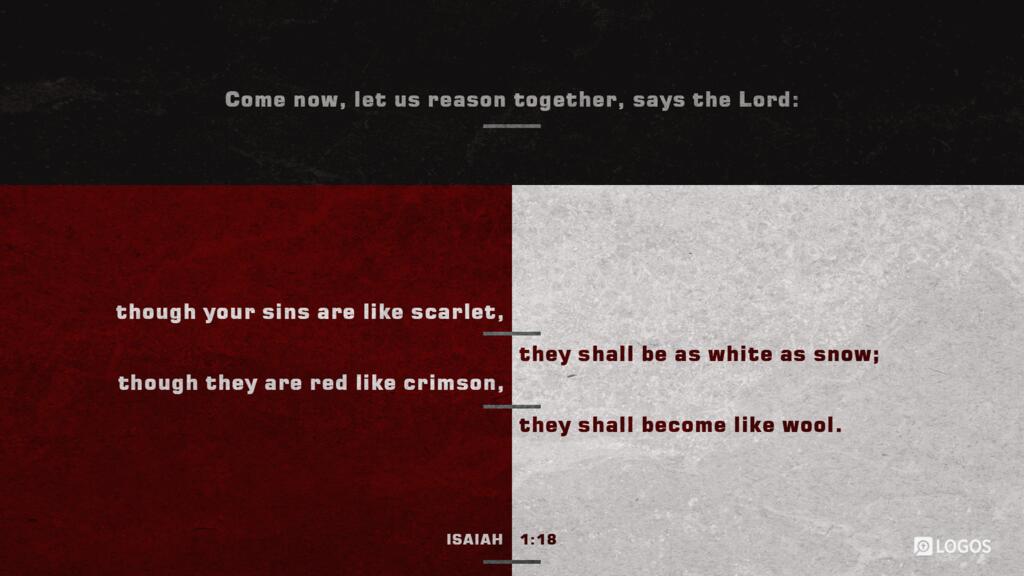
“Come now, let us reason together, says the Lord:
though your sins are like scarlet,
they shall be as white as snow;
though they are red like crimson,
they shall become like wool.
If you are willing and obedient,
you shall eat the good of the land;
but if you refuse and rebel,
you shall be eaten by the sword;
for the mouth of the Lord has spoken.”
How the faithful city
has become a whore,
she who was full of justice!
Righteousness lodged in her,
but now murderers.
Your silver has become dross,
your best wine mixed with water.
Your princes are rebels
and companions of thieves.
Everyone loves a bribe
and runs after gifts.
They do not bring justice to the fatherless,
and the widow’s cause does not come to them.
Copyright 2001 Crossway Bibles
NIVNew International Version (2011)
Learn to do right; seek justice.
Defend the oppressed.
Take up the cause of the fatherless;
plead the case of the widow.
“Come now, let us settle the matter,”
says the Lord.
“Though your sins are like scarlet,
they shall be as white as snow;
though they are red as crimson,
they shall be like wool.
If you are willing and obedient,
you will eat the good things of the land;
but if you resist and rebel,
you will be devoured by the sword.”
For the mouth of the Lord has spoken.
See how the faithful city
has become a prostitute!
She once was full of justice;
righteousness used to dwell in her—
but now murderers!
Your silver has become dross,
your choice wine is diluted with water.
Your rulers are rebels,
partners with thieves;
they all love bribes
and chase after gifts.
They do not defend the cause of the fatherless;
the widow’s case does not come before them.
Copyright 1973, 1978, 1984, 2011 Biblica, Inc.
CSBChristian Standard Bible
Learn to do what is good.
Pursue justice.
Correct the oppressor.
Defend the rights of the fatherless.
Plead the widow’s cause.
“Come, let’s settle this,”
says the Lord.
“Though your sins are scarlet,
they will be as white as snow;
though they are crimson red,
they will be like wool.
If you are willing and obedient,
you will eat the good things of the land.
But if you refuse and rebel,
you will be devoured by the sword.”
For the mouth of the Lord has spoken.
The faithful town—
what an adulteress she has become!
She was once full of justice.
Righteousness once dwelt in her,
but now, murderers!
Your silver has become dross to be discarded,
your beer is diluted with water.
Your rulers are rebels,
friends of thieves.
They all love graft
and chase after bribes.
They do not defend the rights of the fatherless,
and the widow’s case never comes before them.
Copyright 2017 Holman Bible Publishers
NLTNew Living Translation
Learn to do good.
Seek justice.
Help the oppressed.
Defend the cause of orphans.
Fight for the rights of widows.
“Come now, let’s settle this,”
says the Lord.
“Though your sins are like scarlet,
I will make them as white as snow.
Though they are red like crimson,
I will make them as white as wool.
If you will only obey me,
you will have plenty to eat.
But if you turn away and refuse to listen,
you will be devoured by the sword of your enemies.
I, the Lord, have spoken!”
See how Jerusalem, once so faithful,
has become a prostitute.
Once the home of justice and righteousness,
she is now filled with murderers.
Once like pure silver,
you have become like worthless slag.
Once so pure,
you are now like watered-down wine.
Your leaders are rebels,
the companions of thieves.
All of them love bribes
and demand payoffs,
but they refuse to defend the cause of orphans
or fight for the rights of widows.
Holy Bible, New Living Translation, copyright © 1996, 2004, 2015 by Tyndale House Foundation. Used by permission of Tyndale House Publishers. All rights reserved.
LEBThe Lexham English Bible
Learn to do good!
Seek justice! Rescue the oppressed!
Defend the orphan! Plead for the widow!
“Come now, and let us argue,” says Yahweh.
“Even though your sins are like scarlet, they will be white like snow;
even though they are red like crimson, they shall become like wool.
If you are willing and you are obedient,
you shall eat the good of the land.
But if you refuse and you rebel, you shall be devoured by the sword.
For the mouth of Yahweh has spoken.”
How has a faithful city become like a whore?
Full of justice, righteousness lodged in her, but now murderers.
Your silver has become as dross;
Your wine is diluted with waters.
Your princes are rebels
and companions of thieves.
Every one loves a bribe
and runs after gifts.
They do not defend the orphan
and the legal dispute of the widow does not come before them.
Copyright 2012 Lexham Press
KJV 1900King James Version
Learn to do well;
Seek judgment, relieve the oppressed,
Judge the fatherless, plead for the widow.
Come now, and let us reason together, saith the Lord:
Though your sins be as scarlet, they shall be as white as snow;
Though they be red like crimson, they shall be as wool.
If ye be willing and obedient, ye shall eat the good of the land:
But if ye refuse and rebel,
Ye shall be devoured with the sword:
For the mouth of the Lord hath spoken it.
How is the faithful city become an harlot!
It was full of judgment; righteousness lodged in it;
But now murderers.
Thy silver is become dross,
Thy wine mixed with water:
Thy princes are rebellious, and companions of thieves:
Every one loveth gifts, and followeth after rewards:
They judge not the fatherless,
Neither doth the cause of the widow come unto them.
Public Domain