Exodus 33:12–14
The NET BibleOther versions
English
- NET The NET Bible
- DARBY 1890 Darby Bible
- ASV American Standard Version
- AV 1873 The Cambridge Paragraph Bible of the Authorized English Version
- CSB Christian Standard Bible
- D-R Douay-Rheims Bible
- ESV English Standard Version
- GW GOD’S WORD Translation
- GNB Good News Translation
- HCSB The Holman Christian Standard Bible
- KJV 1900 King James Version
- LSB Legacy Standard Bible
- LEB The Lexham English Bible
- MSG The Message: The Bible in Contemporary Language
- NASB95 New American Standard Bible (1995)
- NCV New Century Version
- NIrV New International Reader’s Version (1998)
- NIV New International Version (2011)
- NKJV The New King James Version
- NLT New Living Translation
- NRSVue New Revised Standard Version: Updated Edition
- RSV The Revised Standard Version
- RSVCE The Revised Standard Version, Catholic Edition
- TNIV Today’s New International Version
- YLT Young’s Literal Translation
Arabic
Czech
French
German
Hebrew
Hungarian
Italian
Korean
Latin
Portuguese
Russian
Simplified Chinese
Spanish
Traditional Chinese
33:12Moses said to the Lord, “See, you have been saying to me, ‘Bring this people up,’35 but you have not let me know whom you will send with me. But you said, ‘I know you by name,36 and also you have found favor in my sight.’ 33:13Now if I have found favor in your sight, show me37 your way, that I may know you,38 that I may continue to find39 favor in your sight. And see40 that this nation is your people.”
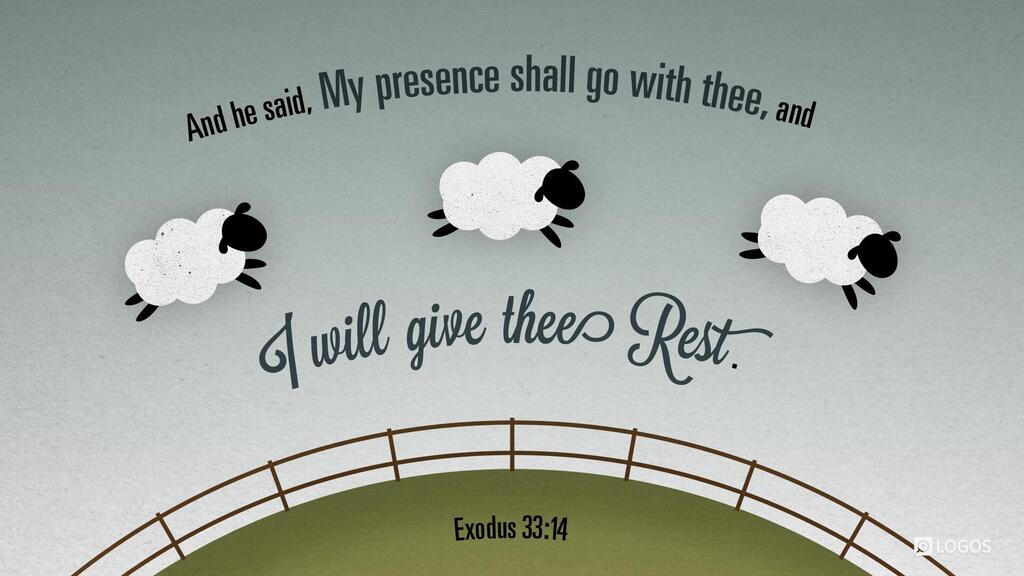
33:14And the Lord41 said, “My presence42 will go with you,43 and I will give you rest.”44
Footnotes
- 35 The Hiphil imperative is from the same verb that has been used before for bringing the people up from Egypt and leading them to Canaan.
- 36 That is, “chosen you.”
- 37 The prayer uses the Hiphil imperative of the verb “to know.” “Cause me to know” is “show me, reveal to me, teach or inform me.” Moses wanted to know more of God’s dealings with people, especially after all that has happened in the preceding chapter.
- 38 The imperfect tense of the verb “to know” with the vav follows the imperative of this root, and so this indicates the purpose clause (final imperfect): “in order that I may know you.” S. R. Driver summarizes it this way: that I may understand what your nature and character is, and shape my petitions accordingly, so that I may find grace in your sight, and my future prayers may be answered (Exodus, ).
- 39 The purpose clause simply uses the imperfect, “that I may find.” But since he already has found favor in God’s eyes, he is clearly praying that it be so in the future as well as now.
- 40 The verb “see” (an imperative) is a request for God to acknowledge Israel as his people by providing the divine leadership needed. So his main appeal will be for the people and not himself. To underscore this, he repeats “see” the way the section opened.
- 41 Heb “and he said”; the referent (the Lord) has been specified in the translation for clarity.
- 42 Heb “my face.” This represents the presence of Yahweh going with the people (see 2 Sam 17:11 for an illustration). The “presence” probably refers to the angel of the presence or some similar manifestation of God’s leading and caring for his people.
- 43 The phrase “with you” is not in the Hebrew text, but is implied.
- 44 The expression certainly refers to the peace of mind and security of knowing that God was with them. But the expression came to mean “settle them in the land of promise” and give them rest and peace from their enemies. U. Cassuto (Exodus, ) observes how in 32:10 God had told Moses, “Leave me alone” (“give me rest”), but now he promises to give them rest. The parallelism underscores the great transition through intercession.
The NET Bible First Edition, Copyright 1996-2005 by Biblical Studies Press
In other versions
ESVEnglish Standard Version
Moses said to the Lord, “See, you say to me, ‘Bring up this people,’ but you have not let me know whom you will send with me. Yet you have said, ‘I know you by name, and you have also found favor in my sight.’ Now therefore, if I have found favor in your sight, please show me now your ways, that I may know you in order to find favor in your sight. Consider too that this nation is your people.” And he said, “My presence will go with you, and I will give you rest.”
Copyright 2001 Crossway Bibles
NIVNew International Version (2011)
Moses said to the Lord, “You have been telling me, ‘Lead these people,’ but you have not let me know whom you will send with me. You have said, ‘I know you by name and you have found favor with me.’ If you are pleased with me, teach me your ways so I may know you and continue to find favor with you. Remember that this nation is your people.”
The Lord replied, “My Presence will go with you, and I will give you rest.”
Copyright 1973, 1978, 1984, 2011 Biblica, Inc.
CSBChristian Standard Bible
Moses said to the Lord, “Look, you have told me, ‘Lead this people up,’ but you have not let me know whom you will send with me. You said, ‘I know you by name, and you have also found favor with me.’ Now if I have indeed found favor with you, please teach me your ways, and I will know you, so that I may find favor with you. Now consider that this nation is your people.”
And he replied, “My presence will go with you, and I will give you rest.”
Copyright 2017 Holman Bible Publishers
NLTNew Living Translation
One day Moses said to the Lord, “You have been telling me, ‘Take these people up to the Promised Land.’ But you haven’t told me whom you will send with me. You have told me, ‘I know you by name, and I look favorably on you.’ If it is true that you look favorably on me, let me know your ways so I may understand you more fully and continue to enjoy your favor. And remember that this nation is your very own people.”
The Lord replied, “I will personally go with you, Moses, and I will give you rest—everything will be fine for you.”
Holy Bible, New Living Translation, copyright © 1996, 2004, 2015 by Tyndale House Foundation. Used by permission of Tyndale House Publishers. All rights reserved.
LEBThe Lexham English Bible
And Moses said to Yahweh, “See, you are saying to me, ‘Take this people up.’ But you have not let me know whom you will send with me, and you yourself have said, ‘I know you by name, and you also have found favor in my eyes.’ And now if I have found favor in your eyes, make known to me, please, your way, and so I may know you so that I can find favor in your eyes. And see that this nation is your people.” And he said, “My presence will go, and I will give you rest.”
Copyright 2012 Lexham Press
KJV 1900King James Version
And Moses said unto the Lord, See, thou sayest unto me, Bring up this people: and thou hast not let me know whom thou wilt send with me. Yet thou hast said, I know thee by name, and thou hast also found grace in my sight. Now therefore, I pray thee, if I have found grace in thy sight, shew me now thy way, that I may know thee, that I may find grace in thy sight: and consider that this nation is thy people. And he said, My presence shall go with thee, and I will give thee rest.
Public Domain