2 Corinthians 7:7–10
The NET BibleOther versions
English
- NET The NET Bible
- DARBY 1890 Darby Bible
- ASV American Standard Version
- AV 1873 The Cambridge Paragraph Bible of the Authorized English Version
- CSB Christian Standard Bible
- D-R Douay-Rheims Bible
- ESV English Standard Version
- GW GOD’S WORD Translation
- GNB Good News Translation
- HCSB The Holman Christian Standard Bible
- KJV 1900 King James Version
- LSB Legacy Standard Bible
- LEB The Lexham English Bible
- MSG The Message: The Bible in Contemporary Language
- NASB95 New American Standard Bible (1995)
- NCV New Century Version
- NIrV New International Reader’s Version (1998)
- NIV New International Version (2011)
- NKJV The New King James Version
- NLT New Living Translation
- NRSVue New Revised Standard Version: Updated Edition
- RSV The Revised Standard Version
- RSVCE The Revised Standard Version, Catholic Edition
- TNIV Today’s New International Version
- YLT Young’s Literal Translation
Arabic
Czech
French
German
Greek
Hungarian
Italian
Korean
Latin
Portuguese
Russian
Simplified Chinese
Spanish
Traditional Chinese
7:7We were encouraged16 not only by his arrival, but also by the encouragement17 you gave18 him, as he reported to us your longing, your mourning,19 your deep concern20 for me, so that I rejoiced more than ever. 7:8For even if I made you sad21 by my letter,22 I do not regret having written it23 (even though I did regret it,24 for25 I see that my letter made you sad,26 though only for a short time). 7:9Now I rejoice, not because you were made sad,27 but because you were made sad to the point of repentance. For you were made sad as God intended,28 so that you were not harmed29 in any way by us. 7:10For sadness as intended by God produces a repentance that leads to salvation, leaving no regret, but worldly sadness brings about death.
Footnotes
- 16 Because of the length and complexity of this Greek sentence, a new sentence was started here in the translation by supplying the phrase “We were encouraged.”
- 17 Or “comfort,” “consolation.”
- 18 Grk “by the encouragement with which he was encouraged by you.” The passive construction was translated as an active one in keeping with contemporary English style, and the repeated word “encouraged” was replaced in the translation by “gave” to avoid redundancy in the translation.
- 19 Or “your grieving,” “your deep sorrow.”
- 20 Or “your zeal.”
- 21 Grk “if I grieved you.”
- 22 My letter. Paul is referring to the “severe” letter mentioned in 2 Cor 2:4.
- 23 Grk “I do not regret”; direct objects in Greek must often be supplied from the context. Here one could simply supply “it,” but since Paul is referring to the effects of his previous letter, clarity is improved if “having written it” is supplied.
- 24 Grk “I did regret”; the direct object “it” must be supplied from the context.
- 25 A few important (𝔓46c B D* it sa) lack γάρ (gar, “for”), while the majority of witnesses have it (א C D1 F G Ψ 0243 33 1739 1881 𝔐 sy bo). Even though 𝔓46* omits γάρ, it has the same sense (, a subordinate clause) because it reads the participle βλέπων (blepōn, “seeing”; the does the same). A decision is difficult because although the overwhelming external evidence is on the side of the conjunction, the lack of γάρ is a significantly harder reading, for the whole clause is something of an anacoluthon. Without the conjunction, the sentence reads more harshly. This would fit with Paul’s “vehemence of spirit” (A. T. Robertson, A Grammar of the Greek New Testament, ) that is found especially in 2 Corinthians and Galatians. However, the that omit the conjunction are prone to such tendencies at times. In this instance, the conjunction should probably stand.
- 26 Grk “my letter grieved you.”
- 27 Grk “were grieved” (so also twice later in the verse).
- 28 Grk “corresponding to God,” that is, corresponding to God’s will (κατὰ θεόν, kata theon). The same phrase occurs in vv. 10 and 11.
- 29 Grk “so that you did not suffer loss.”
The NET Bible First Edition, Copyright 1996-2005 by Biblical Studies Press
In other versions
ESVEnglish Standard Version
and not only by his coming but also by the comfort with which he was comforted by you, as he told us of your longing, your mourning, your zeal for me, so that I rejoiced still more. For even if I made you grieve with my letter, I do not regret it—though I did regret it, for I see that that letter grieved you, though only for a while. As it is, I rejoice, not because you were grieved, but because you were grieved into repenting. For you felt a godly grief, so that you suffered no loss through us.
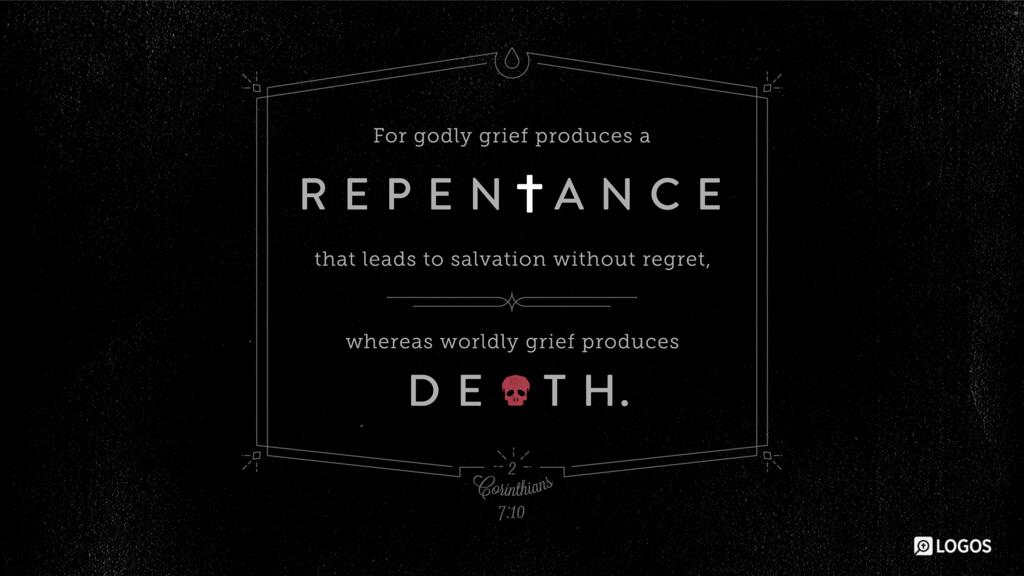
For godly grief produces a repentance that leads to salvation without regret, whereas worldly grief produces death.
Copyright 2001 Crossway Bibles
NIVNew International Version (2011)
and not only by his coming but also by the comfort you had given him. He told us about your longing for me, your deep sorrow, your ardent concern for me, so that my joy was greater than ever.
Even if I caused you sorrow by my letter, I do not regret it. Though I did regret it—I see that my letter hurt you, but only for a little while—yet now I am happy, not because you were made sorry, but because your sorrow led you to repentance. For you became sorrowful as God intended and so were not harmed in any way by us. Godly sorrow brings repentance that leads to salvation and leaves no regret, but worldly sorrow brings death.
Copyright 1973, 1978, 1984, 2011 Biblica, Inc.
CSBChristian Standard Bible
and not only by his arrival but also by the comfort he received from you. He told us about your deep longing, your sorrow, and your zeal for me, so that I rejoiced even more. For even if I grieved you with my letter, I don’t regret it. And if I regretted it—since I saw that the letter grieved you, yet only for a while—I now rejoice, not because you were grieved, but because your grief led to repentance. For you were grieved as God willed, so that you didn’t experience any loss from us. For godly grief produces a repentance that leads to salvation without regret, but worldly grief produces death.
Copyright 2017 Holman Bible Publishers
NLTNew Living Translation
His presence was a joy, but so was the news he brought of the encouragement he received from you. When he told us how much you long to see me, and how sorry you are for what happened, and how loyal you are to me, I was filled with joy!
I am not sorry that I sent that severe letter to you, though I was sorry at first, for I know it was painful to you for a little while. Now I am glad I sent it, not because it hurt you, but because the pain caused you to repent and change your ways. It was the kind of sorrow God wants his people to have, so you were not harmed by us in any way. For the kind of sorrow God wants us to experience leads us away from sin and results in salvation. There’s no regret for that kind of sorrow. But worldly sorrow, which lacks repentance, results in spiritual death.
Holy Bible, New Living Translation, copyright © 1996, 2004, 2015 by Tyndale House Foundation. Used by permission of Tyndale House Publishers. All rights reserved.
LEBThe Lexham English Bible
and not only by his coming, but also by the comfort with which he was comforted among you, because he reported to us your longing, your mourning, your zeal for me, so that I rejoiced even more. For if indeed I grieved you by my letter, I do not regret it. Even if I did regret it (I see that that letter grieved you, even though for a short time), now I rejoice, not that you were grieved, but that you were grieved to repentance. For you were grieved according to the will of God, so that you suffered loss in no way through us. For grief according to the will of God brings about a repentance leading to salvation, not to be regretted, but worldly grief brings about death.
Copyright 2012 Lexham Press
KJV 1900King James Version
And not by his coming only, but by the consolation wherewith he was comforted in you, when he told us your earnest desire, your mourning, your fervent mind toward me; so that I rejoiced the more. For though I made you sorry with a letter, I do not repent, though I did repent: for I perceive that the same epistle hath made you sorry, though it were but for a season. Now I rejoice, not that ye were made sorry, but that ye sorrowed to repentance: for ye were made sorry after a godly manner, that ye might receive damage by us in nothing. For godly sorrow worketh repentance to salvation not to be repented of: but the sorrow of the world worketh death.
Public Domain