1 Peter 2:24
The NET BibleOther versions
English
- NET The NET Bible
- DARBY 1890 Darby Bible
- ASV American Standard Version
- AV 1873 The Cambridge Paragraph Bible of the Authorized English Version
- CSB Christian Standard Bible
- D-R Douay-Rheims Bible
- ESV English Standard Version
- GW GOD’S WORD Translation
- GNB Good News Translation
- HCSB The Holman Christian Standard Bible
- KJV 1900 King James Version
- LSB Legacy Standard Bible
- LEB The Lexham English Bible
- MSG The Message: The Bible in Contemporary Language
- NASB95 New American Standard Bible (1995)
- NCV New Century Version
- NIrV New International Reader’s Version (1998)
- NIV New International Version (2011)
- NKJV The New King James Version
- NLT New Living Translation
- NRSVue New Revised Standard Version: Updated Edition
- RSV The Revised Standard Version
- RSVCE The Revised Standard Version, Catholic Edition
- TNIV Today’s New International Version
- YLT Young’s Literal Translation
Arabic
Czech
French
German
Greek
Hungarian
Italian
Korean
Latin
Portuguese
Russian
Simplified Chinese
Spanish
Traditional Chinese
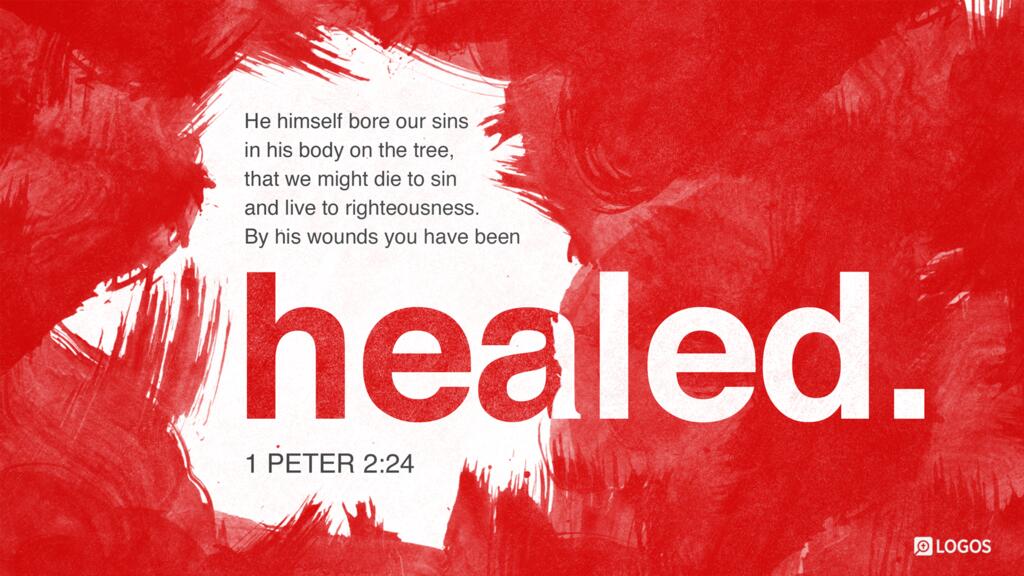
2:24He52 himself bore our sins53 in his body on the tree, that we may cease from sinning54 and live for righteousness. By his55 wounds56 you were healed.57
Footnotes
- 52 Grk “who.” Because of the length and complexity of the Greek sentence, a new sentence was started here in the translation.
- 53 A quotation from Isa 53:4, 12.
- 54 The verb ἀπογίνομαι (apoginomai) occurs only here in the NT. It can have a literal meaning (“to die”; L&N 74.27) and a figurative meaning (“to cease”; L&N 68.40). Because it is opposite the verb ζάω (zaō, “to live”), many argue that the meaning of the verb here must be “die” (so ), but even so literal death would not be in view. “In place of ἀποθνῃσκιεν, the common verb for ‘die,’ ἀπογινεθαι serves Peter as a euphemism, with the meaning ‘to be away’ or ‘to depart’ ” (J. R. Michaels, 1 Peter [ ], ). It is a metaphorical way to refer to the decisive separation from sin Jesus accomplished for believers through his death; the result is that believers “may cease from sinning.”
- 55 Grk “whose.” Because of the length and complexity of the Greek sentence, a new sentence was started here in the translation.
- 56 Grk the singular: “wound”; “injury.”
- 57 A quotation from Isa 53:5.
The NET Bible First Edition, Copyright 1996-2005 by Biblical Studies Press
In other versions
ESVEnglish Standard Version
He himself bore our sins in his body on the tree, that we might die to sin and live to righteousness. By his wounds you have been healed.
Copyright 2001 Crossway Bibles
NIVNew International Version (2011)
“He himself bore our sins” in his body on the cross, so that we might die to sins and live for righteousness; “by his wounds you have been healed.”
Copyright 1973, 1978, 1984, 2011 Biblica, Inc.
CSBChristian Standard Bible
He himself bore our sins in his body on the tree; so that, having died to sins, we might live for righteousness. By his wounds you have been healed.
Copyright 2017 Holman Bible Publishers
NLTNew Living Translation
He personally carried our sins
in his body on the cross
so that we can be dead to sin
and live for what is right.
By his wounds
you are healed.
Holy Bible, New Living Translation, copyright © 1996, 2004, 2015 by Tyndale House Foundation. Used by permission of Tyndale House Publishers. All rights reserved.
LEBThe Lexham English Bible
who himself bore our sins in his body on the tree, so that we may die to sins and live to righteousness, by whose wounds you were healed.
Copyright 2012 Lexham Press
KJV 1900King James Version
Who his own self bare our sins in his own body on the tree, that we, being dead to sins, should live unto righteousness: by whose stripes ye were healed.
Public Domain