John 18:33–38
New American Standard Bible (1995)Other versions
English
- NASB95 New American Standard Bible (1995)
- DARBY 1890 Darby Bible
- ASV American Standard Version
- AV 1873 The Cambridge Paragraph Bible of the Authorized English Version
- CSB Christian Standard Bible
- D-R Douay-Rheims Bible
- ESV English Standard Version
- GW GOD’S WORD Translation
- GNB Good News Translation
- HCSB The Holman Christian Standard Bible
- KJV 1900 King James Version
- LSB Legacy Standard Bible
- LEB The Lexham English Bible
- MSG The Message: The Bible in Contemporary Language
- NET The NET Bible
- NCV New Century Version
- NIrV New International Reader’s Version (1998)
- NIV New International Version (2011)
- NKJV The New King James Version
- NLT New Living Translation
- NRSVue New Revised Standard Version: Updated Edition
- RSV The Revised Standard Version
- RSVCE The Revised Standard Version, Catholic Edition
- YLT Young’s Literal Translation
Arabic
Czech
French
German
Greek
Hungarian
Italian
Korean
Latin
Portuguese
Russian
Simplified Chinese
Spanish
Traditional Chinese
33Therefore Pilate aentered again into the Praetorium, and summoned Jesus and said to Him, “bAre You the King of the Jews?”
34Jesus answered, “Are you saying this 1on your own initiative, or did others tell you about Me?”
35Pilate answered, “I am not a Jew, am I? Your own nation and the chief priests delivered You to me; what have You done?”
36Jesus answered, “aMy kingdom 1is not of this world. If My kingdom were of this world, then My servants would be fighting so that I would not be handed over to the Jews; but as it is, My kingdom is not 2of this realm.”
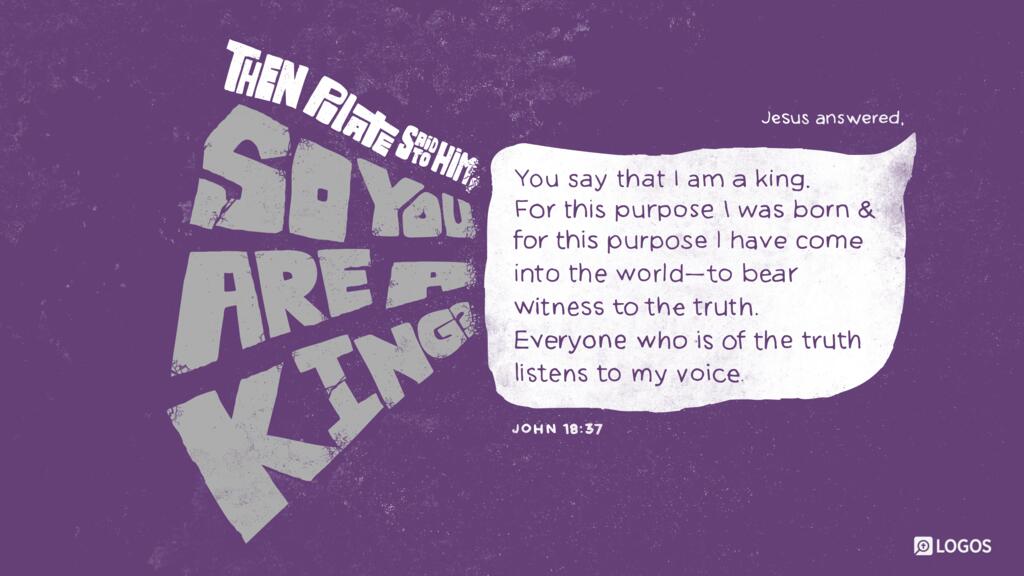
37Therefore Pilate said to Him, “So You are a king?” Jesus answered, “aYou say correctly that I am a king. For this I have been born, and for this I have come into the world, bto testify to the truth. cEveryone who is of the truth hears My voice.”
38Pilate said to Him, “What is truth?”
And when he had said this, he awent out again to the Jews and said to them, “bI find no guilt in Him.
Footnotes
Cross references
Copyright 1960, 1962, 1963, 1971, 1972, 1973, 1975, 1977, 1995 The Lockman Foundation
In other versions
ESVEnglish Standard Version
So Pilate entered his headquarters again and called Jesus and said to him, “Are you the King of the Jews?” Jesus answered, “Do you say this of your own accord, or did others say it to you about me?” Pilate answered, “Am I a Jew? Your own nation and the chief priests have delivered you over to me. What have you done?” Jesus answered, “My kingdom is not of this world. If my kingdom were of this world, my servants would have been fighting, that I might not be delivered over to the Jews. But my kingdom is not from the world.” Then Pilate said to him, “So you are a king?” Jesus answered, “You say that I am a king. For this purpose I was born and for this purpose I have come into the world—to bear witness to the truth. Everyone who is of the truth listens to my voice.” Pilate said to him, “What is truth?”
After he had said this, he went back outside to the Jews and told them, “I find no guilt in him.
Copyright 2001 Crossway Bibles
NIVNew International Version (2011)
Pilate then went back inside the palace, summoned Jesus and asked him, “Are you the king of the Jews?”
“Is that your own idea,” Jesus asked, “or did others talk to you about me?”
“Am I a Jew?” Pilate replied. “Your own people and chief priests handed you over to me. What is it you have done?”
Jesus said, “My kingdom is not of this world. If it were, my servants would fight to prevent my arrest by the Jewish leaders. But now my kingdom is from another place.”
“You are a king, then!” said Pilate.
Jesus answered, “You say that I am a king. In fact, the reason I was born and came into the world is to testify to the truth. Everyone on the side of truth listens to me.”
“What is truth?” retorted Pilate. With this he went out again to the Jews gathered there and said, “I find no basis for a charge against him.
Copyright 1973, 1978, 1984, 2011 Biblica, Inc.
CSBChristian Standard Bible
Then Pilate went back into the headquarters, summoned Jesus, and said to him, “Are you the king of the Jews?”
Jesus answered, “Are you asking this on your own, or have others told you about me?”
“I’m not a Jew, am I?” Pilate replied. “Your own nation and the chief priests handed you over to me. What have you done?”
“My kingdom is not of this world,” said Jesus. “If my kingdom were of this world, my servants would fight, so that I wouldn’t be handed over to the Jews. But as it is, my kingdom is not from here.”
“You are a king then?” Pilate asked.
“You say that I’m a king,” Jesus replied. “I was born for this, and I have come into the world for this: to testify to the truth. Everyone who is of the truth listens to my voice.”
“What is truth?” said Pilate.
After he had said this, he went out to the Jews again and told them, “I find no grounds for charging him.
Copyright 2017 Holman Bible Publishers
NLTNew Living Translation
Then Pilate went back into his headquarters and called for Jesus to be brought to him. “Are you the king of the Jews?” he asked him.
Jesus replied, “Is this your own question, or did others tell you about me?”
“Am I a Jew?” Pilate retorted. “Your own people and their leading priests brought you to me for trial. Why? What have you done?”
Jesus answered, “My Kingdom is not an earthly kingdom. If it were, my followers would fight to keep me from being handed over to the Jewish leaders. But my Kingdom is not of this world.”
Pilate said, “So you are a king?”
Jesus responded, “You say I am a king. Actually, I was born and came into the world to testify to the truth. All who love the truth recognize that what I say is true.”
“What is truth?” Pilate asked. Then he went out again to the people and told them, “He is not guilty of any crime.
Holy Bible, New Living Translation, copyright © 1996, 2004, 2015 by Tyndale House Foundation. Used by permission of Tyndale House Publishers. All rights reserved.
LEBThe Lexham English Bible
Then Pilate entered again into the governor’s residence and summoned Jesus and said to him, “Are you the king of the Jews?” Jesus replied, “Do you say this from yourself, or have others said this to you about me?” Pilate replied, “I am not a Jew, am I? Your people and the chief priests handed you over to me! What have you done?” Jesus replied, “My kingdom is not of this world. If my kingdom were of this world, my servants would be fighting so that I would not be handed over to the Jews. But now my kingdom is not from here.” Then Pilate said to him, “So then you are a king!” Jesus replied, “You say that I am a king. For this reason I was born, and for this reason I have come into the world: in order that I can testify to the truth. Everyone who is of the truth hears my voice.” Pilate said to him, “What is truth?”
And when he had said this, he went out again to the Jews and said to them, “I find no basis for an accusation against him.
Copyright 2012 Lexham Press
KJV 1900King James Version
Then Pilate entered into the judgment hall again, and called Jesus, and said unto him, Art thou the King of the Jews? Jesus answered him, Sayest thou this thing of thyself, or did others tell it thee of me? Pilate answered, Am I a Jew? Thine own nation and the chief priests have delivered thee unto me: what hast thou done? Jesus answered, My kingdom is not of this world: if my kingdom were of this world, then would my servants fight, that I should not be delivered to the Jews: but now is my kingdom not from hence. Pilate therefore said unto him, Art thou a king then? Jesus answered, Thou sayest that I am a king. To this end was I born, and for this cause came I into the world, that I should bear witness unto the truth. Every one that is of the truth heareth my voice. Pilate saith unto him, What is truth? And when he had said this, he went out again unto the Jews, and saith unto them, I find in him no fault at all.
Public Domain