Romans 10:5–9
The Message: The Bible in Contemporary LanguageOther versions
English
- MSG The Message: The Bible in Contemporary Language
- DARBY 1890 Darby Bible
- ASV American Standard Version
- AV 1873 The Cambridge Paragraph Bible of the Authorized English Version
- CSB Christian Standard Bible
- D-R Douay-Rheims Bible
- ESV English Standard Version
- GW GOD’S WORD Translation
- GNB Good News Translation
- HCSB The Holman Christian Standard Bible
- KJV 1900 King James Version
- LSB Legacy Standard Bible
- LEB The Lexham English Bible
- NET The NET Bible
- NASB95 New American Standard Bible (1995)
- NCV New Century Version
- NIrV New International Reader’s Version (1998)
- NIV New International Version (2011)
- NKJV The New King James Version
- NLT New Living Translation
- NRSVue New Revised Standard Version: Updated Edition
- RSV The Revised Standard Version
- RSVCE The Revised Standard Version, Catholic Edition
- YLT Young’s Literal Translation
Arabic
Czech
French
German
Greek
Hungarian
Italian
Korean
Latin
Portuguese
Russian
Simplified Chinese
Spanish
Traditional Chinese
Moses wrote that anyone who insists on using the law code to live right before God soon discovers it’s not so easy—every detail of life regulated by fine print! But trusting God to shape the right living in us is a different story—no precarious climb up to heaven to recruit the Messiah, no dangerous descent into hell to rescue the Messiah. So what exactly was Moses saying?
The word that saves is right here,
as near as the tongue in your mouth,
as close as the heart in your chest.
It’s the word of faith that welcomes God to go to work and set things right for us. This is the core of our preaching. Say the welcoming word to God—“Jesus is my Master”—embracing, body and soul, God’s work of doing in us what he did in raising Jesus from the dead. That’s it. You’re not “doing” anything; you’re simply calling out to God, trusting him to do it for you. That’s salvation.
Copyright 2005 Eugene H. Peterson.
In other versions
ESVEnglish Standard Version
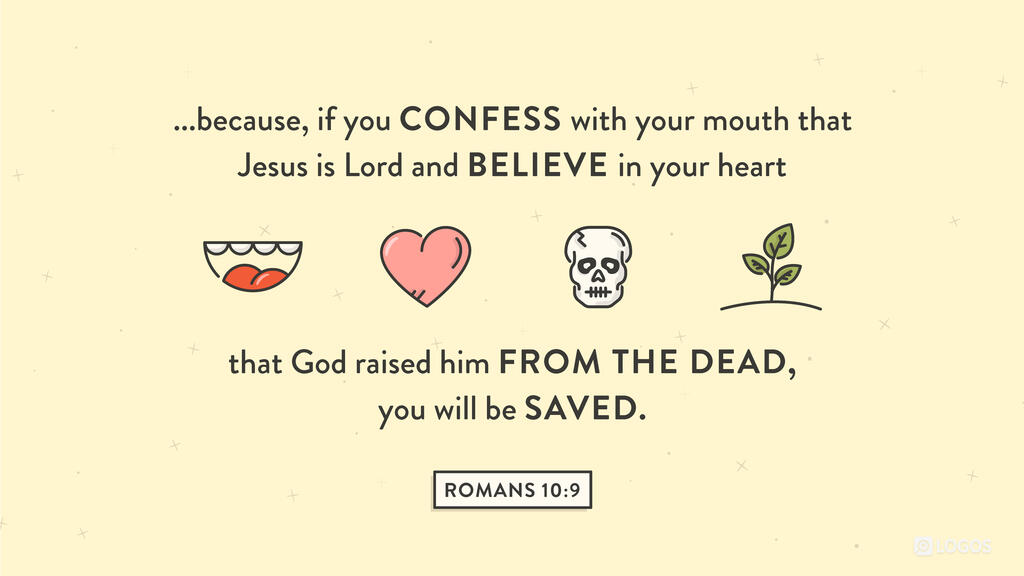
For Moses writes about the righteousness that is based on the law, that the person who does the commandments shall live by them. But the righteousness based on faith says, “Do not say in your heart, ‘Who will ascend into heaven?’ ” (that is, to bring Christ down) “or ‘Who will descend into the abyss?’ ” (that is, to bring Christ up from the dead). But what does it say? “The word is near you, in your mouth and in your heart” (that is, the word of faith that we proclaim); because, if you confess with your mouth that Jesus is Lord and believe in your heart that God raised him from the dead, you will be saved.
Copyright 2001 Crossway Bibles
NIVNew International Version (2011)
Moses writes this about the righteousness that is by the law: “The person who does these things will live by them.” But the righteousness that is by faith says: “Do not say in your heart, ‘Who will ascend into heaven?’ ” (that is, to bring Christ down) “or ‘Who will descend into the deep?’ ” (that is, to bring Christ up from the dead). But what does it say? “The word is near you; it is in your mouth and in your heart,” that is, the message concerning faith that we proclaim: If you declare with your mouth, “Jesus is Lord,” and believe in your heart that God raised him from the dead, you will be saved.
Copyright 1973, 1978, 1984, 2011 Biblica, Inc.
CSBChristian Standard Bible
since Moses writes about the righteousness that is from the law: The one who does these things will live by them. But the righteousness that comes from faith speaks like this: Do not say in your heart, “Who will go up to heaven?” that is, to bring Christ down or, “Who will go down into the abyss?” that is, to bring Christ up from the dead. On the contrary, what does it say? The message is near you, in your mouth and in your heart. This is the message of faith that we proclaim: If you confess with your mouth, “Jesus is Lord,” and believe in your heart that God raised him from the dead, you will be saved.
Copyright 2017 Holman Bible Publishers
NLTNew Living Translation
For Moses writes that the law’s way of making a person right with God requires obedience to all of its commands. But faith’s way of getting right with God says, “Don’t say in your heart, ‘Who will go up to heaven?’ (to bring Christ down to earth). And don’t say, ‘Who will go down to the place of the dead?’ (to bring Christ back to life again).” In fact, it says,
“The message is very close at hand;
it is on your lips and in your heart.”
And that message is the very message about faith that we preach: If you openly declare that Jesus is Lord and believe in your heart that God raised him from the dead, you will be saved.
Holy Bible, New Living Translation, copyright © 1996, 2004, 2015 by Tyndale House Foundation. Used by permission of Tyndale House Publishers. All rights reserved.
LEBThe Lexham English Bible
For Moses writes about the righteousness that is from the law: “The person who does this will live by it.” But the righteousness from faith speaks like this: “Do not say in your heart, ‘Who will ascend into heaven?’ ” (that is, to bring Christ down), or “Who will descend into the abyss?” (that is, to bring Christ up from the dead). But what does it say? “The word is near to you, in your mouth and in your heart” (that is, the word of faith that we proclaim), that if you confess with your mouth “Jesus is Lord” and believe in your heart that God raised him from the dead, you will be saved.
Copyright 2012 Lexham Press
KJV 1900King James Version
For Moses describeth the righteousness which is of the law, That the man which doeth those things shall live by them. But the righteousness which is of faith speaketh on this wise, Say not in thine heart, Who shall ascend into heaven? (that is, to bring Christ down from above:) Or, Who shall descend into the deep? (that is, to bring up Christ again from the dead.) But what saith it? The word is nigh thee, even in thy mouth, and in thy heart: that is, the word of faith, which we preach; That if thou shalt confess with thy mouth the Lord Jesus, and shalt believe in thine heart that God hath raised him from the dead, thou shalt be saved.
Public Domain