1 John 4:10–21
The Message: The Bible in Contemporary LanguageOther versions
English
- MSG The Message: The Bible in Contemporary Language
- DARBY 1890 Darby Bible
- ASV American Standard Version
- AV 1873 The Cambridge Paragraph Bible of the Authorized English Version
- CSB Christian Standard Bible
- D-R Douay-Rheims Bible
- ESV English Standard Version
- GW GOD’S WORD Translation
- GNB Good News Translation
- HCSB The Holman Christian Standard Bible
- KJV 1900 King James Version
- LSB Legacy Standard Bible
- LEB The Lexham English Bible
- NET The NET Bible
- NASB95 New American Standard Bible (1995)
- NCV New Century Version
- NIrV New International Reader’s Version (1998)
- NIV New International Version (2011)
- NKJV The New King James Version
- NLT New Living Translation
- NRSVue New Revised Standard Version: Updated Edition
- RSV The Revised Standard Version
- RSVCE The Revised Standard Version, Catholic Edition
- YLT Young’s Literal Translation
Arabic
Czech
French
German
Greek
Hungarian
Italian
Korean
Latin
Portuguese
Russian
Simplified Chinese
Spanish
Traditional Chinese
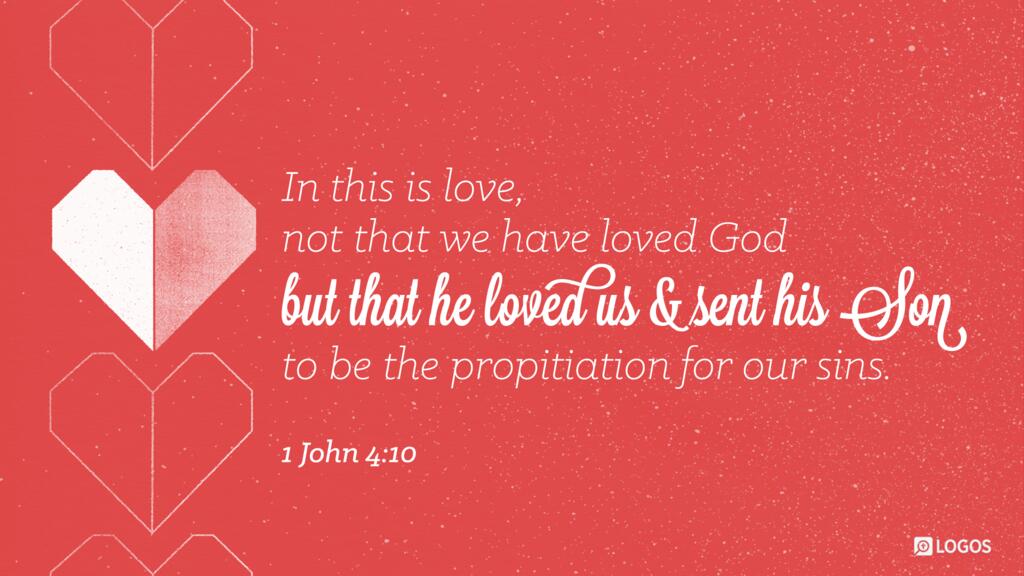
This is the kind of love we are talking about—not that we once upon a time loved God, but that he loved us and sent his Son as a sacrifice to clear away our sins and the damage they’ve done to our relationship with God.
11–12My dear, dear friends, if God loved us like this, we certainly ought to love each other. No one has seen God, ever. But if we love one another, God dwells deeply within us, and his love becomes complete in us—perfect love!
13–16This is how we know we’re living steadily and deeply in him, and he in us: He’s given us life from his life, from his very own Spirit. Also, we’ve seen for ourselves and continue to state openly that the Father sent his Son as Savior of the world. Everyone who confesses that Jesus is God’s Son participates continuously in an intimate relationship with God. We know it so well, we’ve embraced it heart and soul, this love that comes from God.
To Love, to Be Loved
17–18God is love. When we take up permanent residence in a life of love, we live in God and God lives in us. This way, love has the run of the house, becomes at home and mature in us, so that we’re free of worry on Judgment Day—our standing in the world is identical with Christ’s. There is no room in love for fear. Well-formed love banishes fear. Since fear is crippling, a fearful life—fear of death, fear of judgment—is one not yet fully formed in love.
19We, though, are going to love—love and be loved. First we were loved, now we love. He loved us first.
20–21If anyone boasts, “I love God,” and goes right on hating his brother or sister, thinking nothing of it, he is a liar. If he won’t love the person he can see, how can he love the God he can’t see? The command we have from Christ is blunt: Loving God includes loving people. You’ve got to love both.
Copyright 2005 Eugene H. Peterson.