John 18:2–12
The Lexham English BibleOther versions
English
- LEB The Lexham English Bible
- DARBY 1890 Darby Bible
- ASV American Standard Version
- AV 1873 The Cambridge Paragraph Bible of the Authorized English Version
- CSB Christian Standard Bible
- D-R Douay-Rheims Bible
- ESV English Standard Version
- GW GOD’S WORD Translation
- GNB Good News Translation
- HCSB The Holman Christian Standard Bible
- KJV 1900 King James Version
- LSB Legacy Standard Bible
- MSG The Message: The Bible in Contemporary Language
- NET The NET Bible
- NASB95 New American Standard Bible (1995)
- NCV New Century Version
- NIrV New International Reader’s Version (1998)
- NIV New International Version (2011)
- NKJV The New King James Version
- NLT New Living Translation
- NRSVue New Revised Standard Version: Updated Edition
- RSV The Revised Standard Version
- RSVCE The Revised Standard Version, Catholic Edition
- TNIV Today’s New International Version
- YLT Young’s Literal Translation
Arabic
Czech
French
German
Greek
Hungarian
Italian
Korean
Latin
Portuguese
Russian
Simplified Chinese
Spanish
Traditional Chinese
2(Now Judas, the one who betrayed him, also knew about the place, because Jesus often gathered there with his disciples.) 3So Judas, taking the cohort and officers from the chief priests and from the Pharisees, came there with lanterns and torches and weapons. 4Then Jesus, because he* knew all the things that were coming upon him, went out and said to them, “Who are you looking for?” 5They replied to him, “Jesus the Nazarene.” He said to them, “I am he.”* (Now Judas, the one who betrayed him, was also standing with them.) 6So when he said to them, “I am he,”* they drew backa and fell to the ground. 7Then he asked them again, “Who are you looking for?” And they said, “Jesus the Nazarene.” 8Jesus replied, “I said to you that I am he!* So if you are looking for me, let these men go,” 9in order that the word that he had spoken would be fulfilled: “Those whom you have given to me—I have not lost anyone of them.”b
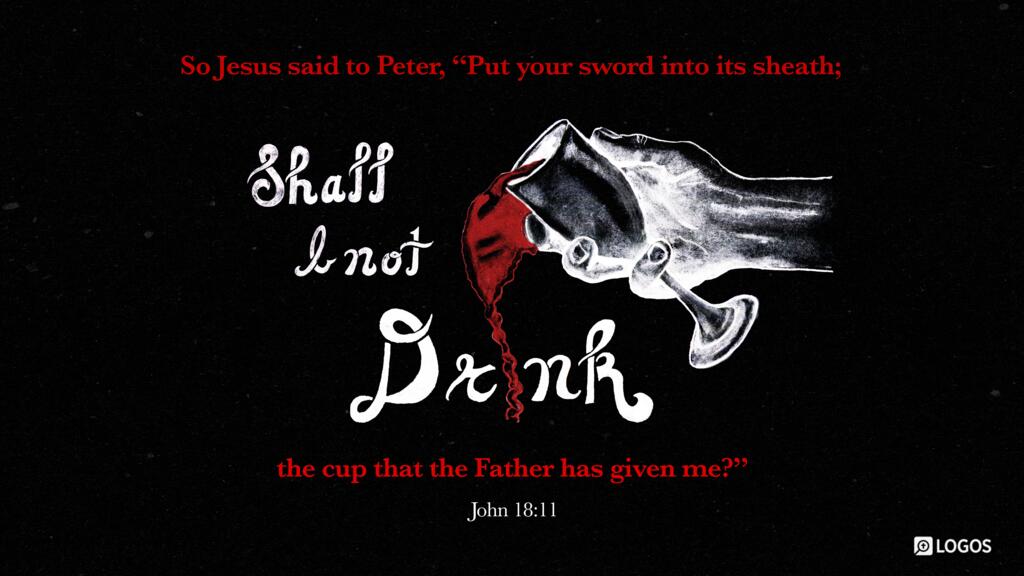
10Then Simon Peter, who had a sword, drew it and struck the slave of the high priest and cut off his right ear. (Now the name of the slave was Malchus.) 11So Jesus said to Peter, “Put the sword into its* sheath! The cup that the Father has given me—shall I not drink it?”
Jesus Taken to Annas
12Then the cohort and the military tribune and the officers of the Jews seized Jesus and tied him up,
Footnotes
- *Here “because” is supplied as a component of the participle (“knew”) which is understood as causal
- *Here the predicate nominative is supplied from context in the English translation
- *Here the predicate nominative is supplied from context in the English translation
- aLiterally “they went to the back”
- *Here the predicate nominative is supplied from context in the English translation
- bA paraphrase of the statement in John 17:12
- *Literally “the”; the Greek article is used here as a possessive pronoun
Copyright 2012 Lexham Press