Acts 4:5–13
The Lexham English BibleOther versions
English
- LEB The Lexham English Bible
- DARBY 1890 Darby Bible
- ASV American Standard Version
- AV 1873 The Cambridge Paragraph Bible of the Authorized English Version
- CSB Christian Standard Bible
- D-R Douay-Rheims Bible
- ESV English Standard Version
- GW GOD’S WORD Translation
- GNB Good News Translation
- HCSB The Holman Christian Standard Bible
- KJV 1900 King James Version
- LSB Legacy Standard Bible
- MSG The Message: The Bible in Contemporary Language
- NET The NET Bible
- NASB95 New American Standard Bible (1995)
- NCV New Century Version
- NIrV New International Reader’s Version (1998)
- NIV New International Version (2011)
- NKJV The New King James Version
- NLT New Living Translation
- NRSVue New Revised Standard Version: Updated Edition
- RSV The Revised Standard Version
- RSVCE The Revised Standard Version, Catholic Edition
- TNIV Today’s New International Version
- YLT Young’s Literal Translation
Arabic
Czech
French
German
Greek
Hungarian
Italian
Korean
Latin
Portuguese
Russian
Simplified Chinese
Spanish
Traditional Chinese
Peter and John on Trial Before the Sanhedrin
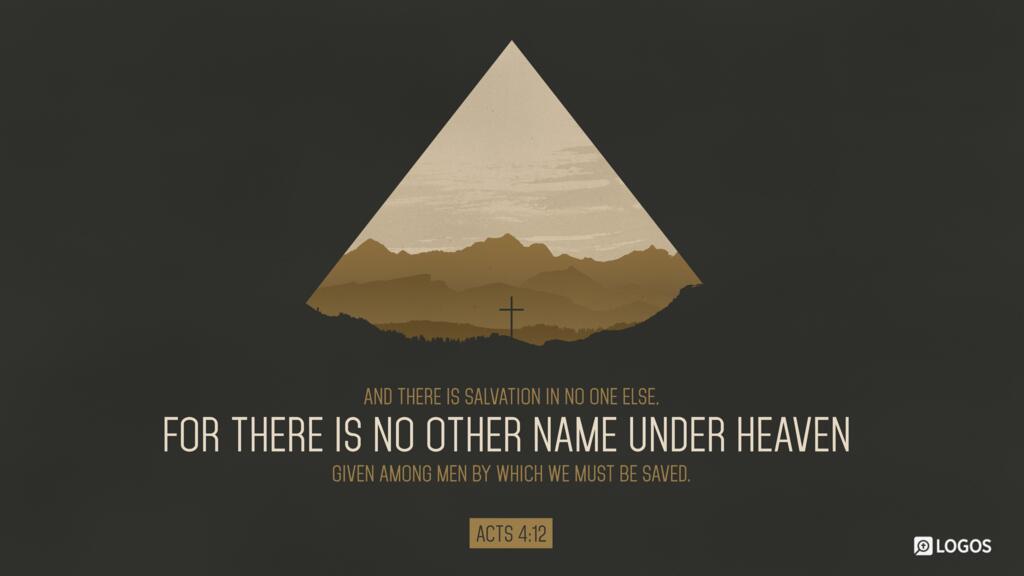
5And it happened that on the next day, their rulers and elders and scribes came together in Jerusalem, 6and Annas the high priest, and Caiaphas and John and Alexander, and all those who were from the high priest’s family. 7And they made them stand in their* midst and* began to ask,* “By what power or by what name did you do this?” 8Then Peter, filled with the Holy Spirit, said to them, “Rulers of the people and elders, 9if we are being examined today concerning a good deed done to a sick man—by what meansa this man was healed—10let it be known to all of you and to all the people of Israel that by the name of Jesus Christ the Nazarene, whom you crucified, whom God raised from the dead—by him this man stands before you healthy! 11This oneb is the stone that was rejected by you, the builders, that has become the cornerstone.c 12And there is salvation in no one else, for there is no other name under heaven that is given among people by which we must be saved.”
13Now when they* saw the boldness of Peter and John, and understood that they were uneducated and untrained men, they were astonished, and recognized them, that they had been with Jesus.
Footnotes
- *Literally “the”; the Greek article is used here as a possessive pronoun
- *Here “and” is supplied because the previous participle (“stand”) has been translated as a finite verb
- *The imperfect tense has been translated as ingressive here (“began to ask”)
- aOr “through whom”
- b“This one” refers to Jesus
- cLiterally “the head of the corner”; this verse is an allusion to Ps 118:22
- *Here “when” is supplied as a component of the participle (“saw”) which is understood as temporal
Copyright 2012 Lexham Press