Luke 9:7–27
The Holman Christian Standard BibleOther versions
English
- HCSB The Holman Christian Standard Bible
- DARBY 1890 Darby Bible
- ASV American Standard Version
- AV 1873 The Cambridge Paragraph Bible of the Authorized English Version
- CSB Christian Standard Bible
- D-R Douay-Rheims Bible
- ESV English Standard Version
- GW GOD’S WORD Translation
- GNB Good News Translation
- KJV 1900 King James Version
- LSB Legacy Standard Bible
- LEB The Lexham English Bible
- MSG The Message: The Bible in Contemporary Language
- NET The NET Bible
- NASB95 New American Standard Bible (1995)
- NCV New Century Version
- NIrV New International Reader’s Version (1998)
- NIV New International Version (2011)
- NKJV The New King James Version
- NLT New Living Translation
- NRSVue New Revised Standard Version: Updated Edition
- RSV The Revised Standard Version
- RSVCE The Revised Standard Version, Catholic Edition
- YLT Young’s Literal Translation
Arabic
Czech
French
German
Greek
Hungarian
Italian
Korean
Latin
Portuguese
Russian
Simplified Chinese
Spanish
Traditional Chinese
Herod’s Desire to See Jesus
7Herod the tetrarch yheard about everything that was going on. zHe was perplexed, because some said that John had been raised from the dead, 8some that Elijah had appeared, aand others that one of the ancient prophets had risen. b9“I beheaded John,” Herod said, “but who is this I hear such things about?” And he wanted to see Him. c
Feeding 5,000
10When the apostles returned, dthey reported to Jesus all that they had done. eHe took them along and withdrew privately to a ftown called Bethsaida. g11When the crowds found out, they followed Him. He welcomed them, hspoke to them about the kingdom of God, and cured ithose who needed healing.
12Late in the day, jkthe Twelve approached and said to Him, “Send the crowd away, lso they can go into the surrounding villages and countryside to find food and lodging, because we are in a deserted place here.”
13“You give them something to eat,” He told them.
“We have no more than five loaves mand two fish,” they said, “unless we go and buy food for all these people.” 14(For about 5,000 men were there.)
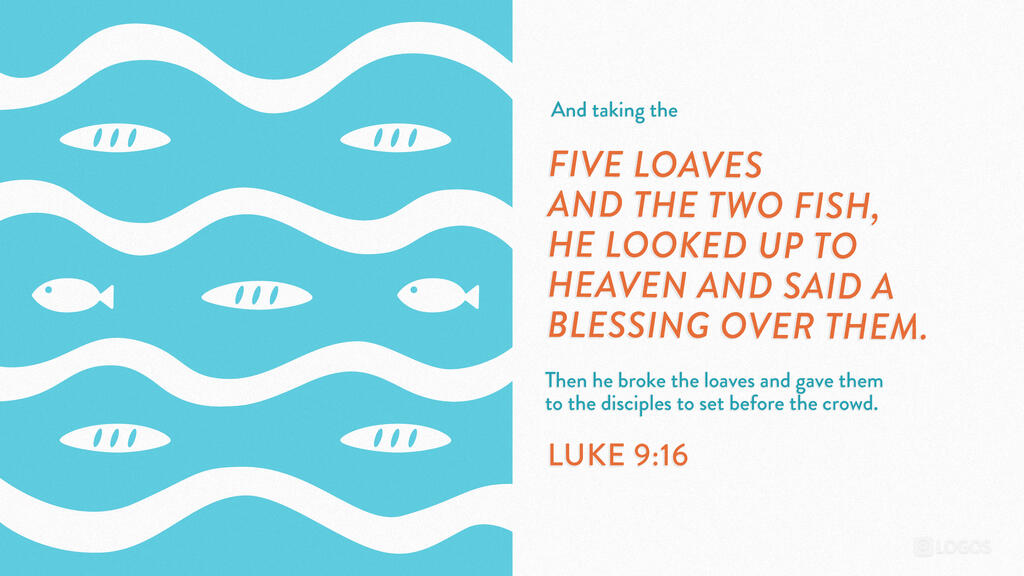
Then He told His disciples, “Have them sit down nin groups of about 50 each.” 15They did so, and had them all sit down. 16Then He took the five loaves and the two fish, and looking up to heaven, oHe blessed and broke them. pHe kept giving them to the disciples to set before the crowd. 17Everyone ate and was filled. Then they picked up q12 baskets of leftover pieces.
Peter’s Confession of the Messiah
18While He was praying in private rand His disciples were with Him, He asked them, “Who do the crowds say that I am?”
19They answered, “John the Baptist; others, Elijah; still others, that one of the ancient prophets has come back.” st
20“But you,” He asked them, “who do you say that I am?”
Peter answered, “God’s Messiah!” u
His Death and Resurrection Predicted
21But He strictly warned and instructed them to tell this to no one, v22saying, w“The •Son of Man xmust suffer many things yand be rejected zby the elders, •chief priests, and •scribes, abe killed, and be raised the third day.” b
Take Up Your Cross
23Then He said to them all, “If anyone wants to come with cMe, he must deny himself, dtake up his cross daily, eand follow Me. f24For whoever wants to save his •life will lose it, but whoever loses his life because of Me will save it. g25What is a man benefited if he gains the whole world, yet loses or forfeits himself? h26For whoever is ashamed of Me and My words, ithe Son of Man will be ashamed of him when He comes in His glory jand that of the Father and the holy angels. k27I tell you the truth: There are some standing here who will not taste death luntil they see the kingdom of God.” m
Footnotes
- f9:10 Other add deserted place near a
- i9:11 Or healed; in this passage, different Gk words are translated as heal. In Eng, “to heal” or “to cure” are synonyms with little distinction in meaning. Technically, we do not heal or cure diseases. People are healed or cured from diseases.
- j9:12 When the day began to decline
- n9:14 them recline
- q9:17 Then were picked up by them
- s9:19 has risen
- •Most frequent title Jesus used for Himself (Dn 7:13; Mt 8:20)
- •A group of Jewish temple officers that included the high priest, captain of the temple, temple overseers, and treasurers
- •A professional group in Judaism that copied the law of Moses and interpreted it, especially in legal cases
- c9:23 come after
- e9:23 Other omit daily
- •The same Greek word (psyche) can be translated life or soul.
Cross references
- y9:7 Lk 3:1, 19; 13:31; 23:7; Ac 13:1
- z9:7–9 Mt 14:1–2; Mk 6:14–16
- a9:8 Mt 11:14; 16:14; 17:3–4, 10–12; Lk 1:17; 4:26
- b9:8 Mk 6:15
- c9:9 Lk 23:8
- d9:10–17 Mt 14:13–21; Mk 6:32–44; Jn 6:5–13
- e9:10 Mk 6:30
- g9:10 Mt 11:21; Mk 8:22; Jn 1:44; 12:21
- h9:11 Lk 8:40
- k9:12 Lk 24:29
- l9:12 Mt 15:23
- m9:13 Mt 16:9; Mk 8:19
- o9:16 Mk 7:34; Jn 11:41; 17:1
- p9:16 Mt 26:26; Mk 8:7; 14:22; Lk 24:30
- r9:18–20 Mt 16:13–16; Mk 8:27–29
- t9:19 Lk 9:7–8
- u9:20 Mt 1:17; Lk 23:35; Ac 3:18; Rv 12:10
- v9:21 Mt 12:16; 16:20; Mk 7:36; 8:30; 9:9; Lk 5:14; 8:56
- w9:22–27 Mt 16:21–28; Mk 8:31–9:1
- x9:22 Lk 13:33; 18:31
- y9:22 Mt 17:12, 22–23; Lk 24:7
- z9:22 Lk 17:25; 20:17; 1Pt 2:4
- a9:22 Lk 20:1; 22:66
- b9:22 Mt 27:63; Jn 2:19
- d9:23 2Tm 2:12–13
- f9:23 Mt 10:38–39; Lk 14:27; 1Co 15:31
- g9:24 Lk 17:33; Jn 12:25
- h9:25 Lk 12:20
- i9:26 Mt 10:33; Rm 1:16; 2Tm 1:8; Heb 11:16; 1Jn 2:28
- j9:26 Dn 7:10; Zch 14:5; Mt 24:30; Jn 1:51; Ac 1:11; 1Th 1:10
- k9:26 Lk 12:9; Rv 14:10
- l9:27 Jn 8:52; Heb 2:9
- m9:27 Mt 10:23; 23:36; 24:34; Mk 13:30; Lk 21:31–32
Copyright 2002, 2003, 2009 Holman Bible Publishers