Romans 6:15–22
The NET BibleOther versions
English
- NET The NET Bible
- DARBY 1890 Darby Bible
- ASV American Standard Version
- AV 1873 The Cambridge Paragraph Bible of the Authorized English Version
- CSB Christian Standard Bible
- D-R Douay-Rheims Bible
- ESV English Standard Version
- GW GOD’S WORD Translation
- GNB Good News Translation
- HCSB The Holman Christian Standard Bible
- KJV 1900 King James Version
- LSB Legacy Standard Bible
- LEB The Lexham English Bible
- MSG The Message: The Bible in Contemporary Language
- NASB95 New American Standard Bible (1995)
- NCV New Century Version
- NIrV New International Reader’s Version (1998)
- NIV New International Version (2011)
- NKJV The New King James Version
- NLT New Living Translation
- NRSVue New Revised Standard Version: Updated Edition
- RSV The Revised Standard Version
- RSVCE The Revised Standard Version, Catholic Edition
- YLT Young’s Literal Translation
Arabic
Czech
French
German
Greek
Hungarian
Italian
Korean
Latin
Portuguese
Russian
Simplified Chinese
Spanish
Traditional Chinese
The Believer’s Enslavement to God’s Righteousness
6:15What then? Shall we sin because we are not under law but under grace? Absolutely not! 6:16Do you not know that if you present yourselves13 as obedient slaves,14 you are slaves of the one you obey, either of sin resulting in death, or obedience resulting in righteousness?156:17But thanks be to God that though you were slaves to sin, you obeyed16 from the heart that pattern17 of teaching you were entrusted to, 6:18and having been freed from sin, you became enslaved to righteousness. 6:19(I am speaking in human terms because of the weakness of your flesh.)18 For just as you once presented your members as slaves to impurity and lawlessness leading to more lawlessness, so now present your members as slaves to righteousness leading to sanctification. 6:20For when you were slaves of sin, you were free with regard to righteousness.
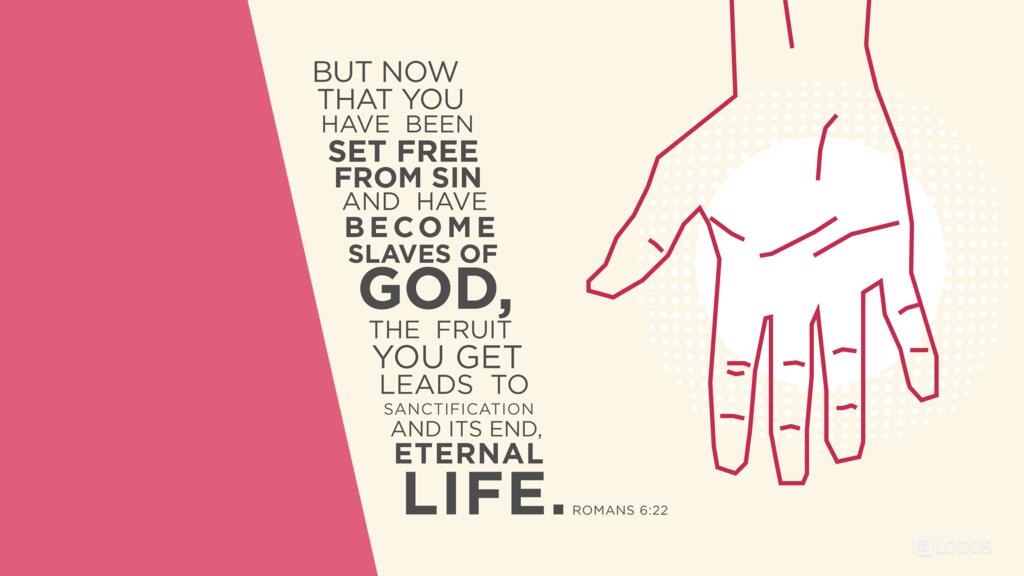
6:21So what benefit19 did you then reap20 from those things that you are now ashamed of? For the end of those things is death. 6:22But now, freed21 from sin and enslaved to God, you have your benefit22 leading to sanctification, and the end is eternal life.
Footnotes
- 13 Grk “to whom you present yourselves.”
- 14 Grk “as slaves for obedience.” See the note on the word “slave” in .
- 15 Grk “either of sin unto death, or obedience unto righteousness.”
- 16 Grk “you were slaves of sin but you obeyed.”
- 17 Or “type, form.”
- 18 Or “because of your natural limitations” (). Verse 19 forms something of a parenthetical comment in Paul’s argument.
- 19 Grk “fruit.”
- 20 Grk “have,” in a tense emphasizing their customary condition in the past.
- 21 The two aorist participles translated “freed” and “enslaved” are causal in force; their full force is something like “But now, since you have become freed from sin and since you have become enslaved to God.…”
- 22 Grk “fruit.”
The NET Bible First Edition, Copyright 1996-2005 by Biblical Studies Press