Revelation 11:15–18
The NET BibleOther versions
English
- NET The NET Bible
- DARBY 1890 Darby Bible
- ASV American Standard Version
- AV 1873 The Cambridge Paragraph Bible of the Authorized English Version
- CSB Christian Standard Bible
- D-R Douay-Rheims Bible
- ESV English Standard Version
- GW GOD’S WORD Translation
- GNB Good News Translation
- HCSB The Holman Christian Standard Bible
- KJV 1900 King James Version
- LSB Legacy Standard Bible
- LEB The Lexham English Bible
- MSG The Message: The Bible in Contemporary Language
- NASB95 New American Standard Bible (1995)
- NCV New Century Version
- NIrV New International Reader’s Version (1998)
- NIV New International Version (2011)
- NKJV The New King James Version
- NLT New Living Translation
- NRSVue New Revised Standard Version: Updated Edition
- RSV The Revised Standard Version
- RSVCE The Revised Standard Version, Catholic Edition
- YLT Young’s Literal Translation
Arabic
Czech
French
German
Greek
Hungarian
Italian
Korean
Latin
Portuguese
Russian
Simplified Chinese
Spanish
Traditional Chinese
The Seventh Trumpet
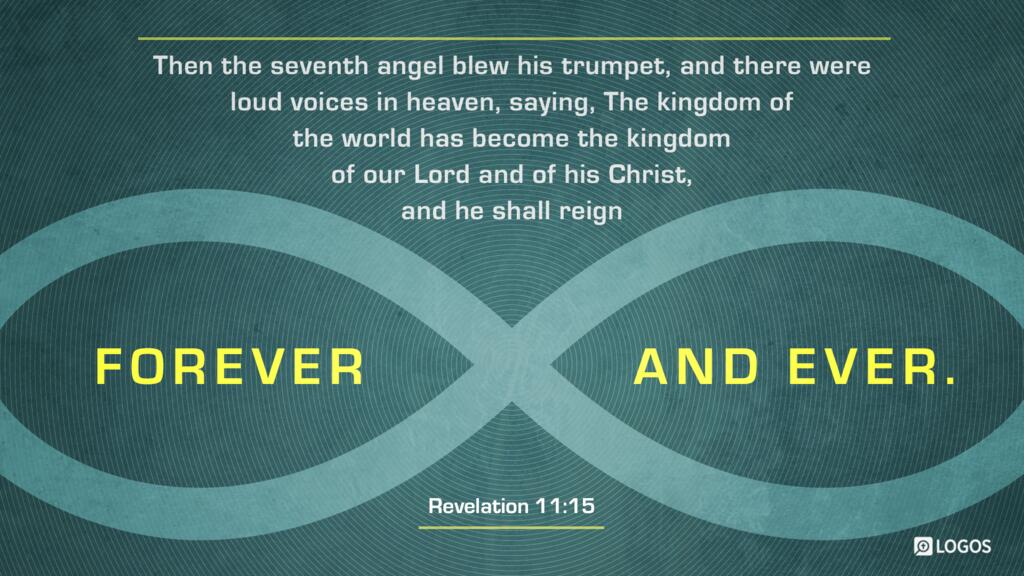
11:15Then36 the seventh angel blew his trumpet, and there were loud voices in heaven saying:
“The kingdom of the world
has become the kingdom of our Lord
and of his Christ,37
and he will reign for ever and ever.”
11:16Then38 the twenty-four elders who are seated on their thrones before God threw themselves down with their faces to the ground39 and worshiped God 11:17with these words:40
“We give you thanks, Lord God, the All-Powerful,41
the one who is and who was,
because you have taken your great power
and begun to reign.42
11:18The43 nations44 were enraged,
but45 your wrath has come,
and the time has come for the dead to be judged,
and the time has come to give to your servants,46
the prophets, their reward,
as well as to the saints
and to those who revere47 your name, both small and great,
and the time has come48 to destroy those who destroy49 the earth.”
Footnotes
- 36 Here καί (kai) has been translated as “then” to indicate the implied sequence of events within the vision.
- 37 Or “Messiah”; both “Christ” (Greek) and “Messiah” (Hebrew and Aramaic) mean “one who has been anointed.”
- 38 Here καί (kai) has been translated as “then” to indicate the implied sequence of events within the vision.
- 39 Grk “they fell down on their faces.” πίπτω 1.b.α.ב. has “fall down, throw oneself to the ground as a sign of devotion or humility, before high-ranking persons or divine beings.”
- 40 Grk “saying.”
- 41 On this word παντοκράτωρ states, “the Almighty, All-Powerful, Omnipotent (One) only of God … (ὁ) κύριος ὁ θεὸς ὁ π.… Rv 1:8; 4:8; 11:17; 15:3; 16:7; 21:22.”
- 42 The aorist verb ἐβασίλευσας (ebasileusas) has been translated ingressively.
- 43 Here καί (kai) has not been translated because of differences between Greek and English style.
- 44 Or “The Gentiles” (the same Greek word may be translated “Gentiles” or “nations”).
- 45 Here καί (kai) has been translated as “but” to indicate the contrast present in this context.
- 46 See the note on the word “servants” in .
- 47 Grk “who fear.”
- 48 The words “the time has come” do not occur except at the beginning of the verse; the phrase has been repeated for emphasis and contrast. The Greek has one finite verb (“has come”) with a compound subject (“your wrath,” “the time”), followed by three infinitive clauses (“to be judged,” “to give,” “to destroy”). The rhetorical power of the repetition of the finite verb in English thus emulates the rhetorical power of its lone instance in Greek.
- 49 Or “who deprave.” There is a possible wordplay here on two meanings for διαφθείρω (diaphtheirō), with the first meaning “destroy” and the second meaning either “to ruin” or “to make morally corrupt.” See L&N 20.40.
The NET Bible First Edition, Copyright 1996-2005 by Biblical Studies Press
In other versions
ESVEnglish Standard Version
Then the seventh angel blew his trumpet, and there were loud voices in heaven, saying, “The kingdom of the world has become the kingdom of our Lord and of his Christ, and he shall reign forever and ever.” And the twenty-four elders who sit on their thrones before God fell on their faces and worshiped God, saying,
“We give thanks to you, Lord God Almighty,
who is and who was,
for you have taken your great power
and begun to reign.
The nations raged,
but your wrath came,
and the time for the dead to be judged,
and for rewarding your servants, the prophets and saints,
and those who fear your name,
both small and great,
and for destroying the destroyers of the earth.”
Copyright 2001 Crossway Bibles
NIVNew International Version (2011)
The seventh angel sounded his trumpet, and there were loud voices in heaven, which said:
“The kingdom of the world has become
the kingdom of our Lord and of his Messiah,
and he will reign for ever and ever.”
And the twenty-four elders, who were seated on their thrones before God, fell on their faces and worshiped God, saying:
“We give thanks to you, Lord God Almighty,
the One who is and who was,
because you have taken your great power
and have begun to reign.
The nations were angry,
and your wrath has come.
The time has come for judging the dead,
and for rewarding your servants the prophets
and your people who revere your name,
both great and small—
and for destroying those who destroy the earth.”
Copyright 1973, 1978, 1984, 2011 Biblica, Inc.
CSBChristian Standard Bible
The seventh angel blew his trumpet, and there were loud voices in heaven saying,
The kingdom of the world has become the kingdom
of our Lord and of his Christ,
and he will reign forever and ever.
The twenty-four elders, who were seated before God on their thrones, fell facedown and worshiped God, saying,
We give you thanks, Lord God, the Almighty,
who is and who was,
because you have taken your great power
and have begun to reign.
The nations were angry,
but your wrath has come.
The time has come
for the dead to be judged
and to give the reward
to your servants the prophets,
to the saints, and to those who fear your name,
both small and great,
and the time has come to destroy
those who destroy the earth.
Copyright 2017 Holman Bible Publishers
NLTNew Living Translation
Then the seventh angel blew his trumpet, and there were loud voices shouting in heaven:
“The world has now become the Kingdom of our Lord and of his Christ,
and he will reign forever and ever.”
The twenty-four elders sitting on their thrones before God fell with their faces to the ground and worshiped him. And they said,
“We give thanks to you, Lord God, the Almighty,
the one who is and who always was,
for now you have assumed your great power
and have begun to reign.
The nations were filled with wrath,
but now the time of your wrath has come.
It is time to judge the dead
and reward your servants the prophets,
as well as your holy people,
and all who fear your name,
from the least to the greatest.
It is time to destroy
all who have caused destruction on the earth.”
Holy Bible, New Living Translation, copyright © 1996, 2004, 2015 by Tyndale House Foundation. Used by permission of Tyndale House Publishers. All rights reserved.
LEBThe Lexham English Bible
And the seventh angel blew the trumpet, and there was a loud voice in heaven saying,
“The kingdom of the world has become the kingdom of our Lord
and of his Christ,
and he will reign forever and ever.”
And the twenty-four elders who are seated on their thrones before God fell down on their faces and worshiped God, saying,
“We give thanks to you, Lord God All-Powerful,
the one who is and the one who was,
because you have taken your great power
and have begun to reign.
And the nations were angry,
and your wrath has come,
and the time for the dead to be judged,
and to give their reward to your slaves the prophets
and to the saints and to the ones who fear your name,
the small and the great,
and to destroy those who destroy the earth.”
Copyright 2012 Lexham Press
KJV 1900King James Version
And the seventh angel sounded; and there were great voices in heaven, saying, The kingdoms of this world are become the kingdoms of our Lord, and of his Christ; and he shall reign for ever and ever. And the four and twenty elders, which sat before God on their seats, fell upon their faces, and worshipped God, Saying, We give thee thanks, O Lord God Almighty, which art, and wast, and art to come; because thou hast taken to thee thy great power, and hast reigned. And the nations were angry, and thy wrath is come, and the time of the dead, that they should be judged, and that thou shouldest give reward unto thy servants the prophets, and to the saints, and them that fear thy name, small and great; and shouldest destroy them which destroy the earth.
Public Domain