Proverbs 31:27–28
The NET BibleOther versions
English
- NET The NET Bible
- DARBY 1890 Darby Bible
- ASV American Standard Version
- AV 1873 The Cambridge Paragraph Bible of the Authorized English Version
- CSB Christian Standard Bible
- D-R Douay-Rheims Bible
- ESV English Standard Version
- GW GOD’S WORD Translation
- GNB Good News Translation
- HCSB The Holman Christian Standard Bible
- KJV 1900 King James Version
- LSB Legacy Standard Bible
- LEB The Lexham English Bible
- MSG The Message: The Bible in Contemporary Language
- NASB95 New American Standard Bible (1995)
- NCV New Century Version
- NIrV New International Reader’s Version (1998)
- NIV New International Version (2011)
- NKJV The New King James Version
- NLT New Living Translation
- NRSVue New Revised Standard Version: Updated Edition
- RSV The Revised Standard Version
- RSVCE The Revised Standard Version, Catholic Edition
- YLT Young’s Literal Translation
Arabic
Czech
French
German
Hebrew
Hungarian
Italian
Korean
Latin
Portuguese
Russian
Simplified Chinese
Spanish
Traditional Chinese
31:27She watches over66 the ways of her household,
and does not eat the bread of idleness.67
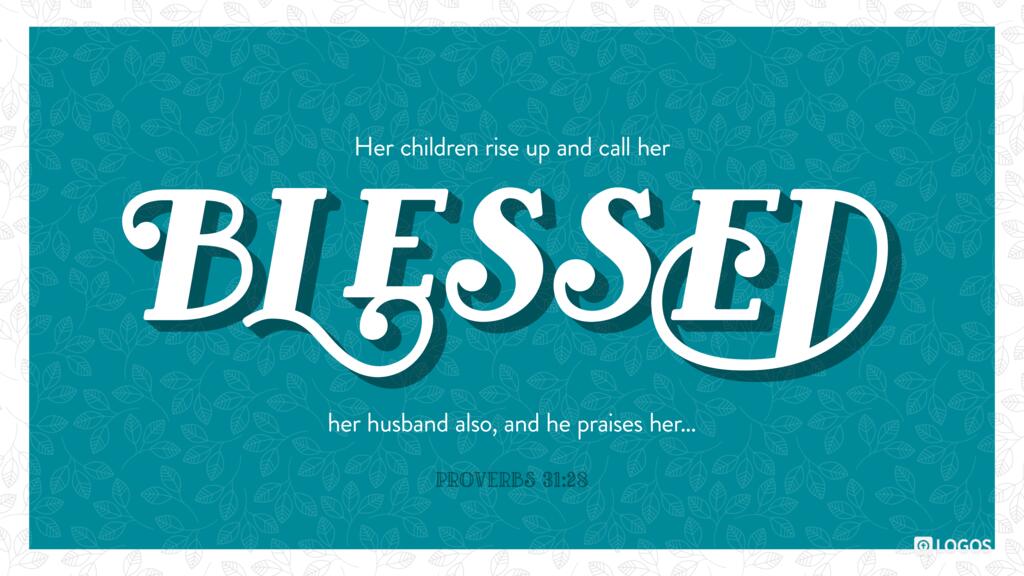
31:28Her children rise up68 and call her blessed,
her husband69 also praises her:
Footnotes
- 66 The first word of the eighteenth line begins with ץ (tsade), the eighteenth letter of the Hebrew alphabet.
- 67 The expression bread of idleness refers to food that is gained through idleness, perhaps given or provided for her. In the description of the passage one could conclude that this woman did not have to do everything she did; and this line affirms that even though she is well off, she will eat the bread of her industrious activity.
- 68 The first word of the nineteenth line begins with ק (qof), the nineteenth letter of the Hebrew alphabet. The deliberate action of “rising up” to call her blessed is the Hebrew way of indicating something important is about to be done that has to be prepared for.
- 69 The text uses an independent nominative absolute to draw attention to her husband: “her husband, and he praises her.” Prominent as he is, her husband speaks in glowing terms of his noble wife.
The NET Bible First Edition, Copyright 1996-2005 by Biblical Studies Press
In other versions
ESVEnglish Standard Version
She looks well to the ways of her household
and does not eat the bread of idleness.
Her children rise up and call her blessed;
her husband also, and he praises her:
Copyright 2001 Crossway Bibles
NIVNew International Version (2011)
She watches over the affairs of her household
and does not eat the bread of idleness.
Her children arise and call her blessed;
her husband also, and he praises her:
Copyright 1973, 1978, 1984, 2011 Biblica, Inc.
CSBChristian Standard Bible
She watches over the activities of her household
and is never idle.
Her children rise up and call her blessed;
her husband also praises her:
Copyright 2017 Holman Bible Publishers
NLTNew Living Translation
She carefully watches everything in her household
and suffers nothing from laziness.
Her children stand and bless her.
Her husband praises her:
Holy Bible, New Living Translation, copyright © 1996, 2004, 2015 by Tyndale House Foundation. Used by permission of Tyndale House Publishers. All rights reserved.
LEBThe Lexham English Bible
She looks after the ways of her household,
and the bread of idleness she will not eat.
Her children rise and consider her happy,
her husband also, and he praises her;
Copyright 2012 Lexham Press
KJV 1900King James Version
She looketh well to the ways of her household,
And eateth not the bread of idleness.
Her children arise up, and call her blessed;
Her husband also, and he praiseth her.
Public Domain