Malachi 4:1–6
The NET BibleOther versions
English
- NET The NET Bible
- DARBY 1890 Darby Bible
- ASV American Standard Version
- AV 1873 The Cambridge Paragraph Bible of the Authorized English Version
- CSB Christian Standard Bible
- D-R Douay-Rheims Bible
- ESV English Standard Version
- GW GOD’S WORD Translation
- GNB Good News Translation
- HCSB The Holman Christian Standard Bible
- KJV 1900 King James Version
- LSB Legacy Standard Bible
- LEB The Lexham English Bible
- MSG The Message: The Bible in Contemporary Language
- NASB95 New American Standard Bible (1995)
- NCV New Century Version
- NIrV New International Reader’s Version (1998)
- NIV New International Version (2011)
- NKJV The New King James Version
- NLT New Living Translation
- NRSVue New Revised Standard Version: Updated Edition
- RSV The Revised Standard Version
- RSVCE The Revised Standard Version, Catholic Edition
- YLT Young’s Literal Translation
Arabic
Czech
French
German
Hebrew
Hungarian
Italian
Korean
Latin
Portuguese
Russian
Simplified Chinese
Spanish
Traditional Chinese
4:1 (3:19)1 “For indeed the day2 is coming, burning like a furnace, and all the arrogant evildoers will be chaff. The coming day will burn them up,” says the Lord who rules over all. “It3 will not leave even a root or branch. 4:2But for you who respect my name, the sun of vindication4 will rise with healing wings,5 and you will skip about6 like calves released from the stall. 4:3You will trample on the wicked, for they will be like ashes under the soles of your feet on the day which I am preparing,” says the Lord who rules over all.
Restoration through the Lord
4:4“Remember the law of my servant Moses, to whom at Horeb7 I gave rules and regulations for all Israel to obey.84:5Look, I will send you Elijah9 the prophet before the great and terrible day of the Lord arrives. 4:6He will encourage fathers and their children to return to me,10 so that I will not come and strike the earth with judgment.”11
Footnotes
- 1 Beginning with 4:1, the verse numbers through 4:6 in the English Bible differ from the verse numbers in the Hebrew text (), with 4:1 = 3:19 , 4:2 = 3:20 , etc., through 4:6 = 3:24 . Thus the book of Malachi in the Hebrew Bible has only three chapters, with 24 verses in ch. 3.
- 2 This day is the well-known “day of the Lord” so pervasive in OT eschatological texts (see Joel 2:30–31; Amos 5:18; Obad 15). For the believer it is a day of grace and salvation; for the sinner, a day of judgment and destruction.
- 3 Heb “so that it” (so , ). For stylistic reasons a new sentence was begun here in the translation.
- 4 Here the Hebrew word צְדָקָה (tsédaqah), usually translated “righteousness” (so , , , ; cf. “justice”), has been rendered as “vindication” because it is the vindication of God’s people that is in view in the context. Cf. 842 צְדָקָה 6; “righteousness as vindicated, justification, salvation, etc.” The expression the sun of vindication will rise is a metaphorical way of describing the day of the Lord as a time of restoration when God vindicates his people (see 2 Sam 23:4; Isa 30:26; 60:1, 3). Their vindication and restoration will be as obvious and undeniable as the bright light of the rising sun.
- 5 The point of the metaphor of healing wings is unclear. The sun seems to be compared to a bird. Perhaps the sun’s “wings” are its warm rays. “Healing” may refer to a reversal of the injury done by evildoers (see Mal 3:5).
- 6 Heb “you will go out and skip about.”
- 7 Horeb is another name for Mount Sinai (cf. Exod 3:1).
- 8 Heb “which I commanded him in Horeb concerning all Israel, statutes and ordinances.”
- 9 I will send you Elijah the prophet. In light of the ascension of Elijah to heaven without dying (2 Kgs 2:11), Judaism has always awaited his return as an aspect of the messianic age (see, e.g., John 1:19–28). Jesus identified John the Baptist as Elijah, because he came in the “spirit and power” of his prototype Elijah (Matt 11:14; 17:1–13; Mark 9:2–13; Luke 9:28–36).
- 10 Heb “he will turn the heart[s] of [the] fathers to [the] sons, and the heart[s] of [the] sons to their fathers.” This may mean that the messenger will encourage reconciliation of conflicts within Jewish families in the postexilic community (see Mal 2:10; this interpretation is followed by most English versions). Another option is to translate, “he will turn the hearts of the fathers together with those of the children [to me], and the hearts of the children together with those of their fathers [to me].” In this case the prophet encourages both the younger and older generations of sinful society to repent and return to the Lord (cf. Mal 3:7). This option is preferred in the present translation; see Beth Glazier-McDonald, Malachi (), 256.
- 11 Heb “[the] ban” (חֵרֶם, kherem). God’s prophetic messenger seeks to bring about salvation and restoration, thus avoiding the imposition of the covenant curse, that is, the divine ban that the hopelessly unrepentant must expect (see Deut 7:2; 20:17; Judg 1:21; Zech 14:11). If the wicked repent, the purifying judgment threatened in 4:1–3 will be unnecessary.
The NET Bible First Edition, Copyright 1996-2005 by Biblical Studies Press
In other versions
ESVEnglish Standard Version
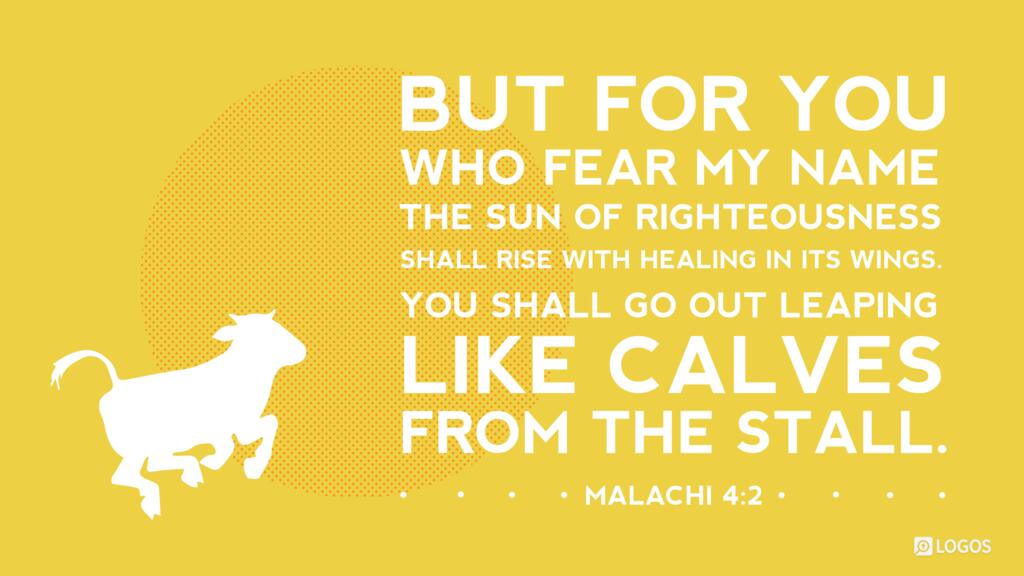
“For behold, the day is coming, burning like an oven, when all the arrogant and all evildoers will be stubble. The day that is coming shall set them ablaze, says the Lord of hosts, so that it will leave them neither root nor branch. But for you who fear my name, the sun of righteousness shall rise with healing in its wings. You shall go out leaping like calves from the stall. And you shall tread down the wicked, for they will be ashes under the soles of your feet, on the day when I act, says the Lord of hosts.
“Remember the law of my servant Moses, the statutes and rules that I commanded him at Horeb for all Israel.
“Behold, I will send you Elijah the prophet before the great and awesome day of the Lord comes. And he will turn the hearts of fathers to their children and the hearts of children to their fathers, lest I come and strike the land with a decree of utter destruction.”
Copyright 2001 Crossway Bibles
NIVNew International Version (2011)
“Surely the day is coming; it will burn like a furnace. All the arrogant and every evildoer will be stubble, and the day that is coming will set them on fire,” says the Lord Almighty. “Not a root or a branch will be left to them. But for you who revere my name, the sun of righteousness will rise with healing in its rays. And you will go out and frolic like well-fed calves. Then you will trample on the wicked; they will be ashes under the soles of your feet on the day when I act,” says the Lord Almighty.
“Remember the law of my servant Moses, the decrees and laws I gave him at Horeb for all Israel.
“See, I will send the prophet Elijah to you before that great and dreadful day of the Lord comes. He will turn the hearts of the parents to their children, and the hearts of the children to their parents; or else I will come and strike the land with total destruction.”
Copyright 1973, 1978, 1984, 2011 Biblica, Inc.
CSBChristian Standard Bible
“For look, the day is coming, burning like a furnace, when all the arrogant and everyone who commits wickedness will become stubble. The coming day will consume them,” says the Lord of Armies, “not leaving them root or branches. But for you who fear my name, the sun of righteousness will rise with healing in its wings, and you will go out and playfully jump like calves from the stall. You will trample the wicked, for they will be ashes under the soles of your feet on the day I am preparing,” says the Lord of Armies.
“Remember the instruction of Moses my servant, the statutes and ordinances I commanded him at Horeb for all Israel. Look, I am going to send you the prophet Elijah before the great and terrible day of the Lord comes. And he will turn the hearts of fathers to their children and the hearts of children to their fathers. Otherwise, I will come and strike the land with a curse.”
Copyright 2017 Holman Bible Publishers
NLTNew Living Translation
The Lord of Heaven’s Armies says, “The day of judgment is coming, burning like a furnace. On that day the arrogant and the wicked will be burned up like straw. They will be consumed—roots, branches, and all.
“But for you who fear my name, the Sun of Righteousness will rise with healing in his wings. And you will go free, leaping with joy like calves let out to pasture. On the day when I act, you will tread upon the wicked as if they were dust under your feet,” says the Lord of Heaven’s Armies.
“Remember to obey the Law of Moses, my servant—all the decrees and regulations that I gave him on Mount Sinai for all Israel.
“Look, I am sending you the prophet Elijah before the great and dreadful day of the Lord arrives. His preaching will turn the hearts of fathers to their children, and the hearts of children to their fathers. Otherwise I will come and strike the land with a curse.”
Holy Bible, New Living Translation, copyright © 1996, 2004, 2015 by Tyndale House Foundation. Used by permission of Tyndale House Publishers. All rights reserved.
LEBThe Lexham English Bible
“For look! The day is about to come, burning like an oven, and all the arrogant and every evildoer will be stubble. The coming day will consume them,” says Yahweh of hosts. “It will not leave behind for them root or branch. But for you who revere my name, the sun of righteousness will rise, with healing in its wings, and you will go out and leap like fattened calves. You will trample down the wicked, for they will be ashes under the soles of your feet on the day that I am going to act,” says Yahweh of hosts.
“Remember the instruction of my servant Moses, which I commanded him at Horeb to all Israel, the rules and regulations. Look! I am going to send to you Elijah the prophet before the coming of the great and awesome day of Yahweh! And he will bring back the hearts of the fathers to the sons, and the hearts of the sons to their fathers, so that I will not come and strike the land with a ban.”
Copyright 2012 Lexham Press
KJV 1900King James Version
For, behold, the day cometh, that shall burn as an oven;
And all the proud, yea, and all that do wickedly, shall be stubble:
And the day that cometh shall burn them up, saith the Lord of hosts,
That it shall leave them neither root nor branch.
But unto you that fear my name shall the Sun of righteousness arise
With healing in his wings;
And ye shall go forth, and grow up as calves of the stall.
And ye shall tread down the wicked;
For they shall be ashes under the soles of your feet
In the day that I shall do this, saith the Lord of hosts.
Remember ye the law of Moses my servant,
Which I commanded unto him in Horeb for all Israel,
With the statutes and judgments.
Behold, I will send you Elijah the prophet
Before the coming of the great and dreadful day of the Lord:
And he shall turn the heart of the fathers to the children,
And the heart of the children to their fathers,
Lest I come and smite the earth with a curse.
Public Domain