Luke 9:21–27
The NET BibleOther versions
English
- NET The NET Bible
- DARBY 1890 Darby Bible
- ASV American Standard Version
- AV 1873 The Cambridge Paragraph Bible of the Authorized English Version
- CSB Christian Standard Bible
- D-R Douay-Rheims Bible
- ESV English Standard Version
- GW GOD’S WORD Translation
- GNB Good News Translation
- HCSB The Holman Christian Standard Bible
- KJV 1900 King James Version
- LSB Legacy Standard Bible
- LEB The Lexham English Bible
- MSG The Message: The Bible in Contemporary Language
- NASB95 New American Standard Bible (1995)
- NCV New Century Version
- NIrV New International Reader’s Version (1998)
- NIV New International Version (2011)
- NKJV The New King James Version
- NLT New Living Translation
- NRSVue New Revised Standard Version: Updated Edition
- RSV The Revised Standard Version
- RSVCE The Revised Standard Version, Catholic Edition
- YLT Young’s Literal Translation
Arabic
Czech
French
German
Greek
Hungarian
Italian
Korean
Latin
Portuguese
Russian
Simplified Chinese
Spanish
Traditional Chinese
9:21But he forcefully commanded75 them not to tell this to anyone,769:22saying, “The Son of Man must suffer77 many things and be rejected by the elders,78 chief priests, and experts in the law,79 and be killed, and on the third day be raised.”80
A Call to Discipleship
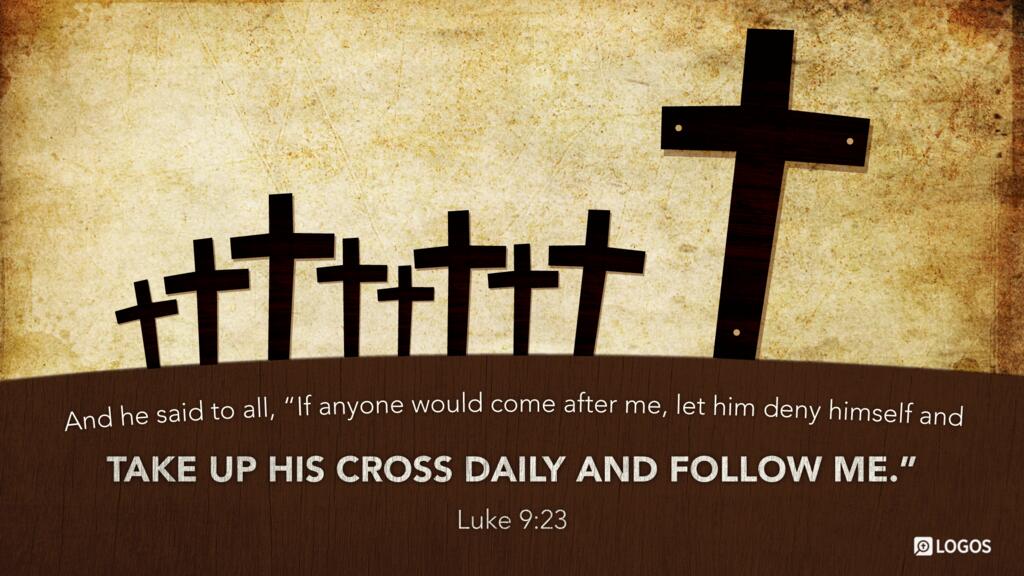
9:23Then81 he said to them all,82 “If anyone wants to become my follower,83 he must deny84 himself, take up his cross daily,85 and follow me. 9:24For whoever wants to save his life will lose it,86 but whoever loses his life for my sake will save it. 9:25For what does it benefit a person87 if he gains the whole world but loses or forfeits himself? 9:26For whoever is ashamed88 of me and my words, the Son of Man will be ashamed of that person89 when he comes in his glory and in the glory90 of the Father and of the holy angels. 9:27But I tell you most certainly,91 there are some standing here who will not92 experience93 death before they see the kingdom of God.”94
Footnotes
- 75 The combination of the participle and verb ἐπιτιμήσας and παρήγγειλεν (epitimēsas and parēngeilen, “commanding, he ordered”) is a hendiadys that makes the instruction emphatic.
- 76 No explanation for the command not to tell this to anyone is given, but the central section of Luke, chapters 9–19, appears to reveal a reason. The disciples needed to understand who the Messiah really was and exactly what he would do before they were ready to proclaim Jesus as such. But they and the people had an expectation that needed some instruction to be correct.
- 77 The necessity that the Son of Man suffer is the particular point that needed emphasis, since for many 1st century Jews the Messiah was a glorious and powerful figure, not a suffering one.
- 78 Rejection in Luke is especially by the Jewish leadership (here elders, chief priests, and experts in the law), though in Luke 23 almost all will join in.
- 79 Or “and scribes.” See the note on the phrase “experts in the law” in .
- 80 The description of the Son of Man being rejected … killed, and … raised is the first of six passion summaries in Luke: 9:44; 17:25; 18:31–33; 24:7; 24:46–47.
- 81 Here δέ (de) has been translated as “then” to indicate the implied sequence of events within the narrative.
- 82 Here them all could be limited to the disciples, since Jesus was alone with them in v. 18. It could also be that by this time the crowd had followed and found him, and he addressed them, or this could be construed as a separate occasion from the discussion with the disciples in 9:18–22. The cost of discipleship is something Jesus was willing to tell both insiders and outsiders about. The rejection he felt would also fall on his followers.
- 83 Grk “to come after me.”
- 84 This translation better expresses the force of the Greek third person imperative than the traditional “let him deny,” which could be understood as merely permissive.
- 85 Only Luke mentions taking up one’s cross daily. To bear the cross means to accept the rejection of the world for turning to Jesus and following him. Discipleship involves a death that is like a crucifixion; see Gal 6:14.
- 86 The point of the saying whoever wants to save his life will lose it is that if one comes to Jesus then rejection by many will certainly follow. If self-protection is a key motivation, then one will not respond to Jesus and will not be saved. One who is willing to risk rejection will respond and find true life.
- 87 Grk “a man,” but ἄνθρωπος (anthrōpos) is used in a generic sense here to refer to both men and women.
- 88 How one responds now to Jesus and his teaching is a reflection of how Jesus, as the Son of Man who judges, will respond then in the final judgment.
- 89 This pronoun (τοῦτον, touton) is in emphatic position in its own clause in the Greek text: “of that person the Son of Man will be ashamed …”
- 90 Grk “in the glory of him and of the Father and of the holy angels.” “Glory” is repeated here in the translation for clarity and smoothness because the literal phrase is unacceptably awkward in contemporary English.
- 91 Grk “I tell you truly” (λέγω δὲ ὑμῖν ἀληθῶς, legō de humin alēthōs).
- 92 The Greek negative here (οὐ μή, ou mē) is the strongest possible.
- 93 Grk “will not taste.” Here the Greek verb does not mean “sample a small amount” (as a typical English reader might infer from the word “taste”), but “experience something cognitively or emotionally; come to know something” (cf. γεύομαι 2).
- 94 The meaning of the statement that some will not taste death before they see the kingdom of God is clear at one level, harder at another. Jesus predicts some will experience the kingdom before they die. When does this happen? (1) An initial fulfillment is the next event, the transfiguration. (2) It is also possible in Luke’s understanding that all but Judas experience the initial fulfillment of the coming of God’s presence and rule in the work of Acts 2. In either case, the “kingdom of God” referred to here would be the initial rather than the final phase.
The NET Bible First Edition, Copyright 1996-2005 by Biblical Studies Press
In other versions
ESVEnglish Standard Version
And he strictly charged and commanded them to tell this to no one, saying, “The Son of Man must suffer many things and be rejected by the elders and chief priests and scribes, and be killed, and on the third day be raised.”
And he said to all, “If anyone would come after me, let him deny himself and take up his cross daily and follow me. For whoever would save his life will lose it, but whoever loses his life for my sake will save it. For what does it profit a man if he gains the whole world and loses or forfeits himself? For whoever is ashamed of me and of my words, of him will the Son of Man be ashamed when he comes in his glory and the glory of the Father and of the holy angels. But I tell you truly, there are some standing here who will not taste death until they see the kingdom of God.”
Copyright 2001 Crossway Bibles
NIVNew International Version (2011)
Jesus strictly warned them not to tell this to anyone. And he said, “The Son of Man must suffer many things and be rejected by the elders, the chief priests and the teachers of the law, and he must be killed and on the third day be raised to life.”
Then he said to them all: “Whoever wants to be my disciple must deny themselves and take up their cross daily and follow me. For whoever wants to save their life will lose it, but whoever loses their life for me will save it. What good is it for someone to gain the whole world, and yet lose or forfeit their very self? Whoever is ashamed of me and my words, the Son of Man will be ashamed of them when he comes in his glory and in the glory of the Father and of the holy angels.
“Truly I tell you, some who are standing here will not taste death before they see the kingdom of God.”
Copyright 1973, 1978, 1984, 2011 Biblica, Inc.
CSBChristian Standard Bible
But he strictly warned and instructed them to tell this to no one, saying, “It is necessary that the Son of Man suffer many things and be rejected by the elders, chief priests, and scribes, be killed, and be raised the third day.”
Then he said to them all, “If anyone wants to follow after me, let him deny himself, take up his cross daily, and follow me. For whoever wants to save his life will lose it, but whoever loses his life because of me will save it. For what does it benefit someone if he gains the whole world, and yet loses or forfeits himself? For whoever is ashamed of me and my words, the Son of Man will be ashamed of him when he comes in his glory and that of the Father and the holy angels. Truly I tell you, there are some standing here who will not taste death until they see the kingdom of God.”
Copyright 2017 Holman Bible Publishers
NLTNew Living Translation
Jesus warned his disciples not to tell anyone who he was. “The Son of Man must suffer many terrible things,” he said. “He will be rejected by the elders, the leading priests, and the teachers of religious law. He will be killed, but on the third day he will be raised from the dead.”
Then he said to the crowd, “If any of you wants to be my follower, you must give up your own way, take up your cross daily, and follow me. If you try to hang on to your life, you will lose it. But if you give up your life for my sake, you will save it. And what do you benefit if you gain the whole world but are yourself lost or destroyed? If anyone is ashamed of me and my message, the Son of Man will be ashamed of that person when he returns in his glory and in the glory of the Father and the holy angels. I tell you the truth, some standing here right now will not die before they see the Kingdom of God.”
Holy Bible, New Living Translation, copyright © 1996, 2004, 2015 by Tyndale House Foundation. Used by permission of Tyndale House Publishers. All rights reserved.
LEBThe Lexham English Bible
But he warned and commanded them to tell this to no one, saying, “It is necessary for the Son of Man to suffer many things and to be rejected by the elders and chief priests and scribes, and to be killed, and to be raised on the third day.
And he said to them all, “If anyone wants to come after me, he must deny himself and take up his cross every day and follow me. For whoever wants to save his life will lose it, but whoever loses his life on account of me, this person will save it. For what is a person benefited if he gains the whole world but loses or forfeits himself? For whoever is ashamed of me and my words, the Son of Man will be ashamed of this person when he comes in his glory and the glory of the Father and of the holy angels. But I tell you truly, there are some of those standing here who will never experience death until they see the kingdom of God.”
Copyright 2012 Lexham Press
KJV 1900King James Version
And he straitly charged them, and commanded them to tell no man that thing; Saying, The Son of man must suffer many things, and be rejected of the elders and chief priests and scribes, and be slain, and be raised the third day. And he said to them all, If any man will come after me, let him deny himself, and take up his cross daily, and follow me. For whosoever will save his life shall lose it: but whosoever will lose his life for my sake, the same shall save it. For what is a man advantaged, if he gain the whole world, and lose himself, or be cast away? For whosoever shall be ashamed of me and of my words, of him shall the Son of man be ashamed, when he shall come in his own glory, and in his Father’s, and of the holy angels. But I tell you of a truth, there be some standing here, which shall not taste of death, till they see the kingdom of God.
Public Domain