John 21:20–25
The NET BibleOther versions
English
- NET The NET Bible
- DARBY 1890 Darby Bible
- ASV American Standard Version
- AV 1873 The Cambridge Paragraph Bible of the Authorized English Version
- CSB Christian Standard Bible
- D-R Douay-Rheims Bible
- ESV English Standard Version
- GW GOD’S WORD Translation
- GNB Good News Translation
- HCSB The Holman Christian Standard Bible
- KJV 1900 King James Version
- LSB Legacy Standard Bible
- LEB The Lexham English Bible
- MSG The Message: The Bible in Contemporary Language
- NASB95 New American Standard Bible (1995)
- NCV New Century Version
- NIrV New International Reader’s Version (1998)
- NIV New International Version (2011)
- NKJV The New King James Version
- NLT New Living Translation
- NRSVue New Revised Standard Version: Updated Edition
- RSV The Revised Standard Version
- RSVCE The Revised Standard Version, Catholic Edition
- YLT Young’s Literal Translation
Arabic
Czech
French
German
Greek
Hungarian
Italian
Korean
Latin
Portuguese
Russian
Simplified Chinese
Spanish
Traditional Chinese
Peter and the Disciple Jesus Loved
21:20Peter turned around and saw the disciple whom Jesus loved following them.52 (This was the disciple53 who had leaned back against Jesus’54 chest at the meal and asked,55 “Lord, who is the one who is going to betray you?”)5621:21So when Peter saw him,57 he asked Jesus, “Lord, what about him?” 21:22Jesus replied,58 “If I want him to live59 until I come back,60 what concern is that of yours? You follow me!” 21:23So the saying circulated61 among the brothers and sisters62 that this disciple was not going to die. But Jesus did not say to him that he was not going to die, but rather, “If I want him to live63 until I come back,64 what concern is that of yours?”
A Final Note
21:24This is the disciple who testifies about these things and has written these things, and we know that his testimony is true. 21:25There are many other things that Jesus did. If every one of them were written down,65 I suppose the whole world66 would not have room for the books that would be written.67
Footnotes
- 52 The word “them” is not in the Greek text but is implied. Direct objects were often omitted in Greek when clear from the context.
- 53 The words “This was the disciple” are not in the Greek text, but are supplied for clarity.
- 54 Grk “his”; the referent (Jesus) has been specified in the translation for clarity.
- 55 Grk “and said.”
- 56 This is a parenthetical note by the author.
- 57 Grk “saw this one.”
- 58 Grk “Jesus said to him.”
- 59 Grk “to stay” or “to remain”; but since longevity is the issue in the context, “to live” conveys the idea more clearly.
- 60 The word “back” is supplied to clarify the meaning.
- 61 Grk “went out.”
- 62 Grk “the brothers,” but here the term refers to more than just the immediate disciples of Jesus (as it does in 20:17). Here, as R. E. Brown notes (John [], 2:), it refers to Christians of the Johannine community (which would include both men and women).
- 63 Grk “to stay” or “to remain”; but since longevity is the issue in the context, “to live” conveys the idea more clearly.
- 64 The word “back” is supplied to clarify the meaning.
- 65 Grk “written”; the word “down” is supplied in keeping with contemporary English idiom.
- 66 Grk “the world itself.”
- 67 Although the majority of (C2 Θ Ψ f13 𝔐 lat) conclude this Gospel with ἀμήν (amēn, “amen”), such a conclusion is routinely added by scribes to NT books because a few of these books originally had such an ending (cf. Rom 16:27; Gal 6:18; Jude 25). A majority of Greek witnesses have the concluding ἀμήν in every NT book except Acts, James, and 3 John (and even in these books, ἀμήν is found in some witnesses). It is thus a predictable variant. Further, excellent and early witnesses, as well as a few others (א A B C*,3 D W 1 33 it), lack the particle, rendering no doubt as to how this Gospel originally ended. The author concludes the Gospel with a note concerning his selectivity of material. He makes it plain that he has not attempted to write an exhaustive account of the words and works of Jesus, for if one attempted to do so, “the whole world would not have room for the books that would be written.” This is clearly hyperbole, and as such bears some similarity to the conclusion of the Book of Ecclesiastes (12:9–12). As it turns out, the statement seems more true of the Fourth Gospel itself, which is the subject of an ever-lengthening bibliography. The statement in v. 25 serves as a final reminder that knowledge of Jesus, no matter how well-attested it may be, is still partial. Everything that Jesus did during his three and one-half years of earthly ministry is not known. This supports the major theme of the Fourth Gospel: Jesus is repeatedly identified as God, and although he may be truly known on the basis of his self-disclosure, he can never be known exhaustively. There is far more to know about Jesus than could ever be written down, or even known. On this appropriate note the Gospel of John ends.
The NET Bible First Edition, Copyright 1996-2005 by Biblical Studies Press
In other versions
ESVEnglish Standard Version
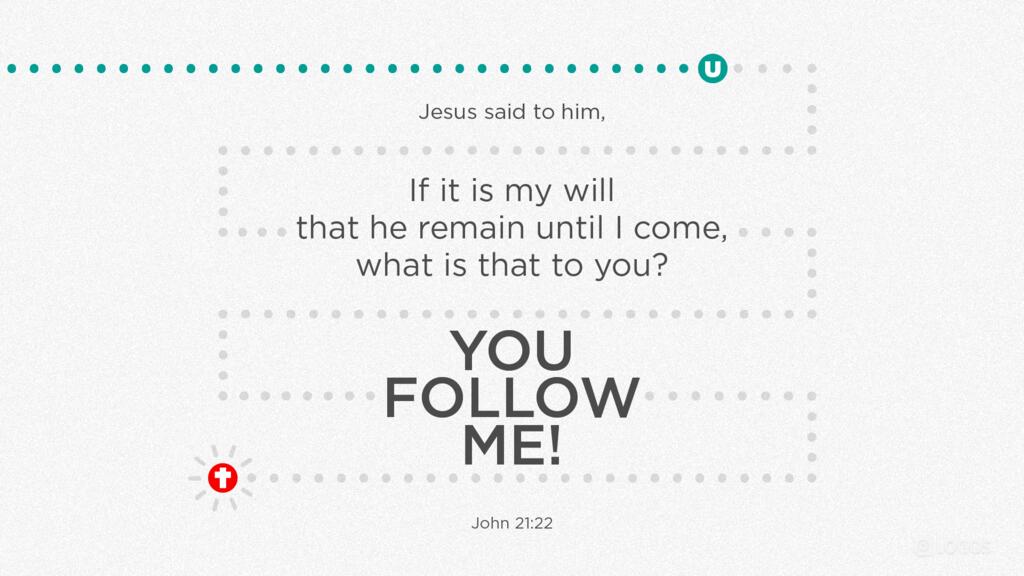
Peter turned and saw the disciple whom Jesus loved following them, the one who also had leaned back against him during the supper and had said, “Lord, who is it that is going to betray you?” When Peter saw him, he said to Jesus, “Lord, what about this man?” Jesus said to him, “If it is my will that he remain until I come, what is that to you? You follow me!” So the saying spread abroad among the brothers that this disciple was not to die; yet Jesus did not say to him that he was not to die, but, “If it is my will that he remain until I come, what is that to you?”
This is the disciple who is bearing witness about these things, and who has written these things, and we know that his testimony is true.
Now there are also many other things that Jesus did. Were every one of them to be written, I suppose that the world itself could not contain the books that would be written.
Copyright 2001 Crossway Bibles
NIVNew International Version (2011)
Peter turned and saw that the disciple whom Jesus loved was following them. (This was the one who had leaned back against Jesus at the supper and had said, “Lord, who is going to betray you?”) When Peter saw him, he asked, “Lord, what about him?”
Jesus answered, “If I want him to remain alive until I return, what is that to you? You must follow me.” Because of this, the rumor spread among the believers that this disciple would not die. But Jesus did not say that he would not die; he only said, “If I want him to remain alive until I return, what is that to you?”
This is the disciple who testifies to these things and who wrote them down. We know that his testimony is true.
Jesus did many other things as well. If every one of them were written down, I suppose that even the whole world would not have room for the books that would be written.
Copyright 1973, 1978, 1984, 2011 Biblica, Inc.
CSBChristian Standard Bible
So Peter turned around and saw the disciple Jesus loved following them, the one who had leaned back against Jesus at the supper and asked, “Lord, who is the one that’s going to betray you?” When Peter saw him, he said to Jesus, “Lord, what about him?”
“If I want him to remain until I come,” Jesus answered, “what is that to you? As for you, follow me.”
So this rumor spread to the brothers and sisters that this disciple would not die. Yet Jesus did not tell him that he would not die, but, “If I want him to remain until I come, what is that to you?”
This is the disciple who testifies to these things and who wrote them down. We know that his testimony is true.
And there are also many other things that Jesus did, which, if every one of them were written down, I suppose not even the world itself could contain the books that would be written.
Copyright 2017 Holman Bible Publishers
NLTNew Living Translation
Peter turned around and saw behind them the disciple Jesus loved—the one who had leaned over to Jesus during supper and asked, “Lord, who will betray you?” Peter asked Jesus, “What about him, Lord?”
Jesus replied, “If I want him to remain alive until I return, what is that to you? As for you, follow me.” So the rumor spread among the community of believers that this disciple wouldn’t die. But that isn’t what Jesus said at all. He only said, “If I want him to remain alive until I return, what is that to you?”
This disciple is the one who testifies to these events and has recorded them here. And we know that his account of these things is accurate.
Jesus also did many other things. If they were all written down, I suppose the whole world could not contain the books that would be written.
Holy Bible, New Living Translation, copyright © 1996, 2004, 2015 by Tyndale House Foundation. Used by permission of Tyndale House Publishers. All rights reserved.
LEBThe Lexham English Bible
Peter turned and saw the disciple whom Jesus loved following them (who also leaned back on his chest at the dinner and said, “Lord, who is the one betraying you?”) So when he saw this one, Peter said to Jesus, “Lord, but what about this one?” Jesus said to him, “If I want him to remain until I come, what is that to you? You follow me!” So this saying went out to the brothers that that disciple would not die. But Jesus did not say to him that he would not die, but “If I want him to remain until I come, what is that to you?”
This is the disciple who is testifying about these things, and who has written down these things. And we know that his testimony is true. Now there are also many other things that Jesus did, which—if they were written down one after the other—I suppose not even the world itself could contain the books that would be written.
Copyright 2012 Lexham Press
KJV 1900King James Version
Then Peter, turning about, seeth the disciple whom Jesus loved following; which also leaned on his breast at supper, and said, Lord, which is he that betrayeth thee? Peter seeing him saith to Jesus, Lord, and what shall this man do? Jesus saith unto him, If I will that he tarry till I come, what is that to thee? follow thou me. Then went this saying abroad among the brethren, that that disciple should not die: yet Jesus said not unto him, He shall not die; but, If I will that he tarry till I come, what is that to thee?
This is the disciple which testifieth of these things, and wrote these things: and we know that his testimony is true. And there are also many other things which Jesus did, the which, if they should be written every one, I suppose that even the world itself could not contain the books that should be written. Amen.
Public Domain