2 Timothy 3:14–17
The NET BibleOther versions
English
- NET The NET Bible
- DARBY 1890 Darby Bible
- ASV American Standard Version
- AV 1873 The Cambridge Paragraph Bible of the Authorized English Version
- CSB Christian Standard Bible
- D-R Douay-Rheims Bible
- ESV English Standard Version
- GW GOD’S WORD Translation
- GNB Good News Translation
- HCSB The Holman Christian Standard Bible
- KJV 1900 King James Version
- LSB Legacy Standard Bible
- LEB The Lexham English Bible
- MSG The Message: The Bible in Contemporary Language
- NASB95 New American Standard Bible (1995)
- NCV New Century Version
- NIrV New International Reader’s Version (1998)
- NIV New International Version (2011)
- NKJV The New King James Version
- NLT New Living Translation
- NRSVue New Revised Standard Version: Updated Edition
- RSV The Revised Standard Version
- RSVCE The Revised Standard Version, Catholic Edition
- YLT Young’s Literal Translation
Arabic
Czech
French
German
Greek
Hungarian
Italian
Korean
Latin
Portuguese
Russian
Simplified Chinese
Spanish
Traditional Chinese
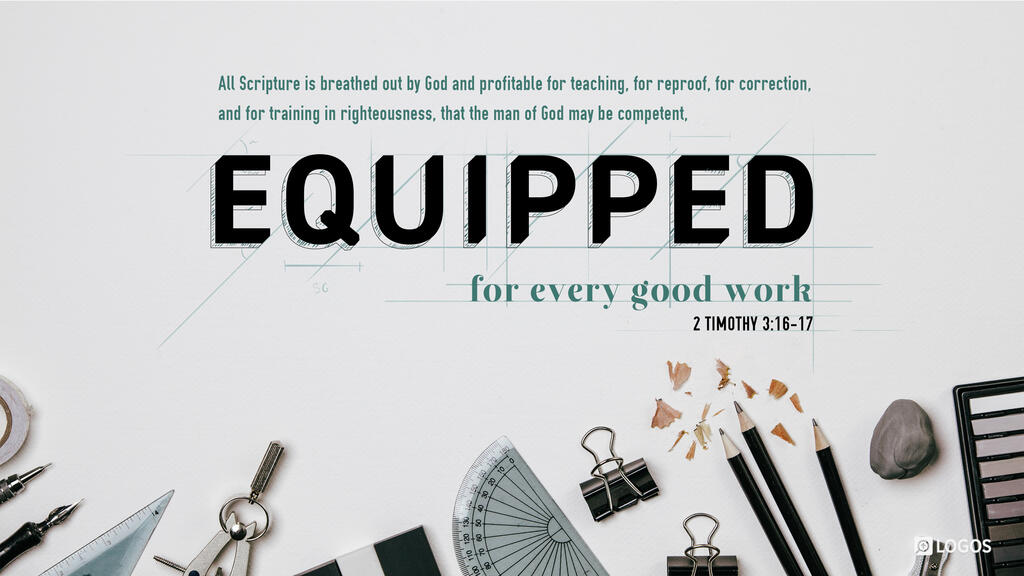
3:14You, however, must continue20 in the things you have learned and are confident about. You know21 who taught you223:15and how from infancy you have known the holy writings, which are able to give you wisdom for salvation through faith in Christ Jesus. 3:16Every scripture23 is inspired by God24 and useful for teaching, for reproof,25 for correction, and for training in righteousness, 3:17that the person dedicated to God26 may be capable27 and equipped for every good work.
Footnotes
- 20 Grk “but you, continue,” a command.
- 21 Grk “knowing,” giving the reasons for continuing as v. 14 calls for.
- 22 Grk “those from whom you learned.”
- 23 Or “All scripture.” There is very little difference in sense between every scripture (emphasizing the individual portions) and “all scripture” (emphasizing the composite whole). The former option is preferred, because it fits the normal use of the word “all/every” in Greek (πᾶς, pas) as well as Paul’s normal sense for the word “scripture” in the singular without the article, as here. So every scripture means “every individual portion of scripture.”
- 24 Inspired by God. Some have connected this adjective in a different way and translated it as “every inspired scripture is also useful.” But this violates the parallelism of the two adjectives in the sentence, and the arrangement of words makes clear that both should be taken as predicate adjectives: “every scripture is inspired … and useful.”
- 25 Or “rebuke,” “censure.” The Greek word implies exposing someone’s sin in order to bring correction.
- 26 Grk “the man of God,” but ἄνθρωπος (anthrōpos) is most likely used here in a generic sense, referring to both men and women.
- 27 This word is positioned for special emphasis; it carries the sense of “complete, competent, able to meet all demands.”
The NET Bible First Edition, Copyright 1996-2005 by Biblical Studies Press
In other versions
ESVEnglish Standard Version
But as for you, continue in what you have learned and have firmly believed, knowing from whom you learned it and how from childhood you have been acquainted with the sacred writings, which are able to make you wise for salvation through faith in Christ Jesus. All Scripture is breathed out by God and profitable for teaching, for reproof, for correction, and for training in righteousness, that the man of God may be complete, equipped for every good work.
Copyright 2001 Crossway Bibles
NIVNew International Version (2011)
But as for you, continue in what you have learned and have become convinced of, because you know those from whom you learned it, and how from infancy you have known the Holy Scriptures, which are able to make you wise for salvation through faith in Christ Jesus. All Scripture is God-breathed and is useful for teaching, rebuking, correcting and training in righteousness, so that the servant of God may be thoroughly equipped for every good work.
Copyright 1973, 1978, 1984, 2011 Biblica, Inc.
CSBChristian Standard Bible
But as for you, continue in what you have learned and firmly believed. You know those who taught you, and you know that from infancy you have known the sacred Scriptures, which are able to give you wisdom for salvation through faith in Christ Jesus. All Scripture is inspired by God and is profitable for teaching, for rebuking, for correcting, for training in righteousness, so that the man of God may be complete, equipped for every good work.
Copyright 2017 Holman Bible Publishers
NLTNew Living Translation
But you must remain faithful to the things you have been taught. You know they are true, for you know you can trust those who taught you. You have been taught the holy Scriptures from childhood, and they have given you the wisdom to receive the salvation that comes by trusting in Christ Jesus. All Scripture is inspired by God and is useful to teach us what is true and to make us realize what is wrong in our lives. It corrects us when we are wrong and teaches us to do what is right. God uses it to prepare and equip his people to do every good work.
Holy Bible, New Living Translation, copyright © 1996, 2004, 2015 by Tyndale House Foundation. Used by permission of Tyndale House Publishers. All rights reserved.
LEBThe Lexham English Bible
But you continue in the things which you have learned and are convinced of, because you know from whom you learned them, and that from childhood you have known the holy writings that are able to make you wise for salvation through faith in Christ Jesus. All scripture is inspired by God and profitable for teaching, for reproof, for correction, for training in righteousness, in order that the person of God may be competent, equipped for every good work.
Copyright 2012 Lexham Press
KJV 1900King James Version
But continue thou in the things which thou hast learned and hast been assured of, knowing of whom thou hast learned them; And that from a child thou hast known the holy scriptures, which are able to make thee wise unto salvation through faith which is in Christ Jesus. All scripture is given by inspiration of God, and is profitable for doctrine, for reproof, for correction, for instruction in righteousness: That the man of God may be perfect, throughly furnished unto all good works.
Public Domain